
MCCH Shift Claim Raises Questions as Maternity Services Continue at Sherbagh

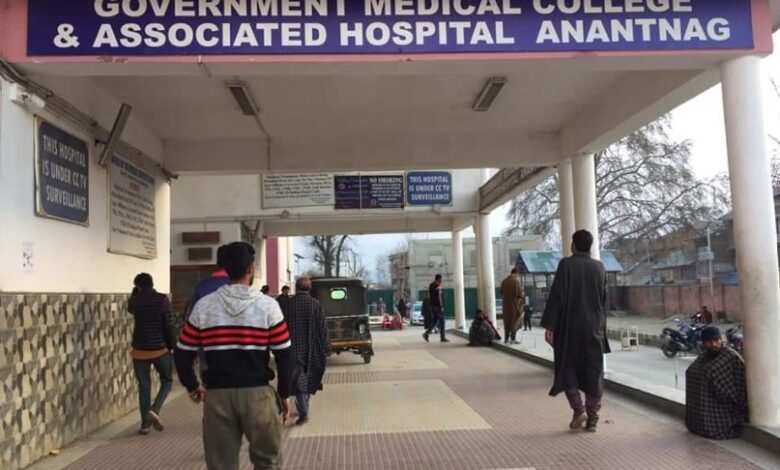
Anantnag, Sep 14, KNT: A recent statement by Health and Medical Education Minister Sakeena Itoo that the Maternity and Child Care Hospital (MCCH) in Anantnag has been shifted to Government Medical College (GMC) Anantnag has raised questions over the present status of the facility, as official GMC records show that paediatrics is functioning at Janglatmandi while obstetrics and gynaecology services continue to be listed at the old Sherbagh hospital.
The distinction is significant because maternity services remain at the Sherbagh facility, meaning the MCCH has not shifted in its entirety to the GMC campus.
The Government Medical College Anantnag’s official OPD schedule, issued in March 2026, lists the OBG department under the MCCH at Sherbagh, while the Paediatrics department is listed at the Janglatmandi campus.
The GMC’s current hospital information also identifies MCCH as an associated hospital and lists both Obstetrics and Gynaecology and Paediatrics among its functioning departments. Its administrative directory separately identifies the Deputy Medical Superintendent’s office at MCCH, Sherbagh.
The arrangement is also consistent with an earlier government position that the Paediatric Department had been shifted to the ground floor of Block-A at the Janglatmandi hospital, while the Obstetrics and Gynaecology Department would continue functioning from the old MCCH at Sherbagh until the required infrastructure was completed at the new site.
The issue assumes greater significance because the government had allocated Rs 86 crore for a proposed 250-bed Maternity and Child Care Hospital at Janglatmandi. However, the project has yet to see construction activity, with the Detailed Project Report prepared but funds under NABARD still awaited, according to the latest available official-level information.
The existing Sherbagh facility has faced concerns over its condition for years. Earlier assessments had described the building as unsafe, while reports have repeatedly highlighted congestion and inadequate infrastructure at the hospital.
For pregnant women and their attendants, the distinction is not merely administrative. The OBG department provides antenatal care, deliveries, caesarean sections, emergency services and other maternity-related procedures, and its continued operation at Sherbagh means women requiring these services are still dependent on the existing facility. The GMC’s own hospital information lists 96 OBG beds at MCCH and 24×7 inpatient services.
A senior resident of Anantnag said the administration should clearly spell out what exactly has been shifted and what remains at Sherbagh.
“If only paediatrics has been shifted, then the public should be told clearly that the maternity services are still operating from the old building. The issue is not about terminology but about where pregnant women are actually receiving care,” he said.
Healthcare sources told the news agency Kashmir News Trust that the proposed 250-bed facility would be significant for South Kashmir, but its implementation remains crucial if the existing maternity services are to be moved to a purpose-built facility.
The government has yet to make the proposed 250-bed hospital fully operational, while the existing maternity services continue at Sherbagh.
For patients and attendants, the questions therefore remain straightforward: when will the new MCCH be constructed, when will maternity services be shifted out of the old facility, and when will the entire hospital function from a modern, purpose-built infrastructure? [KNT]
© Kashmir News Trust (KNT). Unauthorized use without attribution is prohibited.