Why a British-Built Pillar Became a Symbol for Dalits in India?
The battle took place between the British East India Company and the army of the Peshwa Baji Rao II of the Maratha Empire.

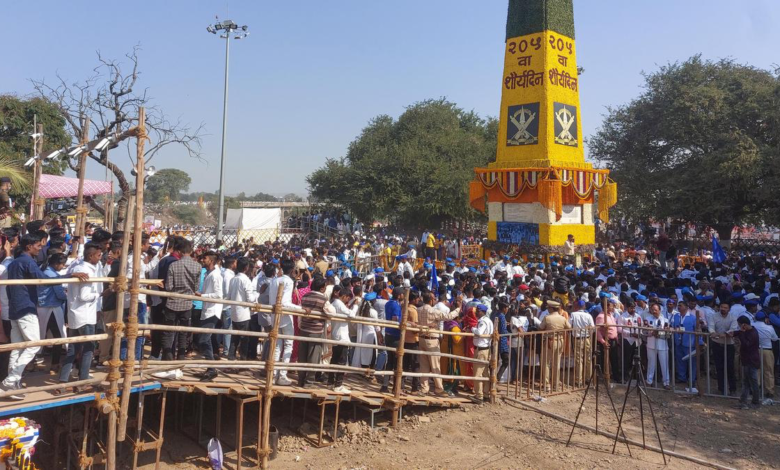
Bhima Koregaon is a village in the Indian state of Maharashtra near the city of Pune. It is historically known for the Battle of Bhima Koregaon, fought on 1 January 1818.
1. The Historical Battle
-
The battle took place between the British East India Company and the army of the Peshwa Baji Rao II of the Maratha Empire.
-
Around 834 Company soldiers (many of them Mahar soldiers, a Dalit community) fought against thousands of Peshwa troops.
-
The Company forces managed to hold their ground, and the Peshwa army withdrew.
2. The Victory Pillar
-
After the battle, the British erected the Vijay Stambh (Victory Pillar) at Bhima Koregaon.
-
The pillar lists the names of soldiers who died in the battle, including many Mahar soldiers.
3. Why it is Important Today
For many Dalit communities, especially Mahars:
-
The battle symbolizes resistance against the Peshwa rule, which is remembered for caste oppression.
-
Every year on 1 January, thousands gather at the memorial to commemorate the event.
4. Modern Controversy
In 2018, during the 200th anniversary of the battle:
-
Violence initiated by alleged upper caste Hindus broke out between groups (so-called upper and Dalit caste) near the memorial.
-
The incident became politically controversial and led to the Bhima Koregaon case, where several social and human rights activists were arrested under anti-terror laws, allegedly on the instructions of BJP government.
✅ In simple words:
Bhima Koregaon is remembered because a small force including Dalit soldiers defeated or resisted a much larger army in 1818, and today it has become a symbol of Dalit pride and historical debate in India.
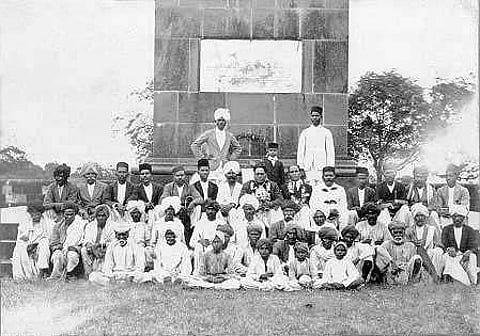
Ambedkar’s visit to Bhima Koregaon
On 1 January 1927, Dr. B. R. Ambedkar visited the memorial pillar (Vijay Stambh) at Bhima Koregaon near Pune. The pillar had the names of soldiers who died in the Battle of Bhima Koregaon, many of whom belonged to the Mahar community.
Ambedkar paid tribute to these soldiers and highlighted their role in the battle. For the Mahar community, which had long faced social discrimination, this recognition was significant.
Why Ambedkar highlighted the battle
Ambedkar used the history of the battle to show that Dalits were not weak or inferior, as caste society portrayed them. He argued that Mahars had fought bravely and served in armies, proving their courage and capability.
His visit transformed the Bhima Koregaon memorial into a symbol of dignity and resistance for Dalits.
Annual commemorations after Ambedkar
After Ambedkar’s visit, followers of his movement began gathering at the memorial every year on 1 January to remember both the soldiers and Ambedkar’s message of equality. Over time, the event grew into a major annual gathering of Dalits from across Maharashtra and other parts of the country.
Why this matters today
Because Ambedkar associated the site with the struggle against caste oppression, Bhima Koregaon became more than just a historical battlefield. It turned into a political and social symbol of Dalit assertion and identity.
In short, the memorial was originally built by the British East India Company after the 1818 battle, but it was Ambedkar’s visit in 1927 that gave it its modern social and political significance.
Bhima Koregaon is politically sensitive in India because it touches three major issues at the same time: caste history, nationalism, and present-day politics.
Caste symbolism
For many Dalits, especially the Mahar community, the Battle of Bhima Koregaon fought on 1 January 1818 represents resistance against upper-caste domination under the Peshwa rule of Baji Rao II. Many of the soldiers in the army of the British East India Company were Mahars. Because the Peshwas were Brahmins and the Mahar community faced discrimination during that period, many Dalits view the battle as a symbolic victory against caste oppression.
Nationalist criticism
Some nationalist and Hindu groups criticize the celebration of the event. Their argument is that the battle was essentially a victory of the British East India Company over an Indian ruler of the Maratha Empire. According to this view, celebrating the battle means glorifying the British who later colonized India. This difference in interpretation makes the event politically controversial.
The 2018 violence
On 1 January 2018, during the 200th anniversary of the battle, violence broke out near the memorial in Pune district of Maharashtra. One person was killed and many others were injured. The incident triggered protests and shutdowns across parts of Maharashtra.
The Bhima Koregaon case
After the violence, police launched an investigation claiming that there was a Maoist conspiracy linked to the event. Several activists, lawyers and academics were arrested under anti-terror laws. The case became widely known as the Bhima Koregaon case. The arrests and prolonged detentions led to a national debate about civil liberties, state power and political dissent.
In simple terms, Bhima Koregaon remains sensitive because different groups interpret it differently. Dalit groups see it as a symbol of social justice and resistance. Some nationalist groups see it as the celebration of a British victory over Indians, while others focus on the civil liberties issues raised by the arrests and investigations that followed.
© Kashmir News Trust (KNT). Unauthorized use without attribution is prohibited.