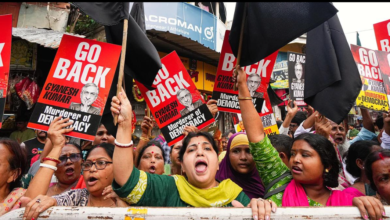
‘Doomsday for Afghanistan, Pakistan air strikes kill over 400, India condemns

Afghan authorities say 408 killed in Kabul hospital strike as Pakistan denies targeting civilians
Air strike on Kabul drug treatment centre triggers civilian toll dispute between Afghanistan and Pakistan
Families search for missing relatives after deadly strike hits Kabul hospital
UN urges restraint after Kabul hospital attack amid escalating Afghanistan–Pakistan tensions
Hundreds of people have been killed in an air strike on a drug treatment centre in Kabul, Afghan authorities said on Tuesday, as Pakistan denied targeting civilians and insisted the operation was aimed at militant infrastructure.
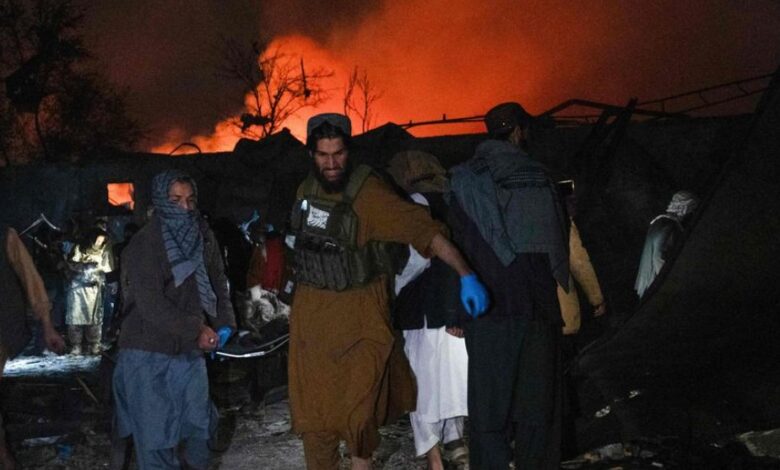
The strike hit the Omar Addiction Treatment Hospital in the Afghan capital at around 9pm local time on Monday, triggering panic among patients and residents, many of whom had just broken their Ramadan fast, officials and witnesses said.
The attack comes amid a sharp escalation in tensions between Afghanistan and Pakistan, marking one of the deadliest incidents in months of cross-border hostilities between the two neighbours.
Afghanistan’s Interior Ministry said at least 408 people were killed and 265 injured in the strike, with many victims believed to be patients undergoing treatment at the facility.
Health authorities said the hospital was housing around 3,000 patients from across Afghanistan at the time of the attack, raising concerns over the scale of civilian casualties.
Witnesses described scenes of devastation inside the hospital complex.
“There were three explosions. The whole place caught fire. It was like doomsday,” said Ahmad, a patient at the facility, who gave only his first name.
He said many patients were trapped as flames spread through the building.
“My friends were burning in the fire, and we could not save them all,” he said.
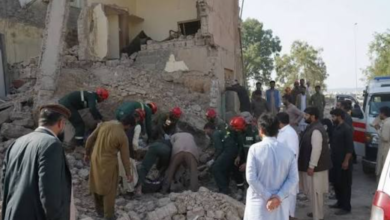
Emergency responders said rescue operations continued through the night and into Tuesday morning.
Ambulance driver Haji Fahim said he saw widespread destruction when he arrived at the site.
“When I arrived, everything was burning. People were burning,” he said, adding that teams were still recovering bodies from the rubble hours later.
Pakistan rejected allegations that it had targeted civilians.
In a statement, Pakistan’s Ministry of Information and Broadcasting said the strikes were “precise” and aimed at “military installations and terrorist support infrastructure.”
It described Afghan claims of civilian casualties as “false and aimed at misleading public opinion.”
The incident highlights the widening conflict between the two countries, which share a 2,600-kilometre border and have traded accusations over militant activity.
Islamabad has repeatedly accused Kabul of harbouring armed groups responsible for cross-border attacks, while Afghan authorities have denied the allegations.
The latest escalation follows weeks of rising tensions that had briefly eased amid mediation efforts by countries including China before flaring up again.
International concern has grown over the humanitarian impact of the conflict.
Richard Bennett, the United Nations Special Rapporteur on human rights in Afghanistan, said he was “dismayed” by reports of civilian casualties.
“I urge parties to de-escalate, exercise maximum restraint and respect international law, including the protection of civilians and civilian objects such as hospitals,” he said in a post on social media.
The Omar Addiction Treatment Hospital, established in 2016, has been a key facility providing rehabilitation services to drug-dependent patients and vocational training to support reintegration into society.
The scale of the reported casualties and the conflicting claims from both sides are likely to intensify scrutiny of the incident and add pressure on international actors to intervene diplomatically.
Meanwhile, India strongly condemned Pakistan over the reported air strike on a hospital in Kabul, describing the incident as a “barbaric” act and calling for accountability for civilian casualties.
In an official statement, the Ministry of External Affairs said the attack on the Omid Addiction Treatment Hospital in the Afghan capital had resulted in a large number of civilian deaths and could not be justified as a legitimate military operation.
India said the attack amounted to a serious violation of international norms and posed a threat to regional stability.
“This is a cowardly and unconscionable act of violence that has claimed the lives of a large number of civilians in a facility which can by no means be justified as a military target,” the statement said.
The ministry accused Pakistan of attempting to portray the incident as a military operation, rejecting Islamabad’s claim that the strike targeted militant infrastructure.
“Pakistan is now trying to dress up a massacre as a military operation,” it said.
India also described the strike as an assault on Afghanistan’s sovereignty and territorial integrity.
“It is a blatant assault on Afghanistan’s sovereignty and a direct threat to regional peace and stability,” the statement added.
Relations between Pakistan and Afghanistan have deteriorated in recent years due to a combination of security, political and border-related tensions. A major source of friction has been Pakistan’s repeated allegations that militant groups operating from Afghan territory carry out cross-border attacks, which Kabul has denied. Disputes over the Durand Line, a contested border between the two countries, have also contributed to mistrust, with both sides differing on its legitimacy. Additionally, issues such as refugee management, trade disruptions and diplomatic disagreements have further strained ties. Periodic military incidents and retaliatory actions along the border have deepened tensions, making the relationship increasingly volatile and fragile.
Highlighting the timing of the incident, India said the attack during the holy month of Ramadan made it “all the more reprehensible,” noting that the period is associated with peace and reflection among Muslim communities.
“There is no faith, no law, and no morality that can justify the deliberate targeting of a hospital and its patients,” the statement said.
India called on the international community to hold those responsible accountable and to ensure that such incidents do not recur.
“The international community must hold the perpetrators of this criminal act accountable,” the ministry said.
New Delhi also extended condolences to the families of those killed and expressed solidarity with the people of Afghanistan.
India reiterated its support for Afghanistan’s sovereignty and territorial integrity amid the ongoing conflict.
© Kashmir News Trust (KNT). Unauthorized use without attribution is prohibited.