
Introduction
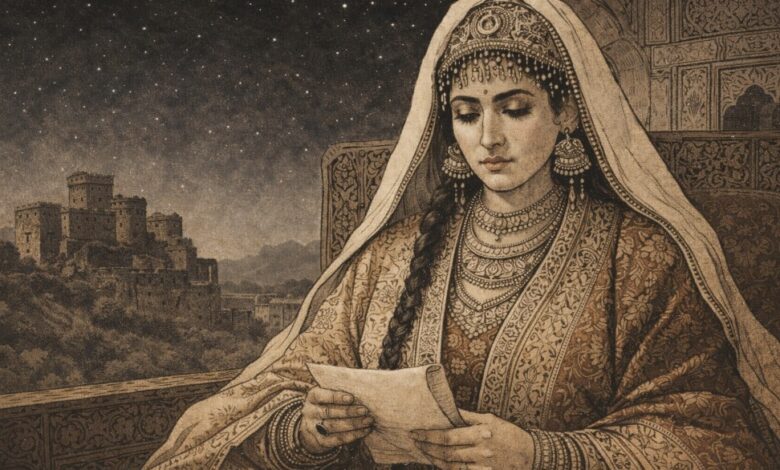
Few figures in Kashmiri history embody as much complexity, strength, and tragedy as Kota Rani, the last Hindu ruler of Kashmir. Her life unfolded during one of the most turbulent phases in the valley’s history — a period marked by invasions, collapsing dynasties, political intrigue, and shifting religious power structures. She was not merely a queen by title but a strategist, administrator, and survivor navigating an increasingly unstable political landscape.
Her story is not just about an individual ruler; it represents the end of an era — the conclusion of centuries of Hindu rule in Kashmir and the beginning of the Shah Mir Sultanate.
Historical Context: Kashmir in Transition
By the late 13th and early 14th centuries, Kashmir was no longer the stable kingdom described in earlier chronicles. The once-powerful Lohara dynasty had weakened, and internal divisions had created opportunities for ambitious nobles and foreign adventurers.
It was during this instability that Rinchana, a Ladakhi noble, entered Kashmir. His rise to power would set in motion a chain of events that would ultimately elevate Kota Rani to the throne.
Early Life and Background
Kota Rani was the daughter of Ramachandra, a powerful minister and military commander in Kashmir. Though little is known about her childhood, her later actions strongly suggest that she was:
- Politically aware from an early age
- Educated in governance and court affairs
- Skilled in diplomacy and crisis management
Her upbringing in a politically active household likely shaped her ability to navigate the volatile environment she would later face.
Marriage to Rinchana: Entry into Power Politics
Kota Rani’s first major political move came through her marriage to Rinchana (later Sultan Saddaruddin).
Who was Rinchana?
- A Ladakhi prince or noble
- Seized power in Kashmir amid political chaos
- Converted to Islam (becoming Sultan Sadr-ud-Din)
Political significance of the marriage
- Strengthened Rinchana’s legitimacy among Kashmiris
- Positioned Kota Rani at the center of power
However, Rinchana’s rule was short-lived. He died around 1320 CE, leaving behind a fragile political system.
Marriage to Udayanadeva: Power Behind the Throne
After Rinchana’s death, Kota Rani married Udayanadeva, a member of the former ruling dynasty.
Why this marriage mattered
- It restored a sense of dynastic continuity
- Appeased factions loyal to the old Hindu order
Reality of governance
Udayanadeva was widely regarded as a weak ruler, and real power increasingly rested in the hands of Kota Rani.
She effectively:
- Managed administration
- Handled external threats
- Controlled political decision-making
Administrative Ability and Public Works
Kota Rani is remembered not just for political survival but for governance.
Key contributions
- Strengthened internal administration
- Maintained order during unrest
- Managed crises including invasions and rebellions
Kuta Kol (Canal Project)
One of the most enduring legacies attributed to her is the Kuta Kol canal in Srinagar. It is believed to have existed in and around the old city (Downtown Srinagar).Traditionally linked with areas near, Rainawari, Nowhatta and inner neighborhoods connected to the Jhelum River (Vyeth)
- Built to control flooding of the Jhelum River
- Demonstrates engineering foresight
- Reflects concern for public welfare
This project alone places her among the more capable rulers of medieval Kashmir.
Threats and Political Instability
Kota Rani’s reign was constantly challenged by:
1. Internal rivalries
- Powerful nobles competing for influence
- Fragmented court politics
2. External pressures
- Repeated invasions
- Weak military structure
3. Rise of Shah Mir
Among the nobles in her court was Shah Mir, a figure who would eventually alter Kashmir’s history.
Rise of Shah Mir
Shah Mir was:
- Likely of foreign origin (possibly from Central Asia or Swat region)
- Initially a court noble under earlier rulers
- Politically patient and highly strategic
Over time, he:
- Built alliances
- Strengthened his position within the court
- Waited for the right moment to seize power
Kota Rani as Sovereign Ruler
After the death of Udayanadeva, Kota Rani assumed full control and became the sole ruler of Kashmir.
This was a remarkable achievement in itself:
- A woman ruling independently in a highly unstable medieval polity
- Maintaining authority amid powerful male nobles
Her rule, however, was short-lived due to the growing influence of Shah Mir.
The Fall: Conspiracy and Collapse
Shah Mir eventually moved decisively:
- He orchestrated a political takeover
- Key supporters of Kota Rani were eliminated or neutralized
- She was left isolated
This marked the end of her authority and the beginning of a new political order.
Death of Kota Rani: Tragedy and Symbolism
The circumstances of her death are central to her legacy.
Widely cited version
- Shah Mir sought to legitimize his rule
- He proposed or forced a marriage
- Kota Rani chose death over submission
Some accounts describe a dramatic end, suggesting she took her own life rather than accept defeat.
Legacy
Kota Rani remains a powerful symbol in Kashmiri history:
As a ruler
- One of the most capable administrators of her time
- A leader who held together a collapsing state
As a historical figure
- Represents the end of Hindu rule in Kashmir
- Marks transition to the Shah Mir Sultanate
As a symbol
- Courage
- Political intelligence
- Resistance in the face of defeat
The Marriage Controversy: What Really Happened?
This is one of the most debated aspects of her life.
Version 1: Primary Chronicle (Jonaraja)
- Shah Mir proposed marriage after seizing power
- Kota Rani committed suicide before the marriage occurred
- This version is considered closest to contemporary history
Version 2: Modern Interpretation
- Kota Rani married Shah Mir
- Seen as a political compromise or necessity
Why the difference?
Possible reasons:
- Bias in primary sources
- Jonaraja may have portrayed her as resisting for honor
- Simplification in modern narratives
- Later writers sometimes streamline complex events
- Interpretive gap
- Lack of multiple primary accounts leaves room for speculation
Critical Analysis
What is certain:
- Shah Mir took power in 1339
- Kota Rani lost her throne
- A marriage proposal or political coercion occurred
What is uncertain:
- Whether the marriage was actually completed
Most balanced conclusion:
The marriage may have been:
- Proposed
- Possibly accepted under pressure
- But likely not completed, according to earlier sources
Conclusion
Kota Rani’s story is not just about how she ruled, but how she navigated power in a collapsing world. She used alliances, marriages, and administrative skill to hold onto authority longer than most could have in such circumstances.
Her end — whether seen as resistance or political compromise — remains a subject of debate. But her significance is unquestionable.
She stands at the turning point of Kashmiri history, where one era ended and another began.
Final Line
Kota Rani was not just the last queen of Kashmir — she was the last defender of an age, whose life continues to provoke debate, admiration, and historical inquiry centuries later.
© Kashmir News Trust (KNT). Unauthorized use without attribution is prohibited.