
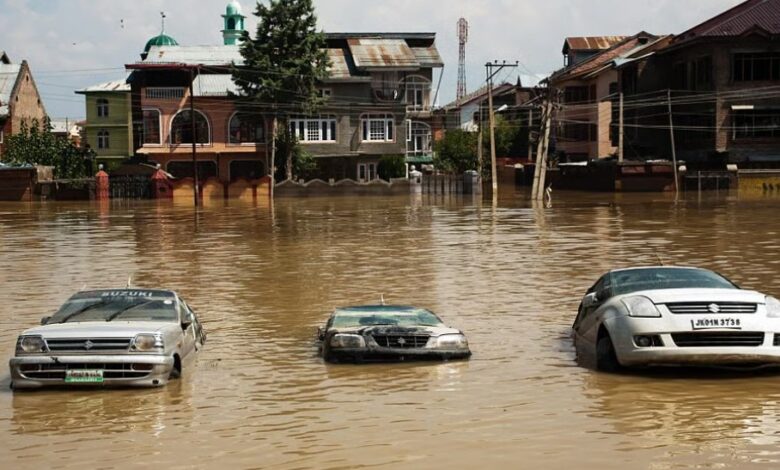
Srinagar, April 3, KNT: The Comptroller and Auditor General (CAG) has flagged violations in flood recovery and rural development schemes in Jammu and Kashmir, citing execution of projects without proper approvals and weak monitoring systems.
The findings are part of audit reports recently tabled in the Assembly, covering key government programmes, including those funded by international agencies.
The issue is significant as it directly affects development outcomes and relief efforts in vulnerable areas.
According to the audit, several projects under flood recovery initiatives, including those supported by the World Bank, were undertaken without adherence to prescribed guidelines.
Read: “Epstein Files: Jeffrey Epstein & His Sex-Trafficking Network
The report also flagged irregularities in rural livelihood programmes, pointing to delays, poor implementation and lack of oversight.
Comptroller and Auditor General (CAG) of India — Role, Powers and Authority
The Comptroller and Auditor General (CAG) of India is the country’s top constitutional audit authority, responsible for examining how public money is collected and spent by the government.
Established under Article 148 of the Constitution of India, the CAG operates independently of the executive and reports directly to Parliament and state legislatures. This independence is intended to ensure impartial oversight of government finances.
The CAG audits:
• Union and State government accounts
• Public sector undertakings (PSUs)
• Government-funded bodies and schemes
• Revenue collections such as taxes
Its audits typically assess whether:
• Public funds were used for the intended purpose
• Expenditure followed rules and procedures
• Projects were implemented efficiently and economically
The CAG does not function as a court and does not have the power to punish individuals or enforce its findings. However, its reports carry significant weight.
After submission, CAG reports are examined by legislative committees such as the Public Accounts Committee (PAC), which can summon officials and recommend corrective action.
While the CAG cannot directly impose penalties, its findings often lead to:
• Government inquiries
• Policy corrections
• Administrative action
• Political and public scrutiny
Over the years, CAG reports have played a crucial role in exposing financial irregularities, improving transparency, and strengthening accountability in governance.
In essence, the CAG serves as a watchdog of public finances — highlighting lapses, but leaving enforcement to the government and legislature.
“Execution of projects without due approvals and monitoring reflects systemic deficiencies,” the audit noted.
Experts warn that such lapses can compromise the effectiveness of schemes aimed at benefiting flood-affected populations and rural communities.
Authorities are expected to review implementation frameworks to address the shortcomings highlighted in the report. [KNT]
© Kashmir News Trust (KNT). Unauthorized use without attribution is prohibited.