Kashmir Under the Sikhs: Tax Burdens and Religious Restrictions
Sikh Rule in Kashmir (1819–1846): Relief From Afghans or a New Era of Restriction?


The arrival of Sikh rule in Kashmir in 1819 marked the end of nearly seventy years of Afghan domination. For many Kashmiris weary of heavy taxation, political instability and harsh Afghan governors, the defeat of Afghan authority initially appeared to be liberation. Yet the period that followed under the Sikh Empire of Maharaja Ranjit Singh produced a more complicated reality. While Afghan political control ended, many Kashmiris soon found themselves confronting a different set of challenges marked by strict administration, economic burdens and religious restrictions that left a lasting imprint on historical memory.
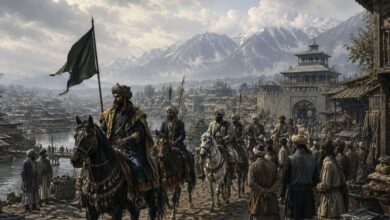
The Sikh conquest of Kashmir occurred during the expansion of Maharaja Ranjit Singh’s kingdom. By the early nineteenth century, the Durrani Empire had weakened, creating opportunities for neighboring powers. In 1819, Sikh forces led by Misr Diwan Chand defeated the Afghan governor Jabbar Khan and entered Kashmir. Afghan authority collapsed, and Kashmir became part of the Sikh Empire headquartered in Lahore.
The fall of Afghan rule was welcomed by sections of the population. Afghan governors had become associated with extortion, political instability and fear. The arrival of Sikh administration initially generated hopes that order and predictable governance would replace decades of uncertainty.
Yet these expectations soon encountered reality.
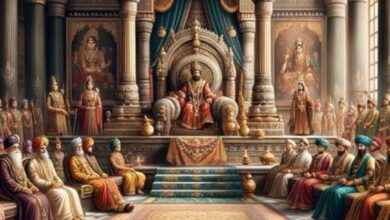
Unlike Afghan rulers who shared the religion of the Valley’s Muslim majority, Sikh administration governed Kashmir as a conquered frontier province under military and political supervision from Lahore. The Sikh rulers did not settle permanently in Kashmir but governed through appointed governors. Over the next twenty-seven years, several governors administered the Valley, and their reputations varied considerably.
One of the earliest concerns under Sikh administration involved taxation and revenue.
Kashmir remained economically valuable because of agriculture, shawl production and trade. Revenue collection therefore became a central priority. Land taxes remained high, and peasants continued to shoulder substantial burdens. Historical accounts indicate that cultivators often surrendered a large portion of agricultural produce as tax. Revenue officials and intermediaries sometimes aggravated hardship through coercive collection practices.
The celebrated shawl industry also remained heavily taxed. Kashmiri shawls enjoyed elite markets across Central Asia, Persia and Europe, generating significant revenue for Lahore. However, the prosperity of the trade rarely translated into prosperity for artisans themselves. Shawl weavers continued to endure poverty, taxation and dependence upon traders and officials who controlled commerce.
While economic hardship persisted, Sikh rule became especially controversial because of religious restrictions recorded in numerous historical accounts.
Among the most frequently discussed issues is the treatment of Muslim religious institutions. Several historians and chroniclers note that Srinagar’s Jamia Masjid remained closed for long periods under Sikh administration. The mosque, historically a major center of religious and social life, reportedly faced restrictions arising from political suspicion and official control.
Historical writings also mention restrictions regarding the public call to prayer, or azaan, in parts of Kashmir during certain periods of Sikh rule. Scholars differ regarding the extent and consistency of these restrictions, but the subject remains a recurring feature in accounts of the period.
Such policies contributed to perceptions among many Kashmiri Muslims that Sikh rule was not merely political authority but also a system involving religious limitations.
Another highly sensitive issue involved cow slaughter.
Protection of cattle carried significant religious importance within the Sikh Empire and particularly under Maharaja Ranjit Singh’s governance. Cow slaughter was prohibited, and violations reportedly invited severe punishment. Historical accounts describe harsh penalties, including execution or severe punishment in some cases, though historians continue to debate whether enforcement remained uniform across all years and districts.
For Kashmir’s Muslim population, where cattle slaughter formed part of dietary and social practices, these laws became a source of resentment and tension.
Historical literature also refers to unequal legal treatment under Sikh administration. One frequently cited claim concerns compensation or blood money in homicide cases, where some writers recorded differing financial valuations based on religious identity. According to these accounts, the killing of a Muslim and that of a Hindu could attract unequal compensation amounts.
This subject remains debated among historians because legal practices varied and available records do not always present consistent evidence. Nevertheless, the persistence of such references in historical writing illustrates broader perceptions of inequality under Sikh authority.
Despite these grievances, Sikh rule was not entirely characterized by administrative chaos.
Compared with the declining Afghan period, Sikh administration introduced stronger military and political control. Law and order improved in certain respects, and large-scale political instability diminished. Governors maintained communication with Lahore and attempted to regulate administration more systematically.
However, order did not necessarily mean comfort.
Many governors acquired reputations for severity and corruption. Among the most controversial figures was Governor Moti Ram, whose administration appears frequently in accounts criticizing religious restrictions and revenue pressure. Other governors likewise faced accusations of exploiting the Valley for personal or imperial gain.
Read: Afghan Rule in Kashmir: Seventy Years of Fear, Taxation and Turmoil
Maharaja Ranjit Singh himself rarely visited Kashmir but remained attentive to its political importance and revenue value. Historical accounts indicate that complaints against officials occasionally reached Lahore, and some governors were removed or replaced following accusations of misconduct. This suggests that central authority did not always endorse abuses, though such interventions rarely transformed daily hardships faced by ordinary Kashmiris.
For rural populations, the burden of taxation remained central to life under Sikh rule.
Peasants depended upon agriculture yet possessed little protection against crop failure or exploitative collection methods. Economic insecurity remained widespread. Historical descriptions portray villages struggling under official demands, while poor harvests intensified hardship.
Trade continued, and Kashmir retained commercial links with Central Asia and northern India. Yet commerce operated within a system where state revenue often took precedence over local welfare.
The Sikh period also witnessed limited political participation among Kashmiris themselves. Real power remained concentrated among governors and officials appointed from outside the Valley. This distance between rulers and ruled reinforced feelings of alienation.
Consequently, Sikh rule produced a mixed legacy in Kashmiri memory.
For some, the overthrow of Afghan authority remained significant. Afghan instability had ended, and stronger centralized control reduced certain forms of disorder. Yet relief from Afghan domination did not evolve into broad public satisfaction. Instead, memories of economic burdens and religious restrictions gradually overshadowed initial hopes.
When Sikh authority weakened following political turmoil in Lahore after Maharaja Ranjit Singh’s death, Kashmir again entered a period of uncertainty. Internal struggles weakened the Sikh Empire, while British influence expanded across northern India.
The decisive moment came after the First Anglo-Sikh War of 1845–46. Sikh defeat reshaped regional politics and paved the way for another transition in Kashmir’s history.
Under the Treaty of Lahore and subsequently the Treaty of Amritsar in 1846, British authorities transferred Kashmir to Gulab Singh, the Dogra ruler of Jammu, in exchange for payment. Sikh rule in Kashmir ended after twenty-seven years.
Its legacy, however, remained contested.
For many Kashmiris, the Sikh period was remembered not as liberation but as an era of strict control, economic pressure and restrictions upon religious life. Yet historians also note that it introduced stronger centralized administration than the chaotic final decades of Afghan authority.
Ultimately, Sikh rule occupies an uneasy place in Kashmir’s past — remembered as the period that ended Afghan domination but failed to deliver the justice and dignity many had hoped would follow.
Cow Slaughter and the Fate of Butchers
Historical accounts of Sikh rule in Kashmir record strict prohibition on cow slaughter, reflecting the religious policy of the Lahore Darbar under Maharaja Ranjit Singh. Contemporary and later historians note that violations could invite severe punishment.
Several writings and oral traditions refer to butchers and individuals accused of cow slaughter facing harsh penalties, including imprisonment and, in some accounts, execution or hanging. These stories contributed to the perception among many Kashmiri Muslims that religious and dietary practices had come under state restriction.
However, historians advise caution in treating every dramatic account as universally documented policy. While the ban on cow slaughter itself is well recorded, the exact number of executions or specific hanging incidents often varies across sources and is not always consistently corroborated.
Nevertheless, the prohibition and fear surrounding enforcement became an enduring part of popular memory associated with Sikh-era Kashmir.
© Kashmir News Trust (KNT). Unauthorized use without attribution is prohibited.