Blocked Lanes, Broken Responsibility: Srinagar’s Parking Crisis

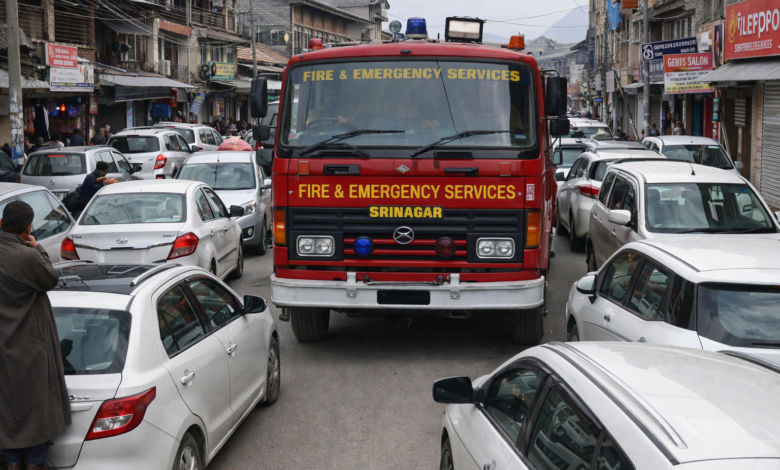
Srinagar’s traffic problem is no longer about congestion alone. It is about obstruction that endangers lives. Across commercial hubs, residential colonies, and inner link roads, wrongly parked vehicles have reduced already narrow streets into bottlenecks. In emergencies, these obstructions become life-threatening.
Vehicle registrations in Jammu and Kashmir have crossed 25 lakh, with Srinagar accounting for a substantial share. Road expansion has not kept pace. In city areas such as Nowhatta, Khanyar, Rainawari and Maharaj Bazar, a single vehicle parked carelessly can block an entire stretch. Fire tenders and ambulances often struggle to pass, losing critical response time.
The law is clear. Section 122 of the Motor Vehicles Act, 1988, prohibits leaving vehicles in a manner that causes obstruction or danger. Section 283 of the Indian Penal Code penalizes obstruction in public ways. Authorities have the power to tow, fine, and impound vehicles. The issue is not the absence of law but the inconsistency in enforcement.
Srinagar requires zero-tolerance emergency corridors leading to hospitals, markets, and densely populated areas. Repeat offenders must face escalating penalties. CCTV-based automated challans should replace selective enforcement. The Srinagar Municipal Corporation must accelerate creation of regulated parking zones and multi-level facilities in commercial districts.
Equally important is civic responsibility. Public roads are not private parking spaces. Every illegally parked vehicle is a potential barrier between a fire tender and a burning home.
Urban discipline is no longer optional. Without firm enforcement and public cooperation, the cost of indifference may one day be counted in lives rather than fines. [KNT]