Hangul Population Rises From 127 in 2008 to 323, Corridor Protection Remains Crucial

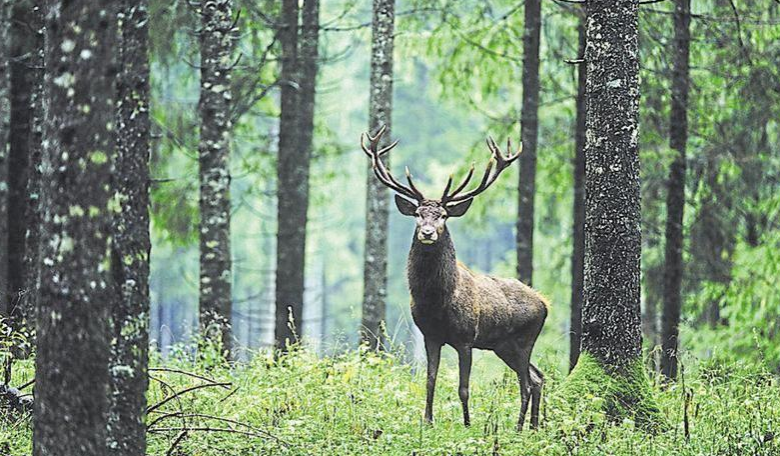
Srinagar, Oct 2: KNT: The population of Jammu and Kashmir’s iconic Hangul has risen to 323 according to the 2025 census, continuing an upward trend from 289 recorded in 2023 and 127 in 2008, even as conservation efforts increasingly focus on protecting the species’ wider habitat and movement corridors.
The latest population figure was presented during the sixth meeting of the J&K Wildlife Board in December 2025, where officials also briefed the board on efforts to operationalise the Hangul Breeding Centre at Tral.
The increase represents a significant change from the population levels recorded in the earlier censuses and comes after years of conservation and protection measures focused particularly on the Dachigam landscape and adjoining habitats.
However, conservation organisations working with the Wildlife Department have highlighted that the long-term protection of Hangul depends not only on population numbers but also on maintaining connectivity between fragmented habitats.
The Wildlife Trust of India’s Hangul Recovery Project has identified potential Hangul presence in parts of Kupwara, Bandipora, Ganderbal, Pulwama and Anantnag and mapped corridors used by the species to move in and out of Dachigam National Park.
According to the project, some of these corridors are fragmented and Hangul also uses areas outside protected areas during winter. Such movements bring the species into landscapes involving multiple landowners and human activity, making coordination with local communities and authorities important for securing safe passage.
The conservation initiative is therefore focused on identifying threats, restoring connectivity and involving communities and government agencies in protecting the species across its wider range.
The Wildlife Department has also been working on the operationalisation of the Hangul Breeding Centre at Tral, while community-based monitoring initiatives and wildlife watchers have been developed in parts of the Hangul landscape.
The rise to 323 offers an encouraging population trend, but the conservation challenge extends beyond the census itself, with habitat connectivity, protection of movement corridors and management of human pressures remaining important to the species’ long-term survival. [KNT]
© Kashmir News Trust (KNT). Unauthorized use without attribution is prohibited.