NEWS AGENCY KASHMIR NEWS TRUST #KNT
© News Agency KNT. Republishing or reproduction of this content in full or part without permission or proper attribution is prohibited.
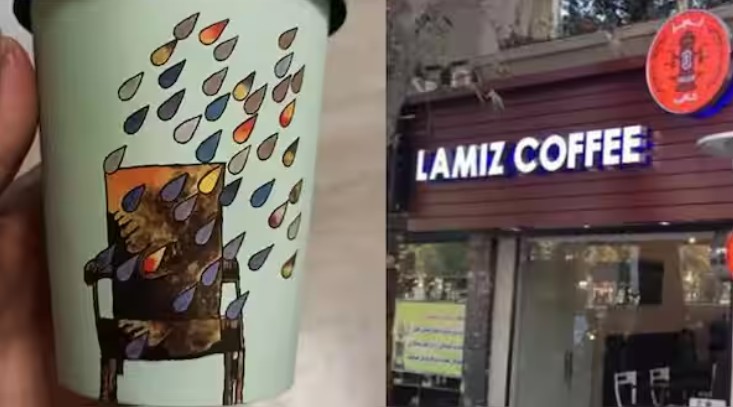
Iranian authorities have ordered the closure of multiple branches of the Lamiz cafe chain in Tehran over designs on takeaway cups deemed to carry political implications, media reports said on Sunday.
The move comes amid heightened sensitivities following recent tensions linked to the US-Israeli war involving Iran, with authorities interpreting the artwork as a reference to the reported killing of Supreme Leader Ayatollah Ali Khamenei.
The decision underscores the strict control exercised over public expression in Iran, particularly during periods of political uncertainty and conflict.
State-linked news agencies Tasnim and Mehr reported that judiciary authorities ordered the sealing of Lamiz outlets in the capital, citing “suspicious designs” against the “martyred imam,” a term used in reference to Khamenei.
While official reports did not elaborate on the design, Persian-language media based outside Iran said the cups featured an image of an empty chair surrounded by colourful droplets. Authorities reportedly viewed this as symbolic commentary on Khamenei’s death and the absence from public view of his son, Mojtaba Khamenei, who has been seen as a potential successor.
The Lamiz cafe chain, which operates more than 20 outlets in Tehran along with branches elsewhere, said in a statement on its social media platforms that the designs were unrelated to current events.
“The cups have no connection whatsoever to recent events,” the company said, adding that the designs were part of preparations for the Nowruz celebrations and had been finalised and printed months in advance.
The cafe also noted that its social media accounts had since been closed, and no further official communication was immediately available.
Officials have not clarified whether branches outside Tehran would face similar action, though reports indicate that only outlets in the capital have been affected so far.
Cafe culture has expanded rapidly in Tehran and other major Iranian cities in recent years, with coffee shops emerging as popular social and cultural spaces, particularly among younger urban populations.
However, such establishments have periodically faced scrutiny from authorities, including over enforcement of dress codes and during times of political unrest, such as the protests reported earlier this year.