There are moments in politics when a statement cuts through the noise and forces reflection. The recent remark by Rafiq Ahmad Naik, MLA from Tral, is one such moment. His warning that the day rice fields disappear from Kashmir, neither India will call it integral, nor Pakistan will ask for it, is not hyperbole. It is a sobering assessment of how land, economy, and politics are deeply intertwined.
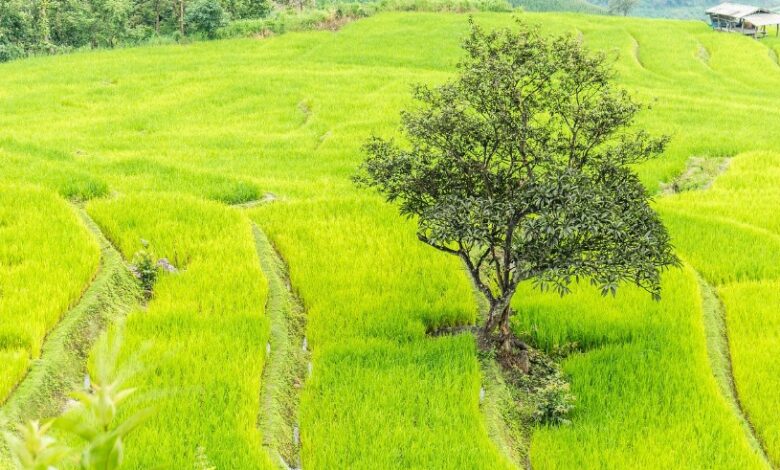
At the heart of Kashmir’s stability lies its soil. The paddy fields that stretch across the Valley are not merely agricultural assets; they are instruments of food security, rural employment and ecological balance. Thousands of families depend directly on rice cultivation. Indirectly, the entire region depends on it for price stability, social equilibrium, and environmental sustainability.
When fertile agricultural land is converted into concrete colonies, commercial complexes, and speculative real estate ventures, the consequences extend far beyond aesthetics. The Valley becomes more dependent on external food supplies. Rural youth drift further from productive engagement. Water systems are disrupted. Flood vulnerability increases. And the region slowly erodes its capacity for economic self-reliance.
A territory that cannot feed itself weakens its strategic position. Agricultural decline is not just an environmental issue; it is a matter of governance and long-term security. Political claims over land mean little if that land loses its productivity and resilience.
The real crisis is not development. It is the model of development. Growth that replaces fertile fields with unplanned expansion may inflate short-term revenues but it mortgages the future. Sustainable development requires balance: protecting agricultural zones, enforcing land-use laws strictly, penalising illegal conversions and ensuring farmers are financially supported so they are not compelled to sell their land.
The disappearance of paddy land would not just change the landscape. It would alter the economic structure of Kashmir. It would deepen unemployment. It would widen inequality. It would make the region more vulnerable to market shocks and climate stress.
The debate over Kashmir has often revolved around borders, sovereignty and identity. Yet, identity is also rooted in land use, livelihood and sustainability. A Valley stripped of its agrarian base loses more than crops; it loses bargaining strength, social cohesion and long-term stability.
This is not nostalgia for a rural past. It is a warning about an unsustainable future. If policymakers are serious about safeguarding Kashmir’s future, protecting its paddy fields must become a non-negotiable priority.
Because when soil is sacrificed, stability follows.