Lebanon Says Over 100 Children Killed in Israeli Strikes Amid Expanding Regional War

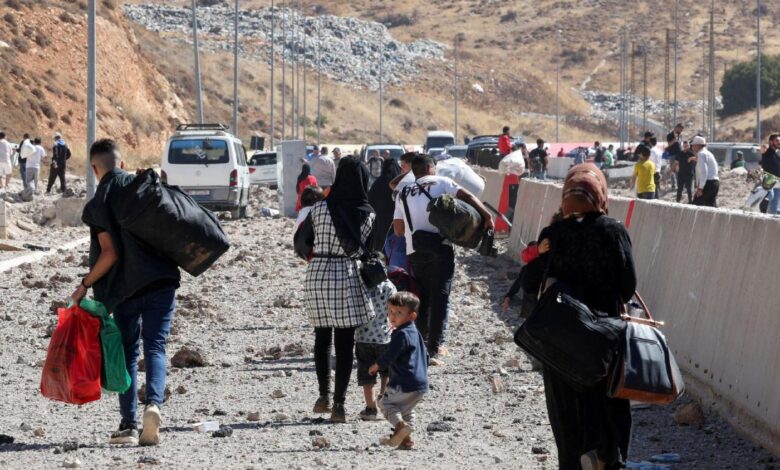
The Iran–Israel war entered its 14th day on Friday with missile attacks, air defence interceptions and cross-border strikes reported across the Middle East, while Lebanon’s health authorities said more than 100 children had been killed in Israeli strikes since the escalation began.
The widening conflict has increasingly drawn in regional actors and threatens key energy routes, with tensions rising across the Gulf and eastern Mediterranean.
In a major development, Iran’s new Supreme Leader Ayatollah Mojtaba Khamenei issued his first public statement since the conflict began on February 28.
In the message released by Iranian authorities, Khamenei warned that United States military bases across the region would be targeted if attacks on Iran continued.
His statement came amid conflicting reports about his condition, with some reports suggesting he was wounded during the initial US–Israeli strikes that reportedly killed his father and former supreme leader Ayatollah Ali Khamenei.
Iran has continued launching missile and drone attacks across the Gulf region, triggering air defence responses in several countries.
Sirens sounded again in Doha as regional defence systems intercepted incoming projectiles, according to officials and witnesses.
Authorities in the United Arab Emirates and Saudi Arabia said their air defence units had also intercepted and destroyed several ballistic missiles and drones launched toward strategic sites.
Meanwhile, Iran has targeted shipping in the Strait of Hormuz, one of the world’s most critical maritime routes for oil supplies.
Security analysts say any disruption to the narrow waterway could have major consequences for global energy markets, as roughly a fifth of the world’s oil shipments pass through the corridor.
Israel, for its part, has intensified strikes on Iranian-linked targets across the region.
Israeli forces carried out attacks against Basij-affiliated installations in Tehran and struck sites associated with Hezbollah in Beirut, officials and local media reported.
Lebanon’s health ministry said the continuing strikes had resulted in significant civilian casualties, including more than 100 children killed since the escalation began.
Lebanon is a Middle Eastern country on the Mediterranean coast, bordered by Syria and Israel. Its capital, Beirut, is known for its historic role in trade, culture and politics in the region.
Rescue teams have been working in several neighbourhoods hit by airstrikes, with hospitals reporting rising casualty figures.
The expanding hostilities have raised fears of a wider regional war involving multiple countries.
Military analysts say the conflict has already moved beyond direct confrontation between Iran and Israel, with attacks and counterattacks occurring across several countries in the region.
International observers have warned that continued escalation could threaten shipping routes, energy infrastructure and civilian populations across the Middle East.
Diplomatic efforts to de-escalate the situation have so far shown little progress, with both sides continuing military operations.
Officials in several Gulf states have placed security forces and air defence systems on high alert as missile and drone activity continues across the region.
The situation remains volatile as the conflict enters its third week.