Missile and drone attacks intensified across parts of the Middle East in the past 12 hours, as the United States and Israel continued strikes on Iranian targets and Tehran signalled preparations for a wider conflict, raising fears of a broader regional war.
Air defence systems were activated in Gulf states including Kuwait overnight, intercepting incoming projectiles, while cross-border exchanges involving Iran-linked groups in Lebanon and elsewhere underscored the multi-front nature of the escalating conflict, officials and regional media reports said.
The latest developments mark a sharp escalation in an already volatile confrontation, with growing concern among global powers that the situation could spiral into a full-scale regional war, disrupting energy supplies and drawing in multiple countries.
US and Israeli forces carried out fresh airstrikes on Iranian-linked military infrastructure, while reports from the region indicated that a senior Iranian missile commander was killed in one of the targeted operations, according to officials and media reports.
Also Read: Iran Claims New Wave of Strikes Under “True Promise 4” Operation
Civilian areas have also been affected. In northern Israel, a strike reportedly hit a kindergarten, raising concerns about the increasing toll on non-combatants as hostilities intensify.
Iran, meanwhile, has begun strengthening its defensive posture and mobilizing forces, signaling readiness for a potential expansion of the conflict beyond aerial exchanges. Analysts say the shift points to the possibility of a ground dimension if hostilities continue to escalate.
“The situation is extremely volatile and risks expanding beyond current theatres,” a senior regional security official said, warning that continued strikes and counterstrikes could trigger a wider confrontation.
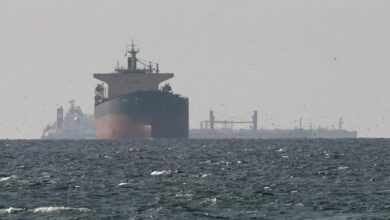
Tensions have also intensified around the Strait of Hormuz, a critical global oil transit route. Iran has tightened its posture in the area, raising concerns about disruptions to shipping and energy supplies. International discussions are under way on securing maritime routes amid the rising threat.
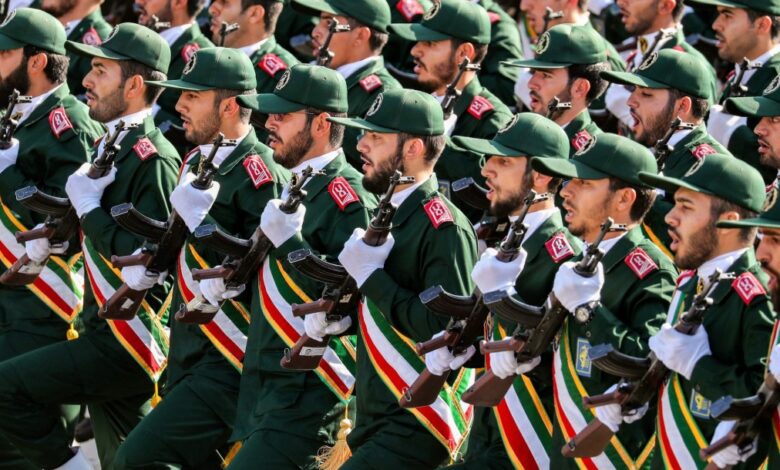
IRGC (Islamic Revolutionary Guard Corps)
The Islamic Revolutionary Guard Corps (IRGC) is an elite military and security force of Iran, established in 1979 following the Islamic Revolution to protect the country’s political system and leadership.
Unlike Iran’s regular army, the IRGC operates as a parallel force with significant influence over military, political and economic spheres. It reports directly to Iran’s Supreme Leader and plays a central role in shaping the country’s regional strategy.
The IRGC oversees several key units, including its aerospace division responsible for missile and drone programmes, and the Quds Force, which manages Iran’s operations and alliances abroad. Through these arms, Iran supports allied groups across the Middle East, including Hezbollah in Lebanon and other regional factions.
The force has been heavily involved in conflicts in Syria, Iraq and Yemen, often acting through proxy networks. It is also accused by Western countries of directing attacks and supplying weapons to allied groups.
Several countries, including the United States, have designated the IRGC as a terrorist organisation, citing its role in regional militancy and security operations.
In the current Middle East escalation, the IRGC is believed to be central to Iran’s military response, particularly in coordinating missile strikes and managing regional alliances.
Oil markets reacted sharply, with Brent crude prices surging past $110 per barrel on Friday, reflecting fears of supply disruption linked to the conflict. Analysts said the spike could have immediate global economic consequences, including higher fuel costs.
World leaders have stepped up diplomatic efforts to contain the crisis. Russia and Saudi Arabia held urgent consultations, while the United Nations warned of the risk of a broader regional disaster if hostilities are not de-escalated.
Residents in affected areas described a tense and uncertain situation. “We hear explosions at night and don’t know what will happen next,” said a resident in northern Israel, reflecting growing anxiety among civilians caught in the conflict.
The current escalation follows months of rising tensions between Iran, Israel and allied forces, with the conflict increasingly shifting from proxy engagements to more direct confrontation across multiple fronts, including Lebanon and key maritime routes.
With missile exchanges intensifying, civilian casualties rising and global economic concerns mounting, the coming hours are expected to be critical in determining whether diplomatic efforts can prevent a wider regional war.