Silence on Reservation Rationalization Raises Questions in J&K

The issue of reservation rationalization in Jammu and Kashmir has quietly entered a phase of uncertainty — not due to lack of process, but due to lack of decision.
A Cabinet Sub-Committee was constituted. It examined the policy. It prepared its report. That report has already been submitted. On paper, the system has done its job.
Yet, the matter now rests in a familiar administrative limbo.
The report is under consideration of the competent authority — the Lieutenant Governor’s office — but there is no timeline, no clarity, and crucially, no visible movement. In governance, delays are not uncommon. But silence, especially on a matter as sensitive and consequential as reservation, invites deeper scrutiny.
What makes this situation more significant is the growing unease among some lawmakers. Opposition legislators have begun flagging the delay. This is not a routine administrative backlog; it is an issue that directly affects representation, employment, and access to opportunities for thousands.
Reservation policy is not merely a legal framework — it is a social contract. Any proposal to rationalize it carries implications for communities, identities, and perceptions of fairness. That is precisely why delay without communication becomes problematic.
Equally notable is the absence of visible political push. The elected government, which is expected to articulate public concerns and follow through on policy matters, has not publicly pressed for movement on the report. In a system where governance is shared between elected representatives and the Lieutenant Governor, coordination becomes essential. When that coordination is not visible, questions naturally arise.
Is the delay procedural? Is it political? Or is it simply administrative inertia?
At present, there are no answers — only a continuation of the status quo.
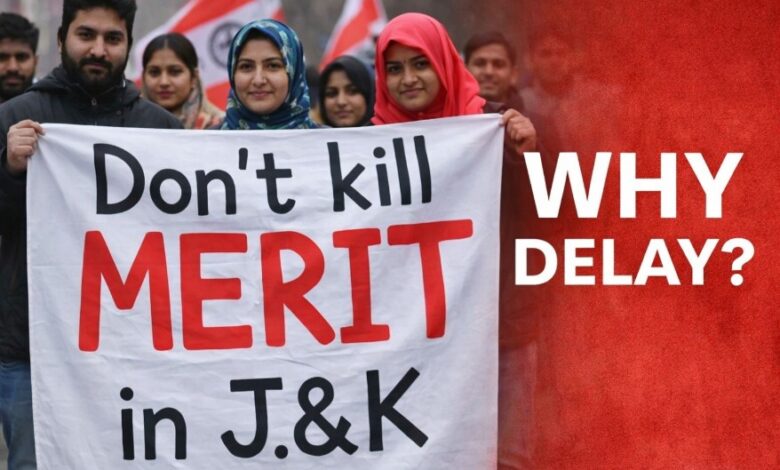
Meanwhile, the existing reservation policy remains in force, unchanged. For some, this means stability. For others, it means continued dissatisfaction, especially among open merit students that were expecting adjustments or reforms.
The lack of interim measures further compounds the uncertainty. Stakeholders are left waiting, without direction or assurance.
This is where governance must step in with clarity. Even if a decision takes time, communication should not. A simple timeline, a status update, or even an acknowledgment of concerns can bridge the gap between policy and public trust.
In democratic systems, delay is sometimes inevitable. But unexplained delay is avoidable.
The reservation rationalization report is no longer just an administrative file. It has become a test case — of coordination between institutions, of responsiveness to lawmakers, and of the government’s willingness to engage transparently on sensitive issues.
Until a decision is taken, or at least a direction is communicated, the question will persist:
If the report is ready, what is holding it back?