Tahajjud in Islam
It is about love, discipline, and seeking nearness to Allah in the quietest hours of the night.

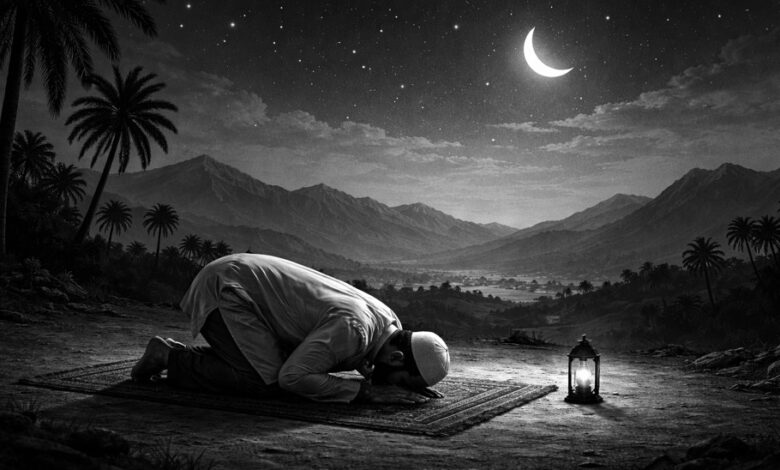
Tahajjud in Islam: Meaning, Virtue, Method, and Its Place in World Spiritual Traditions
Tahajjud is one of the most spiritually powerful voluntary acts of worship in Islam. It is a night prayer performed after sleeping and before the Fajr prayer. Though not obligatory for the Muslim community, it holds a distinguished status in the Qur’an and the Sunnah and has been the practice of the Prophets, the righteous, and seekers of closeness to Allah.
This article explains Tahajjud in detail with Qur’anic references, authentic Hadith, jurisprudential discussions, spiritual wisdom, and a brief comparison with similar practices in other religions.
What is Tahajjud?
The word Tahajjud comes from the Arabic root “hajada,” meaning to stay awake at night. In Islamic terminology, it refers to voluntary prayer offered after waking up from sleep during the night.
Scholars distinguish between two terms:
Qiyam al-Layl: Any voluntary prayer performed after Isha until Fajr.
Tahajjud: Night prayer specifically performed after sleeping for some portion of the night.
Thus, every Tahajjud is Qiyam al-Layl, but not every Qiyam al-Layl qualifies as Tahajjud.
Minimum: Two rak‘ahs
Maximum: No fixed limit
Most common practice of the Prophet ﷺ: Eight rak‘ahs plus three rak‘ahs of Witr
Qur’anic Foundation of Tahajjud
1. Surah Al-Isra (17:79)
“And during a part of the night, pray Tahajjud as an additional prayer for you; it may be that your Lord will raise you to a praised station.”
This verse was addressed directly to Prophet Muhammad ﷺ. Scholars interpret “a praised station” (Maqam Mahmood) as the highest spiritual rank, including the intercession on the Day of Judgment.
2. Surah Al-Muzzammil (73:1–6)
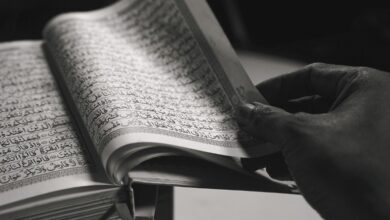
“O you who wraps himself, stand at night in prayer except a little…”
These verses were among the earliest revelations. Before public preaching, the Prophet ﷺ was spiritually trained through night worship. This shows Tahajjud builds inner strength before outward responsibility.
3. Surah As-Sajdah (32:16–17)
“They arise from their beds, calling upon their Lord in fear and hope…”
This verse praises believers who leave the comfort of sleep for worship, promising rewards beyond imagination.
Authentic Hadith on Tahajjud
Best Voluntary Prayer
The Prophet ﷺ said:
“The best prayer after the obligatory prayers is the night prayer.”
(Sahih Muslim)
The Last Third of the Night
The Prophet ﷺ said:
“Our Lord descends every night to the lowest heaven when the last third of the night remains and says: Who is calling upon Me so that I may answer him? Who is asking of Me so that I may give him?”
(Sahih Bukhari, Sahih Muslim)
This indicates a time of special mercy, acceptance of dua, and forgiveness.
Habit of the Prophet ﷺ
Aishah (RA) reported that the Prophet ﷺ would stand in prayer at night until his feet became swollen. When asked why he exerted himself though his sins were forgiven, he replied:
“Should I not be a grateful servant?”
(Sahih Bukhari)
This shows Tahajjud is an expression of gratitude, not only a means of asking.
Why Tahajjud Matters Spiritually
-
It strengthens sincerity because it is hidden worship.
-
It builds discipline and self-control.
-
It softens the heart and removes spiritual hardness.
-
It is a powerful means of seeking forgiveness.
-
It increases concentration in recitation and dua.
-
It nurtures humility and reliance upon Allah.
Many scholars state that those who regularly pray Tahajjud experience deeper tranquility and clarity in life decisions.
How to Perform Tahajjud (Step-by-Step)
-
Pray Isha prayer.
-
Sleep for some portion of the night.
-
Wake during the last third of the night.
-
Perform wudu.
-
Pray two rak‘ahs at a time.
-
Recite Qur’an calmly and thoughtfully.
-
Make sincere dua after prayer.
-
Conclude with Witr if not already prayed.
There is no prescribed surah. One may recite any portion of the Qur’an. Longer recitation is recommended but not mandatory.
Best Time for Tahajjud
The night is divided into three parts. The last third is most virtuous.
Example:
If sunset is 6 PM and Fajr is 5 AM, the night is 11 hours.
Divide by three. Each third is approximately 3 hours 40 minutes.
The final third begins around 1:20 AM.
This period is considered spiritually elevated and most suitable for accepted supplication.
Legal Status in Islamic Jurisprudence
For the Muslim community:
Tahajjud is Sunnah Mu’akkadah according to many scholars, meaning highly recommended.
For Prophet Muhammad ﷺ:
It was obligatory upon him.
Missing Tahajjud is not sinful. However, abandoning it after developing a habit is discouraged.
Can Tahajjud Change Destiny?
Islam teaches that dua can affect one’s decree within the framework of divine wisdom. Scholars explain that sincere supplication during Tahajjud is among the strongest means through which Allah may alter hardships, grant relief, and open doors.
However, ultimate knowledge and control belong to Allah alone.
Psychological and Personal Benefits
Modern research on quiet pre-dawn reflection suggests:
• Improved emotional regulation
• Reduced stress
• Enhanced focus
• Greater resilience
Tahajjud combines structured worship with deep reflection, making it spiritually and psychologically transformative.
Similar Night Practices in Other Religions
While Islam gives a structured format to Tahajjud, night worship is not unique to Islam.
Christianity
Monastic communities observe night vigils such as Matins or Nocturns. Some traditions encourage midnight prayer and reflection.
Judaism
Tikkun Chatzot is a midnight prayer remembering the destruction of Jerusalem. Morning prayers before sunrise are also emphasized.
Hinduism
Brahma Muhurta, approximately 90 minutes before sunrise, is considered the most auspicious time for meditation and spiritual discipline.
Buddhism
Many monks practice early morning or nighttime meditation for heightened awareness.
Islam, however, uniquely integrates physical prayer, Qur’anic recitation, supplication, and a specific prophetic model into this night devotion.
Who Should Pray Tahajjud?
Anyone seeking:
• Forgiveness
• Guidance
• Relief from hardship
• Stronger faith
• Spiritual closeness
• Major life clarity
Even praying two rak‘ahs consistently can transform one’s spiritual life.
A Final Reflection
Tahajjud is not merely a ritual. It is a private audience with the Creator when the world sleeps. It is a sign of longing, sincerity, and gratitude. It trains the soul before the demands of the day begin.
The righteous of earlier generations used to say:
“The honor of a believer lies in the night prayer.”
Tahajjud is therefore not about obligation. It is about love, discipline, and seeking nearness to Allah in the quietest hours of the night.