Time to Audit the Pandemic Years: Transparency Cannot Be Optional
Time is critical. Financial trails fade. Records get archived. Memories weaken. Accountability delayed often becomes accountability denied.

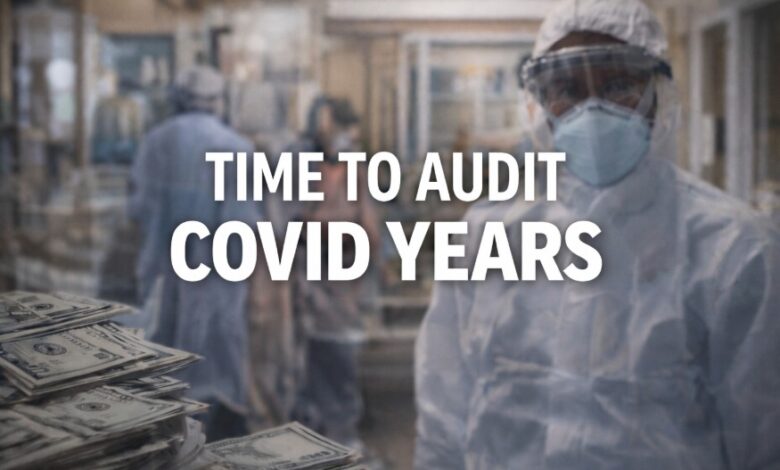
The COVID-19 pandemic was not only a public health emergency but also an unprecedented financial exercise involving massive public expenditure. Emergency procurement, quarantine arrangements, relief packages and emergency infrastructure were executed at extraordinary speed. That speed, while necessary in crisis, also created space for irregularities.
Recent cases registered by investigative agencies over alleged fraud in COVID-related procurement once again raise uncomfortable questions. If ₹27 lakh could allegedly be siphoned off through impersonation and forged identities, what about larger transactions that went unquestioned during the peak of panic?
The pandemic years witnessed extraordinary measures. Hotels were converted into quarantine facilities. Temporary containment barriers appeared overnight marking so-called red and yellow zones. Emergency supplies were procured in bulk. Financial assistance schemes were announced for victims and frontline workers. In such a climate of fear and urgency, oversight mechanisms often took a back seat.
The issue is not whether emergency measures were required. They were. The issue is whether all expenditures and decisions during that period were transparent, audited and accountable.
Anti-Corruption Bureau and other anti-graft agencies should not wait only for formal complaints. Where red flags are visible in public domain or preliminary findings indicate irregularities, suo motu cognizance is both legally permissible and morally necessary. The extraordinary nature of the pandemic does not place financial decisions beyond scrutiny.
Public money spent during crisis deserves post-crisis audit. If there were irregularities in procurement, misuse of quarantine facilities, inflated billing, ghost beneficiaries or diversion of funds, those must be examined without hesitation.
Time is critical. Financial trails fade. Records get archived. Memories weaken. Accountability delayed often becomes accountability denied.
A structured audit of pandemic-era spending would not undermine public health efforts. It would strengthen institutional credibility. Transparency is not an attack on governance. It is the foundation of it.
If wrongdoing occurred, it must be brought to light before it is buried permanently. If systems worked honestly, an audit will only reinforce trust.
The pandemic tested public health systems. It must now test financial accountability systems as well.