
Road accidents involving two-wheelers are rising with disturbing frequency, turning roads into spaces of growing vulnerability rather than safe mobility. Every few days, reports emerge of young riders sustaining critical injuries or losing their lives, often in crashes involving motorcycles and scooters. Yet, despite this alarming pattern, traffic management continues to be treated narrowly, confined largely to city centers, marketplaces and highways.
Traffic regulation is not merely about managing congestion where vehicles are visible and movement is dense. True traffic management means creating a culture of discipline across all roads, including outskirts, rural stretches and interior localities where regulation is often absent.
A troubling reality today is the growing number of underage and preteen boys and girls driving two-wheelers without licenses, helmets or basic road awareness. In many areas, minors can be seen operating motorcycles and scooters freely, often carrying passengers and riding recklessly without fear of accountability. Such normalization of unsafe driving sends a dangerous signal that traffic laws are optional rather than mandatory.
Counselling and routine advisories, though important, cannot alone serve as effective deterrents. Regulation without enforcement weakens the credibility of law. There is an urgent need for stronger and more visible intervention.
Read: Lane Indiscipline Is Fueling Traffic Chaos in Jammu and Kashmir
Parents must also be held accountable. A child does not gain access to a motorcycle independently. When minors are found driving without licenses or helmets, responsibility must extend beyond the rider to those facilitating or permitting such conduct. Heavy penalties, strict legal action and parental accountability can create a stronger deterrent than symbolic warnings.
At the same time, enforcement must be accompanied by sustained awareness. Schools, colleges, community institutions and public campaigns should be mobilized to repeatedly communicate the risks of reckless driving, speeding and helmet-less riding. Warning campaigns backed by real-life examples and community participation can help reshape attitudes toward road safety.
Another issue demanding attention is manpower. Managing traffic in a region with expanding vehicle density requires more than sporadic enforcement drives. Jammu and Kashmir Police remains one of the largest government departments after Education, yet the Traffic Police wing often faces pressure due to limited personnel and operational reach.
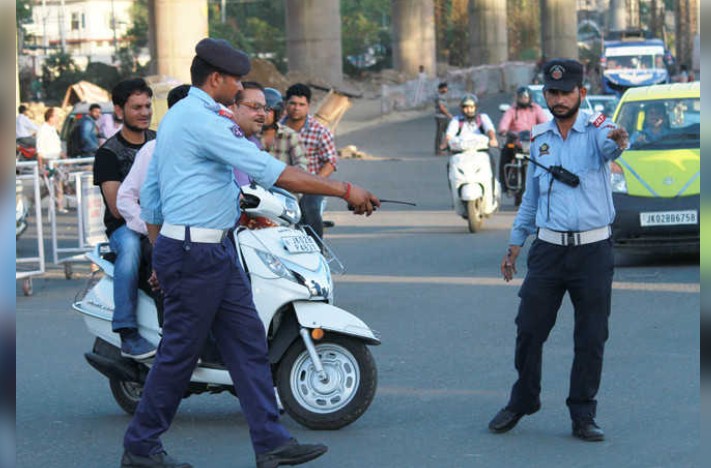
If authorities genuinely seek to reduce accidents, the Traffic Police department must be strengthened with substantial manpower, wider deployment and better field presence. Personnel should not remain concentrated only at city crossings or highways but must also be deployed in peripheral and interior areas where violations routinely go unchecked.
Road safety is not achieved through challans alone, nor through temporary campaigns. It requires sustained enforcement, parental responsibility, public awareness and institutional strengthening. Unless traffic management expands beyond visible urban spaces and addresses the culture of unchecked driving, particularly among minors, accidents involving two-wheelers may continue to rise with tragic consequences.
© Kashmir News Trust (KNT). Unauthorized use without attribution is prohibited.