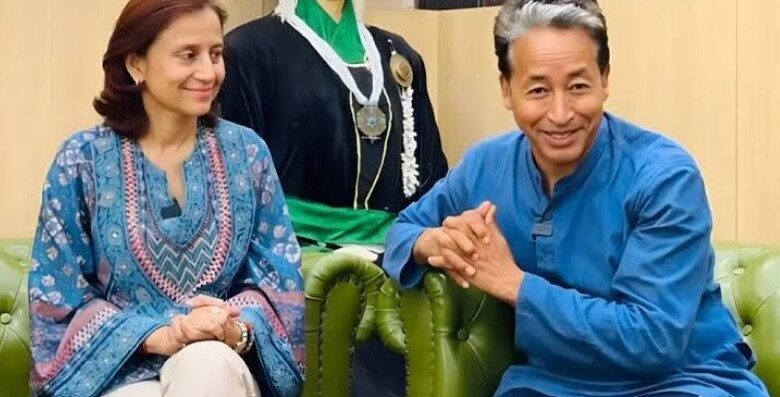
New Delhi, March 25, KNT: Gitanjali Angmo has publicly questioned the absence of judicial scrutiny in the detention case of activist Sonam Wangchuk, after authorities revoked his detention under the National Security Act (NSA).
Her statement comes at a time when the executive decision to withdraw the detention order has effectively ended immediate legal proceedings, but left broader constitutional questions unresolved, particularly regarding the role of the judiciary.
Angmo said the case raised serious constitutional and legal issues that required judicial examination rather than being closed through executive action alone. She emphasized that the matter highlighted concerns around procedural safeguards and the potential misuse of preventive detention laws.
Also Read: Omar Abdullah Says Sonam Wangchuk Should Not Have Been Arrested Under NSA
“The detention case raised serious constitutional and legal questions that deserved a judicial answer, not just an executive retreat,” Angmo said in her statement, calling attention to what she described as systemic gaps.
She alleged multiple procedural lapses in the case, including reliance on truncated video evidence, incorrect transcripts, and suppression of material that could have supported the detainee’s defense. She further pointed to what she termed a “non-application of mind” by the detaining authority, claiming the order was effectively a verbatim copy of police recommendations.
Angmo also highlighted a reported delay of 28 days in providing key evidence, exceeding the statutory 10-day requirement under Section 8 of the NSA. She said such delays undermine constitutional protections under Article 22, particularly the detainee’s right to make an effective representation.
Also Read: Sonam Wangchuk shares jail experience, calls it space for isolation and thought
“The executive stepped back, revoked the detention, and in doing so acknowledged its error. That course correction matters. But the judiciary should also have risen to the occasion,” Angmo said, adding that a reasoned judgment could have clarified legal standards and reinforced safeguards.
Angmo stressed that such cases present opportunities for constitutional courts to establish clear precedents. “Moments like these are opportunities for constitutional courts to grow taller — to transform individual injustice into lasting jurisprudence,” she said.
She added that without judicial clarification, systemic ambiguities in the application of preventive detention laws would continue. “If India aspires to be a Vishwaguru, it must not only correct mistakes but also articulate principles,” she said. [KNT]