The assassination attempt on Rajiv Gandhi in Sri Lanka took place on July 30, 1987, in Colombo, and remains one of the most dramatic moments in India–Sri Lanka relations. The attack occurred during a ceremonial guard of honour a day after Gandhi signed the Indo–Sri Lanka Accord.
Below is a detailed account of the background, motive, incident, and consequences.
Background: The Indo–Sri Lanka Accord
In the mid-1980s, Sri Lanka was engulfed in a violent ethnic conflict between the Sinhalese-majority government and Tamil militant groups, most prominently the Liberation Tigers of Tamil Eelam (LTTE).
India, under Rajiv Gandhi, sought to mediate the crisis. After months of diplomatic pressure and negotiations with Sri Lankan President J. R. Jayewardene, the Indo–Sri Lanka Accord was signed on July 29, 1987.
The agreement aimed to:
-
End hostilities between Tamil militants and the Sri Lankan government
-
Grant provincial autonomy to Tamil-majority regions
-
Deploy the Indian Peace Keeping Force (IPKF) to disarm militant groups
-
Preserve Sri Lanka’s territorial integrity
While the accord was welcomed internationally, it angered multiple factions within Sri Lanka, including Sinhalese nationalists and elements within the Sri Lankan armed forces. The LTTE, initially agreeing under pressure, soon turned hostile.
The Assassination Attempt: What Happened
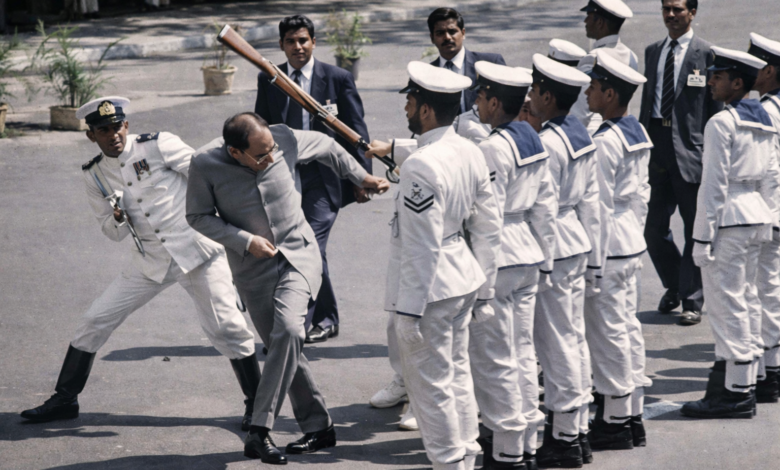
On July 30, 1987, Rajiv Gandhi was reviewing a ceremonial guard of honour by the Sri Lankan Navy in Colombo.
As he walked past the formation, a Sri Lankan naval rating, Vijitha Rohana de Silva, suddenly struck him on the shoulder and neck with the butt of his rifle.
Gandhi instinctively ducked and partially deflected the blow, preventing what could have been a fatal injury. Security personnel quickly subdued the attacker.
The entire incident was captured on camera and broadcast globally.
Motive Behind the Attack
The attacker was not linked to the LTTE. Instead, he was reportedly motivated by anger over the Indo–Sri Lanka Accord.
The key motivations included:
1. Sinhalese Nationalist Anger
Many Sinhalese nationalists believed the accord compromised Sri Lanka’s sovereignty by:
-
Allowing Indian troops on Sri Lankan soil
-
Granting autonomy to Tamil regions
-
Forcing constitutional changes
2. Military Resentment
Some elements within Sri Lanka’s security establishment viewed India’s intervention as humiliating and intrusive.
3. Political Polarization
The accord divided Sri Lankan society sharply. While the government signed it, opposition parties and extremist groups protested violently.
The naval rating later claimed he acted out of patriotic anger.
Immediate Consequences
1. Diplomatic Shock
The attack embarrassed the Sri Lankan government at an international level. It exposed deep internal opposition to the accord.
2. Security Overhaul
India significantly tightened security protocols for its Prime Minister during foreign visits.
3. Symbolic Impact
Although Gandhi survived, the incident demonstrated how volatile the Sri Lankan situation had become.
Long-Term Consequences
1. Collapse of Accord Implementation
The LTTE soon reneged on the agreement and began fighting the Indian Peace Keeping Force.
2. IPKF Conflict
The IPKF became embroiled in a prolonged and bloody conflict with the LTTE between 1987 and 1990. Hundreds of Indian soldiers were killed.
3. Indian Domestic Backlash
The Sri Lanka intervention became controversial within India. Critics argued that India had entered a foreign civil war without a clear exit strategy.
4. Rajiv Gandhi’s Assassination in 1991
Most significantly, the LTTE later assassinated Rajiv Gandhi on May 21, 1991, in Tamil Nadu through a suicide bombing. The assassination was widely viewed as retaliation for India’s military intervention in Sri Lanka.
Historical Significance
The 1987 attack in Colombo was not merely a physical assault; it symbolized:
-
The fragility of regional diplomacy
-
The risks of military intervention in civil conflicts
-
The growing radicalization within Sri Lanka at the time
It also marked the beginning of a chain of events that eventually led to one of the most consequential political assassinations in modern Indian history.