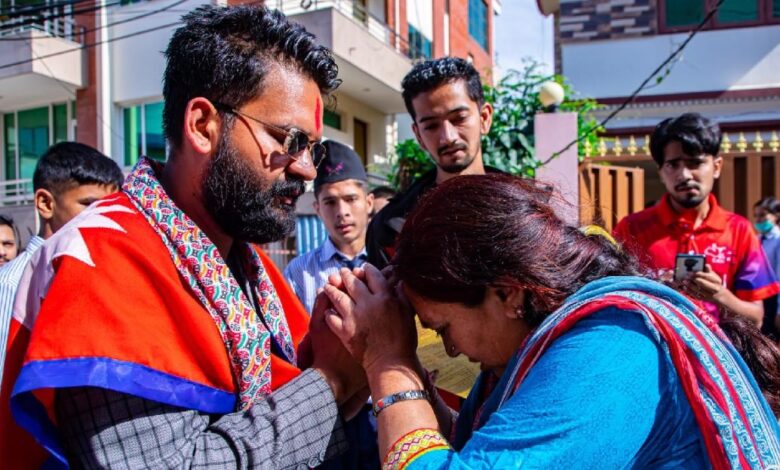
Balendra Shah, popularly known as Balen Shah, has emerged as one of South Asia’s most closely watched young leaders after becoming Nepal’s youngest prime minister at the age of 35.
His rise marks a dramatic political shift in Nepal, driven largely by youth-led protests against corruption and governance failures that toppled the previous government in 2025.
Who is Balen Shah?
Shah is not a traditional politician. Trained as an engineer and widely known as a rapper before entering public life, he first gained prominence as mayor of Kathmandu, where he built an image of a hands-on, reform-oriented administrator.
He later led the Rastriya Swatantra Party to electoral success, paving the way for his appointment as prime minister in March 2026.
How Did He Rise to Power?
His ascent is closely tied to the 2025 Gen Z protests, a nationwide anti-corruption movement led by young Nepalis frustrated with political elites, unemployment, and governance failures.
The protests forced the resignation of Prime Minister K.P. Sharma Oli and created space for a new political leadership backed by youth sentiment.
Shah capitalized on this momentum, presenting himself as a non-traditional, anti-establishment figure committed to systemic reform.
Governance Style: ‘Leader Like a Citizen’
Unlike conventional leaders, Shah has built an image of living simply and staying connected with ordinary citizens. Reports and commentary around his leadership highlight:
- Minimalist governance style
- Direct engagement with public issues
- Focus on administrative efficiency over political rhetoric
This approach has contributed to his growing popularity, particularly among younger populations.
नेपाल की ये जोड़ी फायर है ❤️🔥
नेपाल प्रधान मंत्री बालेन शाह और होम मिनिस्टर pic.twitter.com/0qxZ0M3Tkk
— Dinesh Chauhan (@dinesh_chauhan) April 7, 2026
Reform Agenda and Education Focus
Soon after taking office, Shah’s government introduced a 100-point reform agenda, targeting governance, education, and institutional accountability.
Key education-related measures reported include:
- Removal of political influence from educational institutions
- Plans to restructure student representation without party involvement
- Policy changes aimed at strengthening public education systems
Read: Father, Mother, Wife, Son: Mojtaba Khamenei’s Family Among Victims of Iran War
Why He Is Making Headlines
Shah’s leadership stands out for three key reasons:
- Generational shift — representing a break from traditional political elites
- Anti-corruption positioning — central to his political appeal
- Reform-driven governance — early policy actions targeting systemic issues
His rise is being closely watched as a test case of whether youth-driven political change can translate into sustainable governance.
Challenges Ahead
Despite strong public backing, Shah faces significant challenges:
- Stabilizing Nepal’s economy
- Delivering on ambitious reform promises
- Managing expectations of a politically awakened youth population
Background
Nepal has undergone significant political turbulence in recent years, culminating in mass protests in 2025 that reshaped the country’s leadership structure and brought reform-focused figures like Shah to the forefront.
His tenure now represents a critical phase in Nepal’s democratic transition, with expectations of transparency, accountability, and delivery. [KNT]
ये नेपाल के प्रधानमंत्री हैं,
हमारे यहां तो किसी के इंस्टाग्राम पर एक लाख फोलोवर्स हो जाये उसमें भी अकड़ आ जाती है….नेताओं की बात तो रहने ही दो.. pic.twitter.com/R22uNIoxnb
— RABISH POST (@rabishpost) April 9, 2026