2014 Witnessed Decline in Violence, Flood Tragedy and Major Political Shifts in J&K

Srinagar, Dec 31, KNT: The year 2014 witnessed a decline in militancy-related violence in Jammu and Kashmir compared to previous years, but the Valley continued to witness encounters, shutdowns, civilian killings, protests and political upheaval, while the devastating September floods left hundreds dead and changed the course of life across the region.
According to annual data compiled by KNT, at least 220 people including 106 militants, 39 Army soldiers, 52 civilians, 17 policemen, four BSF personnel and two CRPF men were killed during the year. December turned out to be among the bloodiest months, witnessing the killing of 33 persons including militants, soldiers, civilians and policemen.
January opened with a series of encounters, shutdowns and protests. On January 6, complete shutdown was observed in Sopore to mark the anniversary of the 1993 massacre in which over 50 civilians were allegedly killed by BSF personnel. A day later, an Assistant Sub-Inspector of SOG was killed in a militant attack in Sopore. Multiple encounters between militants and government forces were reported from Pulwama, Sopore and Kulgam during the month.
On January 17, police recovered narcotics worth more than Rs 114 crore concealed in a truck arriving through the cross-LoC trade route in Uri sector. The same day witnessed a split in Hurriyat Conference after Shabir Shah, Nayeem Khan and others formed a separate faction.
February remained tense with shutdowns, clashes and gunfights dominating Kashmir. On February 9 and 10, shutdowns and restrictions were imposed across the Valley on the anniversary of Muhammad Afzal Guru’s execution. The same month witnessed protests in Pulwama and Shopian after the killing of local militants, while Lolab killings in Kupwara triggered Valley-wide shutdowns and curfews.
On February 27, an Army soldier opened fire on colleagues in Safapora Ganderbal, killing five fellow soldiers before shooting himself dead. The incident shocked security circles and drew widespread attention.
March witnessed continued violence and public unrest. Two policemen were killed in a militant attack outside District Court Pulwama on March 3. On March 14, youth Farhat Ahmad Dar was killed in police firing in Naidkhai area of Bandipora, triggering prolonged protests, shutdowns and clashes across north Kashmir.
In April, election-related violence intensified. On April 24, South Kashmir observed widespread boycott during parliamentary polls amid protests and clashes. A polling official was killed in an attack in Shopian. A week later, a youth Bashir Ahmad Bhat was killed after CRPF firing in Nawakadal Srinagar, sparking shutdowns and curfew in parts of the city.
The parliamentary elections drastically altered the political landscape of Jammu and Kashmir. On May 16, Peoples Democratic Party swept all three Lok Sabha seats in Kashmir while BJP emerged dominant in Jammu. Senior leaders including Farooq Abdullah and Ghulam Nabi Azad lost elections. Narendra Modi later took oath as Prime Minister on May 26 after BJP secured a decisive majority at the national level.
The summer months witnessed continued encounters, shutdowns and anti-Israel protests in Kashmir. In July, massive protests erupted across the Valley against Israeli attacks in Gaza. On July 19, a minor boy Suhail Ahmad Lone was killed in CRPF firing in Khudwani Kulgam during anti-Israel protests.
The biggest tragedy of the year struck in September when devastating floods submerged large parts of Jammu and Kashmir, particularly Srinagar city. Beginning September 4, floodwaters caused widespread destruction across the Valley. By September 7, major commercial hubs including Lal Chowk were completely submerged while official figures recorded at least 282 deaths due to floods. Thousands of houses, bridges and roads were damaged while normal life remained paralyzed for weeks.
The floods also exposed administrative collapse and triggered massive rescue operations involving local volunteers, Army personnel and disaster response teams. Large sections of Srinagar remained under water for days while communication systems and healthcare facilities collapsed.
In October and November, militancy-related incidents again increased in north and south Kashmir. Multiple encounters were reported from Kupwara, Handwara, Pulwama and Tral. On November 3, Army firing on a vehicle in Chattergam Budgam killed two youths from Nowgam Srinagar, triggering outrage and protests.
December witnessed intensified militant attacks ahead of Prime Minister Narendra Modi’s visit to Srinagar. On December 5 alone, multiple attacks across Kashmir left 21 persons dead including Army men, militants, policemen and civilians.
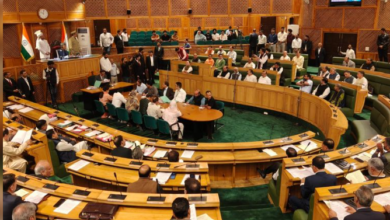
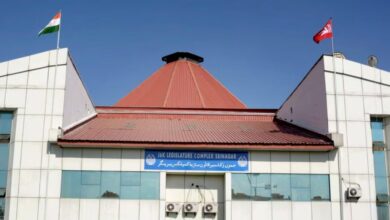
The year ended with Assembly election results producing a fractured mandate. PDP emerged as the single largest party with 28 seats while BJP secured 25 seats, followed by National Conference and Congress. The outcome laid the foundation for a major political realignment in Jammu and Kashmir. [KNT]
© Kashmir News Trust (KNT). Unauthorized use without attribution is prohibited.