Trump Faces Strategic Dilemma as War With Iran Enters Third Week, Global Risks Mount

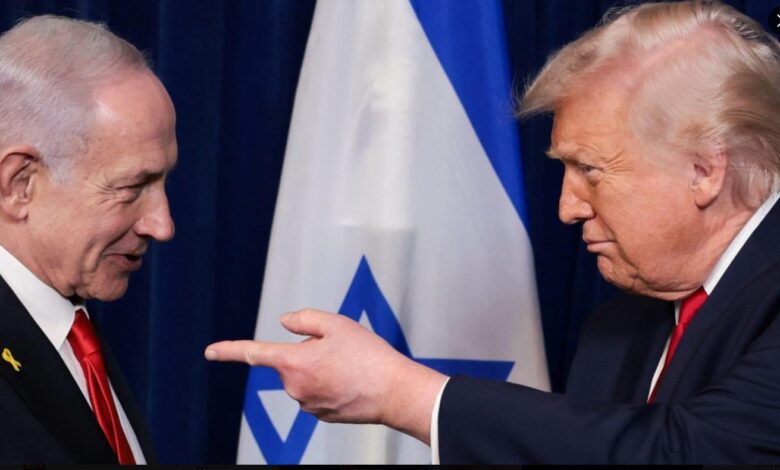
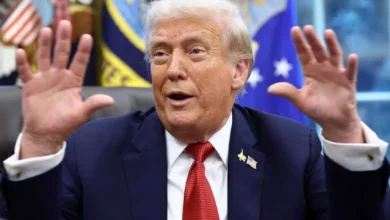
U.S. President Donald Trump is facing mounting strategic pressure as the war with Iran enters its third week, forcing the White House to choose between escalating the conflict further or attempting to declare victory and pull back, according to U.S. officials and reports published by The New York Times.
The conflict, launched two weeks ago in coordination with Israel through a series of military strikes on Iranian targets, has quickly evolved into a broader regional crisis affecting global oil supply routes and international security.
Officials said the administration initially estimated that the war could last between four and six weeks, and that timeline remains the working assumption inside the White House as fighting continues.
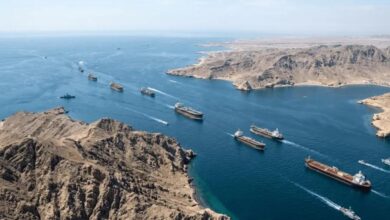
The conflict has highlighted the strategic vulnerability of the Strait of Hormuz, the narrow waterway through which roughly one-fifth of the world’s oil supply passes.
U.S. officials acknowledged that Iran’s ability to disrupt traffic through the strait has proven stronger than anticipated.
Tanker movement through the waterway has nearly halted in recent days, and at least 16 commercial vessels have reportedly been attacked since hostilities began.
The disruption has already had major economic consequences.
Global oil prices have surged to around $100 per barrel, shipping insurance premiums have spiked sharply, and Washington has reportedly eased sanctions on certain Russian oil sales to help stabilize global supply.
In a rare public appeal, Trump called on several major powers — including China, France, Japan, South Korea and Britain — to deploy naval forces to assist in securing the Strait of Hormuz.
Analysts say the request signals that the United States alone may not have the capacity to quickly restore safe commercial passage through the strategic waterway.
Meanwhile, the human toll of the conflict continues to rise.
More than a dozen U.S. soldiers have been killed since the fighting began, while overall fatalities have exceeded 2,100 people, according to officials cited in reports.
Most of the deaths have occurred in Iran, where more than 1,300 civilians are believed to have been killed in the ongoing strikes and military exchanges.
Despite heavy bombardment targeting Iranian military facilities, Tehran retains several capabilities that continue to challenge U.S. and allied forces.
Officials say Iran still possesses the ability to mine shipping lanes in the Gulf, conduct cyberattacks against Western infrastructure, and launch strikes through allied regional militias.
Expectations among some Western analysts that internal unrest might destabilize Iran’s government have also failed to materialize.
Instead, pro-government rallies have reportedly taken place in several Iranian cities following the assassination of the country’s supreme leader earlier in the conflict.
Although the leadership structure has been shaken, the Iranian government remains operational.
According to officials familiar with the situation, the administration of the country is now reportedly being directed by the injured son of the late supreme leader, while the Islamic Revolutionary Guard Corps and Basij militia remain active and continue coordinating military operations.
As the conflict intensifies, the United States has begun reinforcing its military presence in the region.
Officials said Washington is deploying an additional 2,500 Marines to the Middle East, adding to an estimated 50,000 U.S. troops already stationed across bases in the region.
The reinforcement signals that the Pentagon is preparing for the possibility of a prolonged confrontation.
At the same time, senior officials are weighing more aggressive military options.
Among the scenarios reportedly under discussion are the seizure of Kharg Island, Iran’s primary oil export terminal in the Persian Gulf, or a ground operation aimed at securing roughly 970 pounds of near-bomb-grade uranium believed to be stored in the city of Isfahan.
Both options carry significant risks, including the potential for broader regional escalation and direct confrontation with Iranian forces.
Analysts say the coming weeks could prove decisive for the direction of the war, as Washington balances military objectives against economic pressures and rising international concern over the conflict.
© Kashmir News Trust (KNT). Unauthorized use without attribution is prohibited.