
Priyadarshini Mattoo – A Kashmiri Pandit Lady Who Was ‘Raped & Murdered’ in Delhi

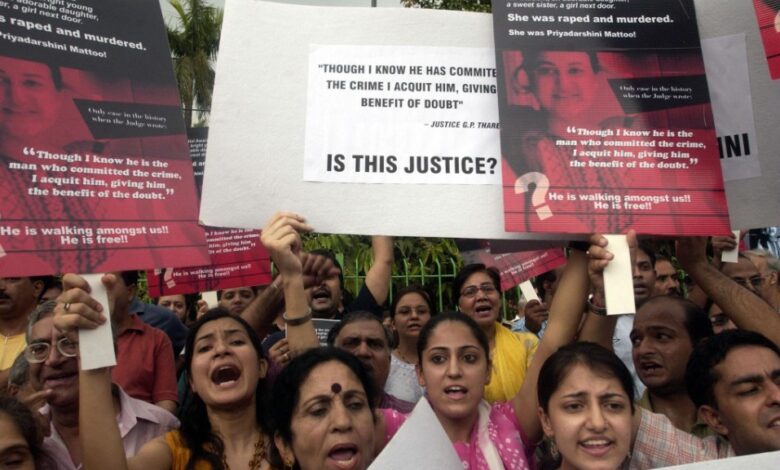
The rape and murder of 25-year-old law student Priyadarshini Mattoo in Delhi in 1996 remains one of India’s most significant criminal cases, exposing deep flaws in investigation, influence in policing, and the challenges of securing justice against a powerful accused.
Priyadarshini, a law student at Delhi University, was found murdered at her residence in Vasant Kunj on January 23, 1996. The case quickly drew national attention not only for the brutality of the crime but also for the background of the accused, Santosh Kumar Singh, who was the son of a senior police officer.
The case unfolded over more than a decade, marked by an initial acquittal despite strong suspicion, followed by a reversal by the Delhi High Court and eventual confirmation of conviction by the Supreme Court.
Priyadarshini Mattoo, originally from Srinagar, Kashmir had moved to Jammu with her family due to rising militancy before later shifting to Delhi for higher studies. She was pursuing an LLB degree when she began facing harassment from Santosh Kumar Singh, a senior at her college.
According to case records, Singh repeatedly stalked and harassed her over several years. Complaints were lodged with police, and at one point, she was even provided with a personal security officer. Despite this, the harassment continued.
The persistence of stalking complaints without effective preventive action later became a central issue in the case, raising questions about police response, especially given the accused’s family background.
On the morning of January 23, 1996, Singh was seen entering the residence where Priyadarshini was staying. A domestic help reportedly witnessed him gaining access to the house under the pretext of resolving ongoing complaints.
What followed was described in court proceedings as a brutal assault. Mattoo was raped, repeatedly struck with a motorcycle helmet, and strangled with an electric wire.
The nature of the injuries and the sequence of events pointed to a violent and sustained attack. The prosecution later established Singh’s presence at the scene following the crime.
Despite the circumstances, the trial court in 1999 acquitted Singh, citing lack of conclusive evidence and granting him the benefit of doubt.
In a judgment that later drew widespread criticism, the Additional Sessions Judge stated that while he believed Singh was responsible, the evidence presented did not meet the threshold required for conviction.
The court sharply criticized the role of the Delhi Police and investigative agencies, noting deliberate inaction and possible influence due to the accused’s father, who held a senior position in the police force at the time.
Key evidentiary failures included improper handling of forensic material, inconsistencies in witness testimonies, and the inability to produce crucial witnesses. The DNA evidence, which could have strengthened the case, was deemed inadmissible due to procedural lapses.
The judgment highlighted systemic issues, including allegations that police officials created false evidence and that investigative lapses obstructed justice.
The acquittal triggered significant public outrage and became a symbol of perceived inequality in the justice system.
The Central Bureau of Investigation (CBI) challenged the verdict in the Delhi High Court in February 2000. However, the case remained pending for several years without substantial progress.
Renewed attention came in the mid-2000s amid broader public scrutiny of high-profile acquittals in India. Priyadarshini Mattoo’s father, Chaman Lal Mattoo, played a visible role in keeping the case in public discourse, appearing frequently in media and advocating for justice.
In 2006, the Delhi High Court took up the case for day-to-day hearings, an unusual move reflecting the urgency and public importance attached to the matter.
Within 42 days, the court delivered its judgment, overturning the acquittal and convicting Santosh Kumar Singh of rape and murder.
The High Court criticized the earlier judgment, stating that it reflected a flawed approach and failed to properly evaluate evidence. It held that the combination of forensic and circumstantial evidence was sufficient to establish guilt.
The court also acknowledged that police reluctance to act on prior complaints may have been influenced by the accused’s background.
Following the conviction, the High Court awarded the death penalty in October 2006, categorizing the case among the “rarest of rare” due to the brutality of the crime.
The court emphasized that Singh had multiple opportunities to reform but continued his behavior, culminating in the murder.
Singh appealed to the Supreme Court, which in 2010 upheld the conviction but commuted the death sentence to life imprisonment.
The Supreme Court’s decision marked the final stage of judicial determination in the case, though it drew mixed reactions, with the victim’s family expressing disappointment over the reduction in sentence.
The Priyadarshini Mattoo case is widely regarded as a turning point in India’s criminal justice discourse.
It exposed critical weaknesses in investigation, particularly in cases involving influential accused, and highlighted the consequences of procedural lapses in evidence handling.
The case also underscored the role of public pressure and media attention in accelerating judicial processes in high-profile matters.
Legal experts have often cited the case alongside others as examples of how initial failures in investigation and prosecution can delay justice, even when eventual conviction is secured.
More than two decades after the crime, the case continues to be referenced in discussions on police accountability, forensic standards, and judicial reform.
It remains a stark reminder of the challenges faced by victims in securing justice, particularly when systemic inefficiencies intersect with social and institutional influence.
The timeline of the case—from the 1996 murder to the 2010 Supreme Court verdict—reflects both the delays inherent in the legal system and the capacity for eventual correction through appellate review.
The case also contributed to broader calls for strengthening laws related to stalking and harassment, recognizing early warning signs in cases of escalating violence. [KNT]
© Kashmir News Trust (KNT). Unauthorized use without attribution is prohibited.