The Rising Culture of Defiance Within National Conference Raises Concerns

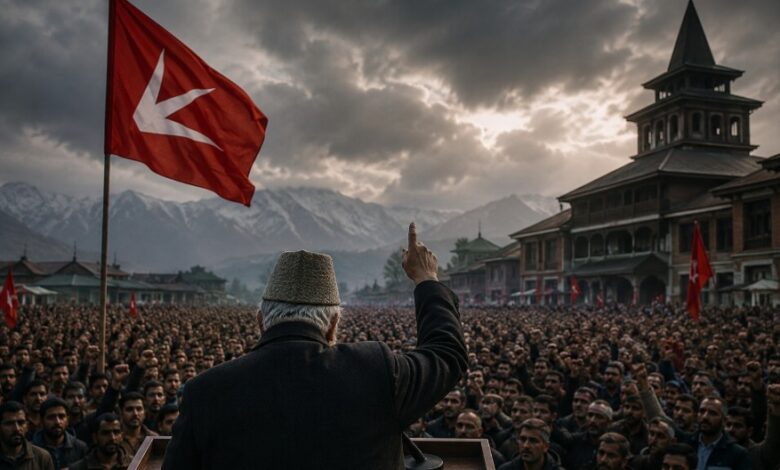
The Jammu and Kashmir National Conference has, for decades, stood apart in Kashmir’s political landscape because of its organizational discipline and ideological structure. Unlike many regional parties that frequently witnessed open factionalism and public infighting, the National Conference traditionally maintained internal order even during periods of political turbulence.
Differences within the party were never absent. From the time of Sheikh Mohammad Abdullah to the eras of Dr. Farooq Abdullah and Omar Abdullah, leaders and workers often disagreed over decisions, appointments, and political strategies. Yet such disagreements largely remained confined within the party structure. Public protests against the leadership or attempts to influence organizational decisions through street pressure were rarely seen.
The recent developments in Sonawari, however, have sparked debate within political circles about whether that culture is beginning to change.
The controversy erupted after the appointment of a district president, which triggered protests by supporters of MLA Hilal Akbar Lone. Demonstrators openly challenged the party’s decision, and the involvement of members of the Lone family, including the sons of senior leader Mohammad Akbar Lone, gave the episode greater political significance.
For many within the party, the concern is not merely about one protest or one organizational dispute. The larger fear is that if political pressure through public mobilization becomes normalized, it could encourage similar rebellions in other districts as well.
Read: If Sheikh Abdullah Hadn’t Been There, Kashmir Wouldn’t Have Survived Tribal Raid: Satish Sharma
Political parties survive on discipline as much as on popularity. Once organizational authority weakens, factionalism often begins to replace ideology. That is precisely why the Sonawari episode is being viewed by many as a warning sign rather than an isolated incident.
Another aspect fueling the debate is the growing perception of dynastic influence within regional politics. Critics argue that several old party workers who remained loyal to the National Conference during difficult political periods now feel increasingly marginalized, while politically influential families appear to dominate the organizational space.
The issue becomes more sensitive because the National Conference has historically projected itself as a cadre-based political movement rather than a party driven by family-centered local factions. The present unrest risks creating the impression that influence within the party can now be asserted not through organizational processes, but through public pressure and personal networks.
Read: Altaf Bukhari Questions Omar Abdullah Govt’s Independence, Flags Internal Contradictions
At the same time, some political observers caution against overreacting to internal dissent. They argue that disagreements are inevitable in democratic politics and that suppressing every form of protest may also alienate workers. According to this view, the challenge before the leadership is to manage dissent without allowing indiscipline to take root.
Still, the optics of the Sonawari protest have undeniably created discomfort within sections of the party. Public demonstrations against internal decisions weaken the perception of unity and provide political opponents an opportunity to question the party’s internal stability.
The National Conference today stands at an important moment. It must decide whether organizational decisions will continue to flow through party structure and discipline, or whether public mobilization will gradually become an accepted tool for influencing leadership choices.
The strength of the National Conference has never rested solely on one leader or one family. Its endurance came from its political legacy, ideological narrative, and generations of workers who carried the party through difficult phases of Kashmir’s political history.
If internal discipline weakens under the weight of personal influence and factional assertion, the party risks damaging the very structure that once distinguished it from others.
Fazil Wani, Sonawari
The views expressed are those of the writer and do not necessarily reflect the editorial position of KNT.
© Kashmir News Trust (KNT). Unauthorized use without attribution is prohibited.