PDP Releases ‘Before and After’ Video, Accuses Omar Abdullah of Betraying His Own Position on Liquor Trade
From Warning Against Liquor Expansion to Defending It: Omar Abdullah Faces Heat Over Contradictory Remarks

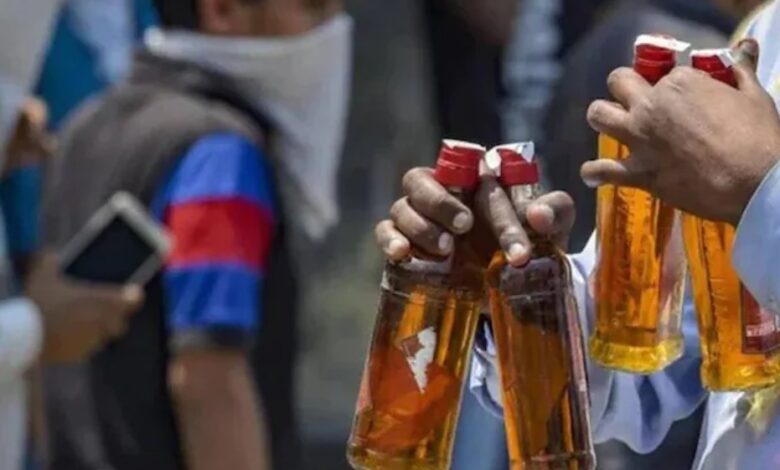
Ganderbal, May 10, KNT: Jammu and Kashmir Chief Minister Omar Abdullah has landed in the middle of a fierce political and public controversy after his aggressive defense of liquor shops in Kashmir triggered outrage and reopened debate over what critics called his “before-and-after politics” on the sensitive issue of alcohol trade in the Valley.
The controversy erupted in Central Kashmir’s Ganderbal district when Omar Abdullah was asked by reporters why liquor shops continue to operate in Kashmir despite repeated public objections and demands for restrictions on alcohol sales in the Muslim-majority region.
Instead of offering a policy explanation, the Chief Minister responded sharply, questioning the people themselves for visiting liquor shops.
“Who forced you? You people willingly visit liquor shops. Why do you go to shops? We are not dragging you there and taking you there. We are not advertising liquor business and we didn’t increase the number of liquor outlets,” Omar Abdullah told reporters in a visibly aggressive tone.
The remarks instantly triggered backlash, not only because of the content of the statement but also due to the atmosphere surrounding the interaction. Those accompanying the Chief Minister were seen laughing sarcastically at reporters immediately after the remarks, a moment that quickly spread across social media platforms and fueled criticism further.
Within hours, opposition parties seized upon the controversy, accusing Omar Abdullah of abandoning his earlier stand against liquor expansion and now defending the very trade he once condemned publicly.
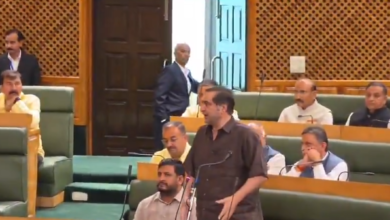
The sharpest attack came from the People’s Democratic Party led by former Chief Minister Mehbooba Mufti. PDP circulated a “before and after” video clip showing Omar Abdullah’s previous speeches alongside his latest remarks from Ganderbal.
In the older clip shared by PDP, Omar Abdullah can reportedly be heard accusing the Central Government of spreading liquor shops “in every nook and cranny” and “playing with the careers of youth.” He had also criticized the justification that liquor trade generates revenue, saying such earnings were flowing from alcohol business and that the trade was thriving despite its social consequences.
The resurfaced video dramatically altered the political narrative around the issue. Opposition leaders accused Omar Abdullah of making one set of statements while in opposition and adopting a completely different tone after returning to power.
“What changed now?” became a recurring question across political circles and social media discussions in Kashmir.
Critics said the controversy was not merely about liquor outlets but about political credibility and consistency. Several opposition voices argued that Omar Abdullah’s latest remarks appeared dismissive toward concerns repeatedly raised by religious organizations, civil society groups, and sections of the public over the years regarding alcohol sales in the Valley.
The liquor business has long remained one of the most politically explosive social issues in Kashmir. Every few years, demands for closure or restriction of liquor outlets intensify, particularly after new shop licenses, visible advertisements, or reports of expanding alcohol trade emerge in the Valley.
Omar Abdullah himself had previously positioned the issue as a larger moral and social concern. That is precisely why his latest remarks have generated unusually sharp reactions even among some people who otherwise support his party politically.
Political observers said the “before-and-after” video released by PDP proved politically damaging because it visually contrasted two entirely different political positions from the same leader. In one phase, Omar Abdullah appeared to warn against liquor proliferation and youth destruction; in the other, he questioned why people voluntarily visit liquor shops and argued that the government was neither forcing anyone nor expanding the number of outlets.
The controversy also highlighted the growing role of archived political speeches in modern Kashmir politics, where old video clips often return to challenge present-day narratives.
Meanwhile, social media platforms across Jammu and Kashmir remained flooded with reactions, criticism, memes, and political commentary. Many users questioned whether governments change their principles after assuming office, while others accused political parties of selectively weaponizing moral issues depending on whether they are in government or opposition.
The issue is now expected to dominate political discourse in the coming days, especially as opposition parties attempt to portray Omar Abdullah’s remarks as evidence of what they call a widening gap between political promises, public posturing, and governance realities in Jammu and Kashmir.
Notably, the Omar Abdullah-led government had earlier indicated that it was considering bringing a bill in the Jammu and Kashmir Assembly seeking restrictions on liquor trade, a move that had generated significant public attention at the time. However, the proposed legislation was never tabled after several legislators reportedly raised concerns over its financial implications. Among them, Hasnain Masoodi had cautioned that a blanket ban on liquor could severely impact government revenue generation, exposing divisions within the ruling establishment over whether public sentiment or economic considerations should take precedence on the sensitive issue. [KNT]
© Kashmir News Trust (KNT). Unauthorized use without attribution is prohibited.