Power Without Clarity? The Growing Question in Jammu and Kashmir

For years, Jammu and Kashmir has lived through shifting political arrangements, competing centers of authority and layered administrative structures. Yet perhaps the most striking irony today is not merely political disagreement, but public uncertainty over a basic democratic question: who is actually calling the shots?
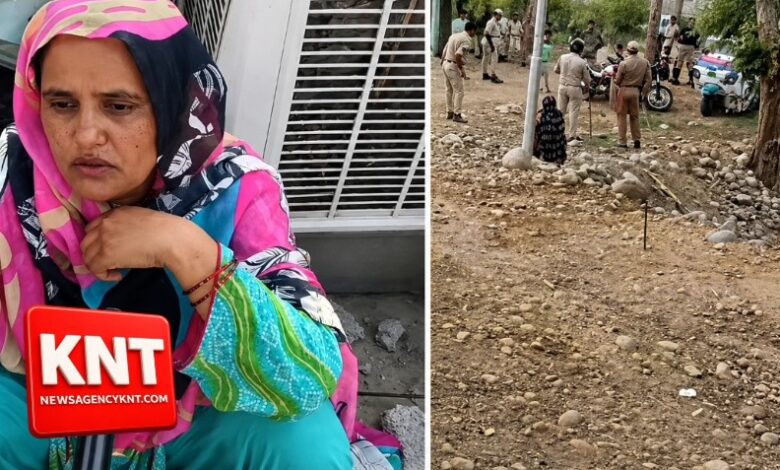
The recent demolition controversy in Sidhra, where tribal and Gujjar-Bakerwal families saw homes razed amid competing explanations and political blame, has once again exposed this confusion.
When demolitions take place and ministers later claim they were not consulted, an uncomfortable question naturally arises. If elected representatives are not aware of major actions affecting citizens, then where does accountability lie?
This is not merely an opposition talking point or a social media slogan. It is a governance question.
The elected government led by Omar Abdullah came to office carrying expectations of political restoration, responsive administration and visible leadership. Many voters believed that elected rule would restore a sense of political ownership after years of bureaucratic and centrally administered governance.
But public perception increasingly appears caught between two realities.
On paper, Jammu and Kashmir has an elected government, cabinet ministers and legislators. On the ground, however, controversies often trigger an immediate search for answers that are difficult to locate. Whether it involves demolitions, administrative crackdowns or sensitive public issues, citizens are frequently left wondering which institution made the decision and who should ultimately answer for it.
That ambiguity weakens democratic confidence.
The silence or limited visibility of leadership during moments of controversy only deepens such perceptions. Politics is not merely about occupying office or issuing statements; it is also about presence during public anxiety.
The debate surrounding Tuesday’s demolitions became politically revealing precisely because even voices within the ruling establishment appeared uncomfortable and defensive. Ministers reportedly distanced themselves from decisions and called for inquiries, creating the impression of a government reacting to events rather than directing them.
This raises another difficult question.
Are ministers and legislators merely enjoying protocol, official residences and ceremonial authority while substantive decisions emerge elsewhere? Or is the problem one of coordination and communication rather than authority itself?
The distinction matters.
No democratic system can function effectively if citizens are uncertain about responsibility. Governance cannot become a maze where accountability disappears between departments, ministries and parallel power structures.
The challenge for the ruling establishment is therefore larger than any single controversy.
Public confidence does not depend solely on roads, schemes or announcements. It also depends upon clarity. Citizens need to know who decides, who approves, who intervenes and who bears responsibility when things go wrong.
In democratic politics, power without visible accountability creates distrust.
Jammu and Kashmir’s political history has already witnessed long phases where decisions were perceived as distant from public participation. That memory remains alive. Which is why the present moment carries unusual significance.
If elected governance is to mean something beyond symbolism, then leadership must be visible, decisive and answerable.
Otherwise, the irony will persist: institutions may exist, ministers may speak and legislatures may function, yet ordinary people will continue asking the simplest and perhaps most troubling question of all — who is really governing Jammu and Kashmir?
© Kashmir News Trust (KNT). Unauthorized use without attribution is prohibited.