
NEWS AGENCY KASHMIR NEWS TRUST #KNT
© Kashmir News Trust (KNT). Unauthorized use without attribution is prohibited.
When the Queen of England used toilet paper, a Dogra Maharaja cleaned himself with special linen. The expenditure incurred on the purchase of this special cloth and the salary of the servants who cleaned the monarch was included in the expenditure of the palace. The monarch afforded this luxury when taxes on prostitutes formed 25% of the total income of the state (prostitution was legalized during that period). The rest came from taxes imposed mainly on the Muslim population of the state. However, notwithstanding the meager income, the rulers spent lavishly on the army, on the royal family and on entertaining guests.
During Partap Singh’s regime, the state would prepare a sort of budget every year. It would include details of income and expenditure to be incurred on various works. However, Partap Singh’s personal expenditure was never included in the budget. There used to be a separate head in the expenditure of the palace. It was titled “Tati Pun” (latrine expenditure).
After answering the call of nature, Partap Singh would stand (in a particular fashion) in the corridor. Three servants would remain present round the clock to wash the monarch. Two of them would stand in the corridor holding two ends of an entire roll of special linen. The Maharaja would lean in a particular fashion in the middle of the corridor with fine linen passing between his legs. The third servant would pour water from a silver container on his buttocks. The servants with linen would then give see-saw movements to the fine cloth. After every washing, the cloth roll would be given to the servants involved in “purifying” the Maharaja.
The Maharaja had also a Minister-in-waiting. He would administer Jamalgota (laxative) to the Maharaja to force him go to the latrine several times in a day. Every time, the Maharaja went to the latrine, a new roll of linen would be used to wash him.
Linen paper is a premium, high-quality paper distinguished by its tactile, woven crosshatch texture, closely mimicking the look and feel of woven linen fabric. It is widely favored for projects that require a sophisticated finish, such as wedding invitations, luxury business cards, executive stationery, and restaurant menus
(Inputs from Shuhabnama by Qudrutullah Shuhaab)
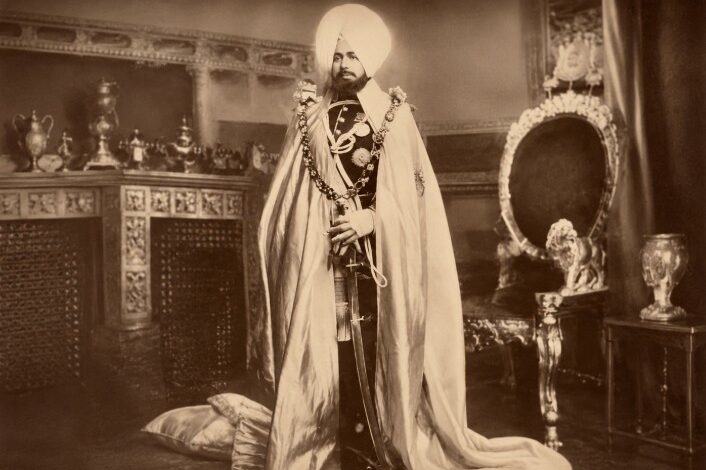
Maharaja Pratap Singh (1848–1925) was the Maharaja of Jammu and Kashmir and the head of the Dogra dynasty, reigning for nearly 40 years from 1885 until his death. His transformative and longest-serving reign laid the foundation for a modern, progressive state.
He modernized the state’s transport and communication systems, initiating the construction of major infrastructure like the Jhelum Cart Road, the Kohala Bridge, and the Banihal Cart Road. He also established vital linkages like the Jammu-Sialkot railway line.
He championed public education by establishing two of the region’s earliest premier colleges: Prince of Wales College (now GGM Science College) in Jammu and S.P. College in Srinagar. He also abolished regressive taxes (such as the Muslim marriage tax) and laid the groundwork for modern local self-government by setting up municipalities in major towns and cities.
Pratap Singh’s reign navigated periods of severe British interference, which temporarily restricted his powers. However, he survived these politically motivated challenges and successfully had his absolute powers fully restored, eventually freeing the state from undue British influence by 1921.
Because he died without a direct male heir, he was succeeded by his nephew, the prominent Maharaja Hari Singh.
© Kashmir News Trust (KNT). Unauthorized use without attribution is prohibited.