Court Refuses To Quash Amul Milk Case, Says Unsafe Milk Allegations Must Face Trial

Srinagar, May 22, KNT: The High Court of Jammu & Kashmir and Ladakh has refused to quash criminal proceedings against representatives of Banaskantha District Cooperative Milk Producers’ Union Ltd, associated with the Amul brand, holding that concerns involving public health and food safety cannot be compromised by commercial considerations or procedural objections.
The judgment, delivered by Justice Wasim Sadiq Nargal, dismissed a petition challenging criminal proceedings pending before the Chief Judicial Magistrate (CJM), Shopian, and vacated interim stay orders that had remained in operation since April 2022. The court directed the trial court to proceed with the complaint and conclude proceedings preferably within six months.
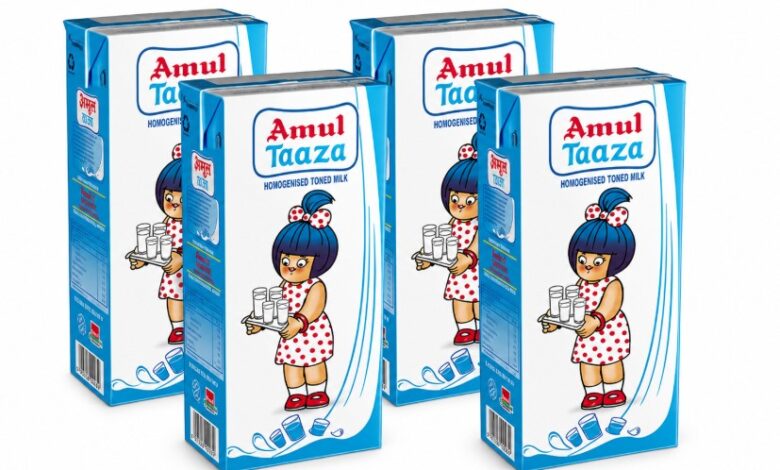
The case relates to a sample of “Amul Taza Homogenized Toned Milk” lifted by a Food Safety Officer in Shopian.
According to court records, the first laboratory analysis conducted by the Food Analyst, Kashmir Division, had declared the milk sample to be of standard quality. However, the Designated Officer later found that important safety parameters, including tests for antibiotic residues, pesticide residues and heavy metals, had not been examined.
After recording reasons in writing, the Designated Officer referred the second portion of the sample to the Referral Food Laboratory at the National Dairy Development Board (NDDB), Anand, Gujarat, which subsequently declared the milk sample “unsafe” under relevant provisions of the Food Safety and Standards Act.
The company’s representatives, including its Managing Director and quality control nominee, approached the High Court seeking quashing of the complaint and the cognizance order passed by the CJM Shopian. They argued that the sample had been referred to the Referral Laboratory without prior hearing and contended that mandatory legal procedures had not been followed.
Rejecting these arguments, the High Court as per the news agency Kashmir News Trust held that Rule 2.4.3 of the Food Safety and Standards Rules, 2011 empowers the Designated Officer to refer samples for further examination after recording reasons if the initial report appears incomplete or erroneous. The court found that such reasons had indeed been recorded in the present case.
Justice Nargal observed that the Referral Laboratory functions as the final statutory scientific authority and that once its report is received, the earlier analyst’s report loses significance. The court noted that the subsequent report could not be treated as contradictory but rather as a conclusive scientific determination under the law.
In strong observations on consumer protection, the court underlined the seriousness of allegations involving milk products.
“This Court cannot lose sight of the fact that public health is of paramount importance and must prevail over private commercial interests,” the judgment stated while noting that milk is consumed extensively by children, infants, elderly persons and patients.
The court further held that once the statutory Referral Laboratory declared the sample unsafe, the matter moved beyond a dispute between parties and became an issue directly affecting public health and safety.
Justice Nargal also rejected the contention that the Managing Director enjoyed blanket immunity under Section 66 of the Food Safety and Standards Act, observing that questions relating to responsibility, knowledge or negligence would require evidence and can only be examined during trial.
Declining to extend interim protection “even for a single day more,” the court noted that proceedings involving serious allegations relating to unsafe food products had remained stalled for years despite public health concerns.
Finding prima facie material disclosing offences punishable under Section 59 of the Food Safety and Standards Act, the High Court dismissed the petition and directed both parties to appear before the CJM Shopian on July 10, 2026.
Advocate Reyaz Ahmad Mir appeared for the petitioners, while Deputy Advocate General Hakim Aman Ali represented the Union Territory administration. [KNT]
What Does Section 59 of the Food Safety and Standards Act Provide?
Section 59 of the Food Safety and Standards Act, 2006 deals with punishment for unsafe food and is among the most serious provisions under India’s food safety law.
The section applies when food is found unsafe for human consumption and its consumption causes injury, illness or death.
Punishment varies depending on the impact of the unsafe food:
• No Injury Caused
If unsafe food is sold or manufactured but no injury occurs, punishment may extend to six months imprisonment and fine up to Rs 1 lakh.
• Non-Grievous Injury
If consumption causes illness or injury not classified as grievous, punishment may extend to one year imprisonment and fine up to Rs 3 lakh.
• Grievous Injury
If unsafe food results in serious or grievous injury, punishment may extend to six years imprisonment and fine up to Rs 5 lakh.
• Death of Consumer
Where unsafe food leads to death, the law provides for imprisonment not less than seven years, extendable to life imprisonment, along with fine not less than Rs 10 lakh.
Why Is It Important?
Section 59 is intended to protect consumers and ensure accountability among food manufacturers, distributors and sellers by treating food safety violations as serious public health offences rather than mere regulatory lapses. Milk, infant food and commonly consumed products often attract heightened scrutiny under this provision due to their wide public consumption.
© Kashmir News Trust (KNT). Unauthorized use without attribution is prohibited.