French Surgeon Who Accepted Islam After Studying Pharaoh’s Mummy

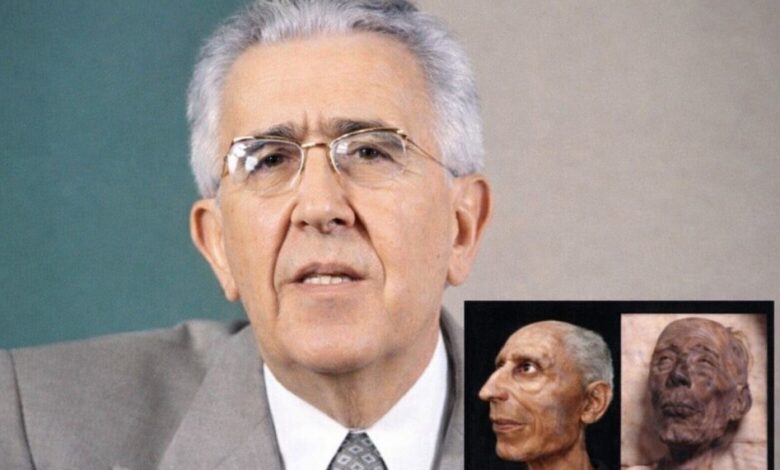
Maurice Bucaille: Life, Work, and Influence
Maurice Bucaille (1920–1998) was a French physician and author known for examining the relationship between modern science and religious texts, particularly the Quran. His work gained global attention for arguing that the Quran contains statements consistent with scientific knowledge.
Early life and education
Maurice Bucaille was born on July 19, 1920, in Pont-l’Évêque, France. He studied medicine and later specialized in gastroenterology, building a strong scientific foundation that influenced his later research.
Medical career
Bucaille practiced as a physician and gained recognition in his field. He served as a personal doctor to members of the Saudi royal family, which brought him closer to the Middle East and its intellectual and religious traditions.
Shift toward religious studies
His interest gradually moved toward comparing religious scriptures with scientific discoveries. He studied the Quran and the Bible alongside developments in embryology, astronomy, and geology.
He concluded that the Quran does not contradict established scientific facts and contains descriptions that align with modern findings.
Major work: The Bible, the Quran and Science
Published in 1976, this book became his most influential work.
In it, Bucaille argued that:
- The Bible contains inconsistencies from a scientific perspective
- The Quran remains consistent with modern scientific knowledge
- Certain Quranic verses correspond with discoveries made centuries later
The book gained widespread readership, especially in the Muslim world.
Concept of “Bucailleism”
His approach later came to be known as “Bucailleism,” referring to interpreting religious texts through modern scientific understanding.
Supporters see it as strengthening faith through science, while critics argue it may involve retrofitting modern ideas into ancient texts.
Research on Egyptian mummies
Bucaille also participated in studies of Egyptian mummies. His examination of preserved bodies contributed to his belief that some Quranic references correspond with physical findings.
Influence and legacy
Maurice Bucaille remains a significant figure in discussions on religion and science. His work influenced religious scholarship, debates, and popular literature, especially within Islamic intellectual circles.
He passed away in 1998, but his ideas continue to be discussed and debated.
Key points
- French physician with a scientific background
- Explored connections between science and scripture
- Authored The Bible, the Quran and Science
- Inspired global discussion on faith and science
- Remains influential yet debated
Real Story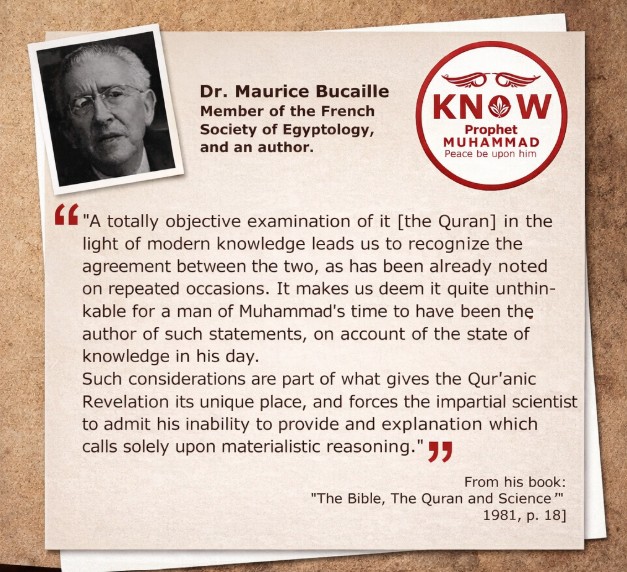
The Turning Point: Study of the Pharaoh’s Mummy
France has long been known for its interest in archaeology and heritage. During the presidency of François Mitterrand in the 1980s, Egypt allowed France to receive the mummy of an ancient Pharaoh for scientific examination.
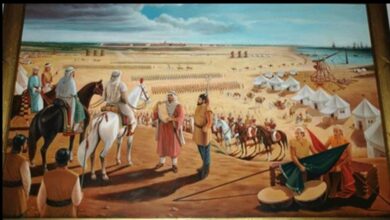
The mummy was transported to France with a ceremonial reception, where senior officials, including the president, were present. It was later placed in a specialized facility where a team of archaeologists, surgeons, and anatomists began detailed research.
Maurice Bucaille was appointed as the lead surgeon and scientist overseeing the study.
Scientific Findings and Key Questions
During the examination, Bucaille and his team conducted restoration and analytical procedures on the mummy. Through his analysis, he observed traces of salt on the body, which led him to conclude that the Pharaoh had drowned and that the body had been recovered from water and preserved quickly.
However, one question puzzled him deeply:
Why had this particular body remained so well preserved compared to others, despite being recovered from the sea?Encounter with Quranic Perspective
While working on his findings, one of his colleagues mentioned that Muslims believe the Pharaoh had drowned. Bucaille initially rejected this idea, arguing that such conclusions require modern scientific methods.
Another colleague then informed him that the Quran explicitly mentions that the Pharaoh drowned and that his body was preserved.
This surprised Bucaille, especially considering that the mummy itself had only been discovered in 1898, while the Quran has been recited for over 1,400 years.
Comparative Study of Religious Texts
Bucaille began examining religious scriptures more closely. He noted that the Christian Gospels (Matthew and Luke) describe the pursuit of Prophet Musa (peace be upon him) but do not mention the preservation of Pharaoh’s body.
He also reviewed the Torah but found no clear reference to the body being preserved after drowning.
This contrast deepened his curiosity and led him into further research.
Journey to Saudi Arabia and Declaration
After completing initial studies, Bucaille traveled to Saudi Arabia, where a medical conference was being held with Muslim scholars and anatomists.
There, he presented his findings about the preserved body of the Pharaoh. In response, a participant recited a verse from the Quran (Yunus 92), which states that the body would be preserved as a sign for future generations.
According to the account, this moment had a profound impact on him, and he publicly declared his belief in the Quran. And finally became a Muslim.
Years of Research and Intellectual Work
Upon returning to France, Bucaille spent nearly ten years conducting a detailed comparison between modern scientific discoveries and statements found in the Quran.
His objective was to verify whether any contradictions existed between the two. He concluded that the Quran did not conflict with established scientific facts.
Major Publication and Global Impact
Bucaille published his findings in a widely known book titled:
The Bible, The Qur’an and Science: The Holy Scriptures Examined in the Light of Modern Knowledge.The book gained international attention and was translated into multiple languages, including Arabic, English, Indonesian, Persian, Turkish, and German. It became widely available across both Eastern and Western countries.
Recognition and Legacy
In the preface of his book, Bucaille expressed his surprise at the alignment between Quranic statements and modern scientific discoveries, noting the precision and depth of such references.
His work received significant recognition, and in 1988, he was awarded a prize in history by the French Academy.
Conclusion
Maurice Bucaille’s journey reflects a transition from medical science to comparative religious study. His work continues to influence discussions on the relationship between science and scripture, particularly within global intellectual and religious circles.
Summary
© Kashmir News Trust (KNT). Unauthorized use without attribution is prohibited.