Israeli Airstrikes, Hezbollah Response Push Fragile Lebanon Ceasefire Toward Breakdown

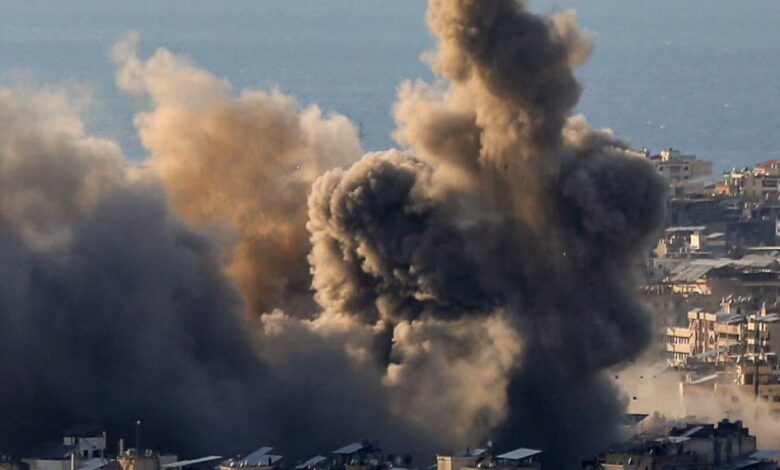
The Middle East remained under heightened tension on Wednesday as Israeli military operations in Lebanon intensified, Hezbollah launched retaliatory attacks, and renewed friction between Iran and the United States complicated regional diplomacy and security calculations.
Israeli forces expanded operations in southern Lebanon following extensive airstrikes targeting multiple locations, marking one of the heaviest periods of bombardment in recent weeks. Israeli Prime Minister Benjamin Netanyahu said the military campaign was being widened to address threats linked to Hezbollah activity near the border.
The escalation has placed fresh pressure on a ceasefire arrangement brokered earlier this year between Israel and Hezbollah.
International reports said Israeli strikes targeted areas across southern and eastern Lebanon while Hezbollah responded with drones, rockets, and artillery fire directed toward Israeli positions. Casualties and displacement were reported as fighting continued across contested areas.
The renewed violence reflects more than a localized border confrontation.
The Lebanon front has become increasingly linked to wider tensions involving Iran, the United States, and continuing instability connected to Gaza and Gulf security, creating overlapping flashpoints across the region.
Alongside developments in Lebanon, tensions involving Iran and the United States added another layer of uncertainty.
Iran accused Washington of violating ceasefire understandings following reported military action linked to maritime security concerns near the Strait of Hormuz, while diplomatic engagement between the sides continued despite growing rhetoric and mutual accusations.
The Strait of Hormuz remains strategically critical because a major share of global energy supplies passes through the waterway.
Concerns over maritime security and potential disruption to shipping routes triggered market anxiety and renewed attention to the economic consequences of wider conflict.
Despite battlefield escalation, diplomatic channels remain active.
Regional and international mediation efforts continue to focus on preserving ceasefire arrangements, preventing disruption to commercial shipping, and avoiding a broader military confrontation involving multiple regional actors. However, developments on the ground have weakened confidence in near-term de-escalation.
The Gaza conflict continues to influence regional politics and security calculations as well, with analysts warning that escalation on one front could rapidly spill into another.
The broader Middle East landscape now reflects overlapping crises involving the Israel-Hezbollah confrontation, Iran-US tensions, and continuing instability connected to Gaza.
Diplomacy remains underway, but the combination of military escalation, competing strategic interests, and fragile ceasefire mechanisms has left the region facing renewed uncertainty and heightened security risks. [KNT]
© Kashmir News Trust (KNT). Unauthorized use without attribution is prohibited.