ITBP Chief’s 50-Year-Old Weapons Remark Sparks Political Storm as China Face-Offs Continue


New Delhi, Oct 23, KNT: A statement by Indo-Tibetan Border Police (ITBP) Director General Shatrujeet Singh Kapoor that some weapons used by the force are around 50 years old has triggered a political confrontation over India’s border preparedness, with the Congress questioning the Modi government’s handling of China even as the force chief acknowledged continuing face-offs with Chinese troops at multiple locations along the Arunachal Pradesh frontier.
Kapoor’s remarks have brought renewed attention to the equipment available to personnel guarding the Line of Actual Control (LAC), where India and China have continued to engage in military and diplomatic efforts to manage their unresolved border tensions. Speaking at an ITBP event in Alwar, Rajasthan, ahead of the force’s 65th Raising Day on October 24, he said countering China through traditional methods of warfare was no longer sufficient and stressed the need to modernise weapons, vehicles and border infrastructure.
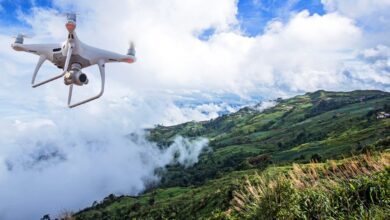
The ITBP chief’s comments on outdated weapons came alongside his confirmation that face-offs with China’s People’s Liberation Army (PLA) were continuing at several locations in Arunachal Pradesh. He said newly raised Shaurya commando teams had demonstrated their capabilities during these confrontations, while the force was expanding its drone and anti-drone capabilities, developing underground infrastructure along the frontier and preparing personnel for high-altitude combat scenarios.
The remarks have prompted the Congress to intensify its criticism of the government’s China policy. Party general secretary Jairam Ramesh accused Prime Minister Narendra Modi and the government of maintaining silence over developments along the border, including reports of restrictions on Indian patrolling, China’s claims over areas in Arunachal Pradesh and its construction of a major dam with potential implications for regional water and ecological security. Ramesh also cited India’s growing trade deficit with China as evidence, in the party’s view, of broader weaknesses in the government’s approach to Beijing.
Ramesh linked the controversy to Modi’s June 2020 remarks following the Galwan Valley clash, in which 20 Indian soldiers were killed. The Congress leader argued that the government’s public messaging on the border situation had failed to address concerns raised by developments on the ground. His statements represent the opposition’s political assessment of the situation; Kapoor’s remarks themselves focused on continuing confrontations and the need to strengthen the ITBP’s operational capabilities.
The force chief said the Ministry of Home Affairs had granted in-principle approval to a modernisation scheme worth about ₹4,000 crore, including ₹1,000 crore earmarked for drone and anti-drone systems. He said the ITBP had received ₹400 crore in government funding, with around 70 per cent of that amount allocated to strengthening drone-warfare capabilities. Drone platoons have been raised in border-guarding battalions, while training programmes are being developed to prepare personnel for changing battlefield conditions.
Kapoor also said a new ‘Strike’ course had been designed to prepare ITBP personnel for situations resembling the 2020 Galwan clash, with the entire force expected to undergo the training by the end of 2027. The force is also procuring all-terrain and quick-reaction vehicles and developing underground facilities along the frontier, measures intended to improve mobility, protection and operational readiness in difficult high-altitude terrain.
The ITBP guards approximately 3,488 kilometres of India’s border with China, from Ladakh to Arunachal Pradesh, with many of its posts located at high altitudes and exposed to severe winter conditions. Kapoor’s remarks have therefore placed two connected issues in the spotlight: the continuing confrontation with Chinese forces in the eastern sector and the modernisation needs of the personnel deployed along the frontier.
The political dispute now centres on whether the government’s modernisation plans are adequate to meet the challenges described by the force chief and how it is addressing the wider strategic relationship with China. While Kapoor outlined planned investments and new operational capabilities, the Congress has used his remarks to renew its demand for greater clarity from the government on border developments and its broader China policy. [KNT]
© Kashmir News Trust (KNT). Unauthorized use without attribution is prohibited.