

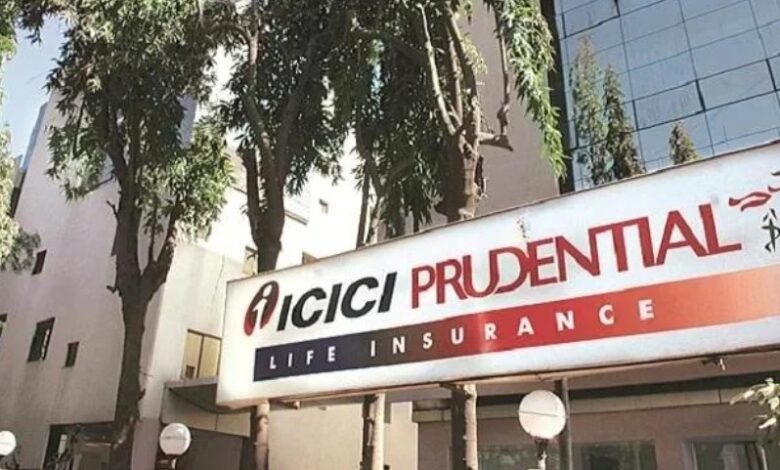
ICICI Prudential Life Insurance has upgraded its Partner Stack with new capabilities, introducing what it calls ‘ICICI Life Partner Stack 2.0’, bringing together AI-enabled tools, deeper partner-system integrations and digital capabilities for its advisor and distribution network.
The upgraded platform is designed to support advisors and distribution partners across sales, customer onboarding and servicing, enabling them to identify relevant insurance solutions, generate quotations, onboard customers and undertake servicing digitally.
The company said its eQuote App uses an AI-based product recommender to suggest products based on customer segment and life stage, while allowing advisors to generate and share personalized quotations. LIVA, an AI-enabled chatbot, provides advisors with a conversational interface to access product features and quotations while interacting with customers.
“Our advisors and distribution partners play an important role in helping customers understand and access life insurance solutions. ICICI Life Partner Stack 2.0 is aimed to give them digital and AI-enabled tools that make everyday operations simpler and customer friendly – from identifying suitable solutions and generating quotations to onboarding and servicing,” Amish Banker, Chief Distribution Officer, ICICI Prudential Life Insurance, said.
The company said Partner Stack 2.0 also integrates with partner CRM platforms to improve synchronization and customer journey management. Through API integration, partners can raise customer service requests from their own platforms, with ICICI Prudential Life processing the requests and sharing status updates digitally.
Group partners can also use API services to submit member details, register claims and share servicing requirements, according to the company.
The revamped retail and group partner portals provide access to client details, reports, remuneration details and other servicing capabilities.
For onboarding, the platform is integrated with national databases and services including UIDAI for Aadhaar, CERSAI for CKYC, Vahan for IDV, GSTN, EPFO, CAS and Perfios. The company said these integrations can pre-fill up to 70% of the application form, reducing the need for customers to collect and upload KYC and income documents.
The platform also offers multiple premium payment options, including ASBA and WhatsApp-based payments. The company said AI-enabled pre-issuance video verification is also used to support underwriting and strengthen risk and fraud checks.
ICICI Prudential Life said its digital ecosystem has more than 200 partner-system integrations, with 99% of business applications received digitally. In Q1 FY2027, the company recorded 27 million digital service interactions, while 54% of savings policies were issued on the same day, according to the company.
The company also reported a 99.3% claim settlement ratio in Q1 FY2027, which it described as industry-leading, with an average turnaround time of one day for non-investigated individual death claims. [KNT]
© Kashmir News Trust (KNT). Unauthorized use without attribution is prohibited.
PR Kashmir News Trust is a trusted Public Relations, Media Relations, News and Event Management agency based in Jammu & Kashmir, helping organizations, institutions and businesses build visibility, credibility and meaningful media engagement through strategic communication and professional storytelling.
For media outreach, event promotion, press coverage, interviews, brand campaigns and public relations services, contact:
Email: prkashmirnewstrust@gmail.com
Calling / WhatsApp: +91 7006382093
Calling: +91 9419000819