Why Aga Syed Ruhullah Mehdi Decided to Part Ways with National Conference
Differences over reservation policy, Article 370, political prisoners and unfulfilled electoral promises at the centre of growing rift

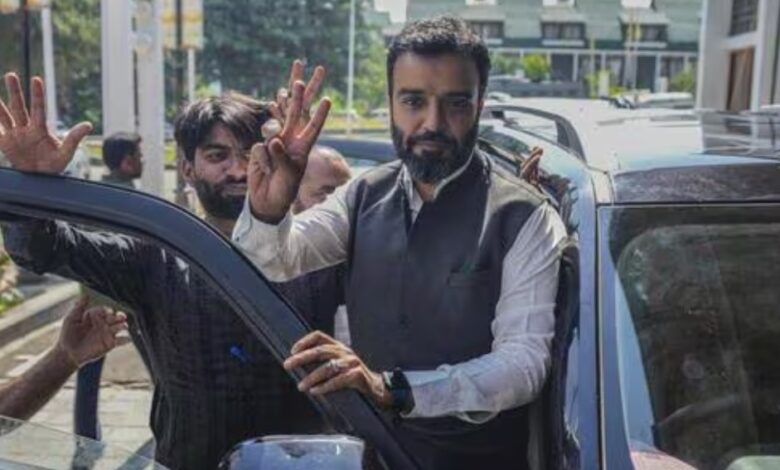
Srinagar, Nov 3, KNT: Aga Syed Ruhullah Mehdi’s decision to part ways with the Jammu and Kashmir National Conference has brought into focus a series of political and ideological differences between the Srinagar MP and the party leadership, with disagreements over the reservation policy, restoration of Article 370, release of political prisoners and the implementation of electoral promises emerging as key issues behind the split.
Ruhullah, who had emerged as one of the prominent voices within the National Conference, has increasingly questioned the party’s approach towards issues on which it sought public support during the Assembly elections. His decision reflects his dissatisfaction with what he considers a gap between the party’s electoral commitments and its actions after coming to power.
Reservation Policy: A Major Point of Disagreement
The reservation issue has been among the most contentious subjects in Jammu and Kashmir. Ruhullah publicly questioned the government’s handling of the reservation policy and supported demands for a review of the existing framework.
The issue generated considerable resentment among sections of aspirants and students, particularly over the distribution of reserved categories and the impact on open-merit opportunities. Ruhullah’s position brought him into disagreement with the government’s approach and added to the strain between him and the party leadership.
Article 370 and 35A: Unfulfilled Political Commitment
Restoration of Article 370 and 35A has remained central to Ruhullah’s political position. He has expressed dissatisfaction over the lack of meaningful progress on the issue, arguing that the National Conference had sought votes on a commitment to fight for the restoration of Jammu and Kashmir’s special status.
For Ruhullah, the restoration of statehood alone cannot replace the larger demand concerning the constitutional and political status of the erstwhile state.
Release of Political Prisoners
The release of political prisoners has also featured among the issues on which Ruhullah has criticised the government’s performance. He has maintained that commitments made to the people must be pursued rather than left unaddressed after the formation of the government.
The issue remains politically sensitive in Jammu and Kashmir, where families and political groups have repeatedly raised concerns over detentions and the continued incarceration of people booked in different cases.
Electoral Promises and Public Mandate
At the heart of Ruhullah’s criticism is the question of electoral accountability. He has argued that the National Conference secured its mandate by making commitments to the people and that those promises cannot be set aside after assuming power.
His differences with the party have increasingly centred on whether the government and its leadership have done enough to translate those commitments into action.
Statehood Cannot Replace Special Status
Ruhullah has also drawn a distinction between restoration of statehood and restoration of Jammu and Kashmir’s special constitutional position.
While restoration of statehood remains an important demand, he has argued that it should not be presented as a substitute for the struggle over Article 370 and the region’s constitutional rights. This position has exposed a wider debate over the political priorities the National Conference should pursue.
Differences with Party Leadership
The disagreement has gradually moved beyond individual policy questions to the functioning and political direction of the party itself.
Ruhullah has openly criticised the leadership, questioning its approach towards public commitments and internal accountability. In particularly sharp remarks, he accused the party leadership of treating Jammu and Kashmir like an estate passed down through a family.
He has also suggested that the problems within the party cannot be corrected from within, signalling that his differences are no longer limited to policy disagreements.
Political Prisoners, Constitutional Rights and Party Credibility
Taken together, these issues form the broader basis of Ruhullah’s political discontent. His criticism is that the National Conference must be judged not merely by the promises it made during the election campaign but by the extent to which it continues to pursue them after securing power.
His departure therefore raises questions about the party’s ability to retain leaders and supporters who expect a more assertive position on Jammu and Kashmir’s political and constitutional demands.
What Does His Exit Mean for National Conference?
Ruhullah’s decision could create a political challenge for the National Conference, particularly among sections of young voters and supporters who identify with his position on Article 370, reservation and political rights.
His criticism may also intensify scrutiny of the government’s performance on issues that formed an important part of the party’s electoral narrative.
However, the extent of the political impact will depend on whether Ruhullah retains his support base and what political course he adopts in the coming months. His departure does not automatically translate into a loss of support for the National Conference, but it has placed the party’s internal differences and electoral commitments under renewed public scrutiny.
At its core, Ruhullah’s decision appears to be rooted in his belief that the National Conference has not done enough to honour the political promises on which it sought the people’s mandate. [KNT]
© Kashmir News Trust (KNT). Unauthorized use without attribution is prohibited.