
Women’s Quota Bill Triggers Debate Over Seat Redistribution and Federal Balance

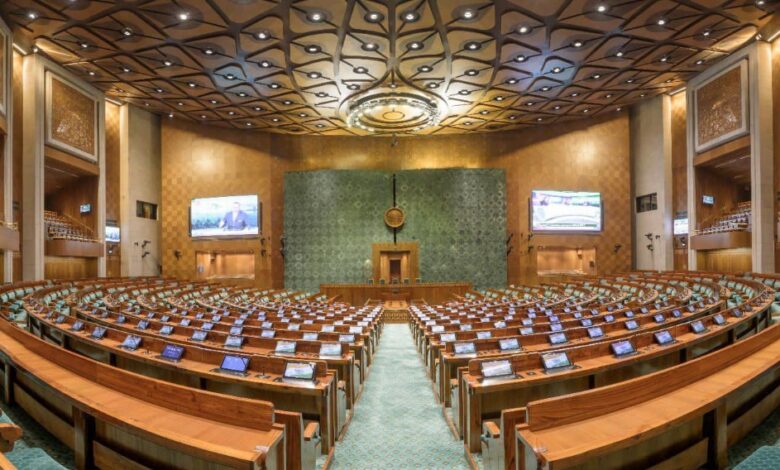
The leaked draft of the Constitution (One Hundred and Thirty-first Amendment) Bill, 2026, expected to be introduced in a special session of Parliament, signals a shift far deeper than its stated objective of enhancing women’s representation. At its core, the bill appears to reconfigure the very architecture of political representation in India, raising questions that go beyond policy and enter the terrain of institutional balance and federal trust.
At first glance, the proposal extends provisions for reservation of seats for women across the Lok Sabha and state assemblies, to be implemented after a fresh delimitation exercise. However, a closer reading of the draft text suggests that this is not merely a social reform measure but a structural reset of how constituencies are defined, seats are allocated, and political weight is distributed among states.
One of the most consequential aspects is the apparent removal of the long-standing freeze on seat reallocation based on the 1971 Census, a political compromise designed to prevent states that successfully controlled population growth from being penalized. The bill replaces this constitutional certainty with a more flexible framework, where the basis for population calculation is left to be determined by Parliament through ordinary legislation.
This shift, while procedurally subtle, carries significant implications. Moving such a foundational parameter out of the Constitution and into the domain of simple majority law lowers the threshold for future changes. It transforms what was once a stable, consensus-driven arrangement into a potentially fluid and politically contingent decision.
Equally significant is the expansion of the Lok Sabha to a proposed strength of up to 815 members. While an increase in representation can be justified in light of population growth, the absence of clear safeguards on proportional distribution raises concerns about uneven political influence. Without explicit constitutional guarantees preserving the relative share of states, the balance between regions could be recalibrated in ways that may not command broad consensus.
The bill also appears to place substantial operational authority in the hands of the Delimitation Commission, an entity that will determine constituency boundaries and seat distribution. The Constitution, as reflected in the draft language, does not appear to prescribe detailed constraints or guiding principles for this process. Moreover, the traditional legal insulation of delimitation outcomes from judicial review, if retained, would mean that these decisions—once made—are effectively final.
This combination of expanded discretion, reduced constitutional anchoring, and limited avenues for challenge introduces a new dynamic into India’s electoral framework. It shifts the system from one grounded in fixed constitutional safeguards to one that relies more heavily on institutional conduct and political restraint.
Supporters of the bill may argue that flexibility is necessary to adapt to demographic realities and to ensure fairer representation in a changing country. They may also point to the long-pending demand for women’s reservation as a compelling justification for advancing the delimitation timeline.
However, the convergence of multiple structural changes within a single amendment raises the stakes. When electoral boundaries, seat allocation formulas, and constitutional protections are all recalibrated simultaneously, the margin for unintended consequences increases.
The central question, therefore, is not whether reform is needed, but how it is structured. In a federal democracy as diverse as India, legitimacy often depends not only on outcomes but on the perceived fairness of the process. Transparency, clear safeguards, and broad political consensus become essential when altering the rules of representation.
As Parliament prepares to take up the bill, the debate is likely to extend beyond women’s representation into deeper concerns about federal balance, institutional safeguards, and the durability of constitutional commitments. The choices made in this moment could shape the contours of India’s representative democracy for decades to come. [KNT]
© Kashmir News Trust (KNT). Unauthorized use without attribution is prohibited.