
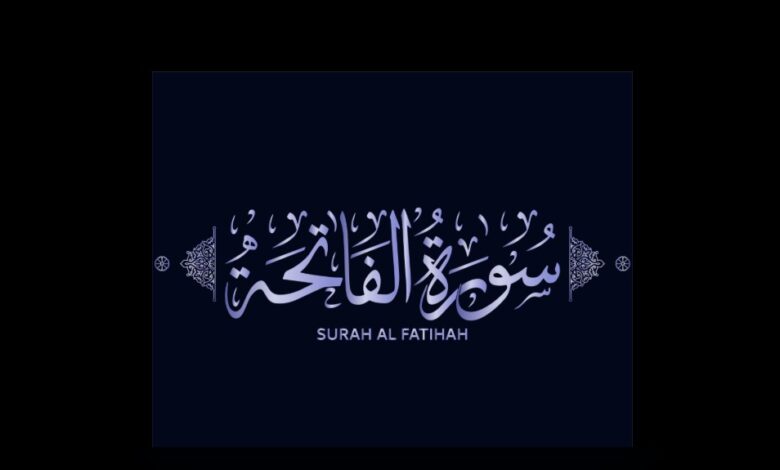
Surah Al-Fātiḥah (The Opening)
Surah Al-Fātiḥah is the first chapter of the Qur’an and the most recited chapter in Islam. It has 7 verses, revealed in Makkah, and is considered the summary of the entire Qur’an.
It is called:
-
Al-Fātiḥah – The Opening
-
Umm al-Kitāb – The Mother of the Book
-
As-Sab‘ al-Mathānī – The Seven Repeated Verses
-
Ash-Shifā’ – The Cure
Full Meaning and Structure
The Surah is a complete spiritual framework in seven short verses:
-
Praise of Allah
-
Recognition of His Lordship
-
Recognition of His Mercy
-
Acknowledgment of Judgment Day
-
Declaration of exclusive worship
-
Supplication for guidance
-
Clarification of the straight path
It moves from theology → relationship → prayer → moral direction.
Core Themes
1. Tawḥīd (Oneness of God)
It establishes absolute monotheism:
-
Only Allah is Lord.
-
Only Allah is worshipped.
-
Only Allah gives guidance.
2. Mercy
“Ar-Raḥmān, Ar-Raḥīm” emphasizes divine mercy before judgment.
3. Accountability
“Master of the Day of Judgment” introduces moral responsibility.
4. Guidance
The central request:
“Guide us to the Straight Path.”
This makes it not just praise, but a living prayer.
Its Role in Islamic Worship
-
Recited in every rak‘ah of every prayer.
-
If one does not recite it in prayer, the prayer is invalid (according to majority scholarship).
-
Muslims recite it at least 17 times daily in obligatory prayers.
It is the most repeated scripture in the world.
Its Unique Dialogue Structure
A famous Hadith Qudsi states that Allah says:
“I have divided the prayer between Me and My servant…”
When the servant says:
“Alḥamdu lillāh…”
Allah responds: “My servant has praised Me.”
So Al-Fātiḥah is described as a direct conversation between human and God.
Comparison With Jewish Scripture
Torah

-
Strong monotheism.
-
Emphasis on divine guidance.
-
Recognition of God as Lord.
Key Difference:
The Torah focuses heavily on law, covenant, and commandments.
Al-Fātiḥah focuses on:
-
Direct personal supplication.
-
Universal spiritual guidance.
-
Not tied to ethnicity or tribe.
Judaism emphasizes covenant with Children of Israel.
Al-Fātiḥah speaks universally: “Guide us.”
Shema Yisrael
The Shema says:
“Hear O Israel, the Lord our God, the Lord is One.”
This parallels Tawḥīd in Al-Fātiḥah.
But Al-Fātiḥah adds:
-
Mercy emphasis
-
Day of Judgment
-
Explicit prayer for guidance
Comparison With the Bible
Bible
Lord’s Prayer
“Our Father in Heaven…
Hallowed be Thy name…
Give us this day our daily bread…
Lead us not into temptation…”
Similarities:
-
Praise first.
-
Recognition of divine authority.
-
Request for guidance.
-
Ethical direction.
Differences:
Al-Fātiḥah:
-
No concept of divine sonship.
-
No intercessor.
-
No inherited sin.
-
Absolute monotheism.
The Lord’s Prayer invokes God as “Father.”
Al-Fātiḥah invokes Allah as “Lord of all worlds.”
Theological Significance
Al-Fātiḥah summarizes:
-
Theology (God’s nature)
-
Anthropology (human dependence)
-
Eschatology (Judgment)
-
Ethics (Straight Path)
-
Spiritual psychology (humility and need)
Scholars say:
Everything in the Qur’an expands on Al-Fātiḥah.
“Those Who Earned Anger” – Who?
Verse 7 mentions:
-
Those who earned anger
-
Those who went astray
Classical Islamic scholars often interpret:
-
“Earned anger” = those who knew truth but rejected it
-
“Went astray” = those who acted without knowledge
Some scholars historically associated these categories with certain Jewish and Christian theological patterns. However, the verse is not ethnically limited. It applies to anyone fitting those descriptions.
Spiritual Impact
Al-Fātiḥah:
-
Centers humility
-
Builds reliance on God
-
Aligns belief and action
-
Creates daily moral reset
It is recited:
-
In prayer
-
For healing
-
At funerals
-
At beginnings of major tasks
Linguistic Miracle
-
Perfect balance: 7 verses
-
Central pivot verse: “You alone we worship…”
-
Symmetrical praise → supplication structure
-
Every word carries layered meaning
Example:
“Rabb” means:
Lord, Sustainer, Nourisher, Educator.
Why It Is Called the Summary of the Qur’an
Because the Qur’an elaborates on:
-
Who Allah is
-
What the straight path is
-
Who went astray
-
What guidance means
Al-Fātiḥah introduces all of that in 7 verses.
Philosophical Depth
It answers fundamental questions:
Who is God?
Why are we here?
Where are we going?
How should we live?
In seven lines.
Ultimate Significance
For Muslims, Al-Fātiḥah is:
-
The heart of prayer
-
The foundation of faith
-
The map of life
-
The spiritual constitution of Islam
It is not just read.
It is lived.
© Kashmir News Trust (KNT). Unauthorized use without attribution is prohibited.