Ayatollah Ali Khamenei: Supreme Leader at the Centre of a Historic Confrontation
From Revolutionary Cleric to Architect of Iran’s Security State

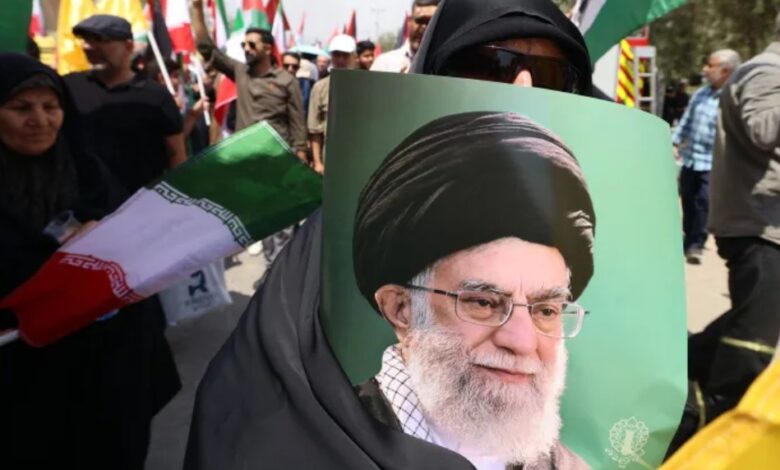
United States President Donald Trump on Saturday announced the killing of Iran’s Supreme Leader Ali Khamenei, stating that joint US-Israeli air strikes had hit and destroyed his compound in Tehran.
Trump said Khamenei and other senior Iranian officials “couldn’t escape US intelligence and the advanced tracking systems,” describing the strike as part of what he termed a major combat operation. The announcement came amid a widening military confrontation between Iran on one side and the United States and Israel on the other. Iran, however, refuted the claim, saying the Supreme Leader is alive, safe and sound.
Khamenei, 86, had led the Islamic Republic since 1989, succeeding Ayatollah Ruhollah Khomeini, the architect of Iran’s 1979 Islamic Revolution. While Khomeini shaped the ideological foundations of the new state after the overthrow of the Pahlavi monarchy, it was Khamenei who consolidated and expanded Iran’s military and paramilitary institutions, building a security architecture that projected influence across West Asia.
Born in 1939 in the holy Shia city of Mashhad, Khamenei the son of a respected cleric of Azerbaijani origin. He began Quranic studies at the age of four and later pursued religious scholarship in Mashhad, Najaf and Qom, where he studied under prominent clerics, including Khomeini. He did not complete conventional high school education, instead dedicating himself fully to theological training.
As a political activist opposed to the shah’s rule, Khamenei was repeatedly arrested by SAVAK, the monarchy’s secret police, and exiled to remote areas. Following the 1979 revolution, he quickly rose within the new establishment, serving briefly as defence minister and later as supervisor of the Islamic Revolutionary Guard Corps after the outbreak of the Iran-Iraq war.
In 1981, he survived an assassination attempt that left his right arm permanently paralyzed. The same year, he was elected president, becoming Iran’s first cleric to hold the office. His presidency coincided with the final years of the devastating eight-year war with Iraq, a conflict that deeply shaped his worldview.
Analysts have long argued that the Iran-Iraq war framed Khamenei’s strategic outlook. The conflict, combined with Western backing of Saddam Hussein and international silence over Iraq’s use of chemical weapons, reinforced his deep distrust of the United States and its allies. That perspective formed the cornerstone of his doctrine of constant vigilance and defensive preparedness.
Upon Khomeini’s death in 1989, a constitutional council appointed Khamenei as Supreme Leader, despite debates over clerical rank requirements. Though he initially suggested he might not deserve the role, his subsequent tenure proved decisive and far from symbolic.
As Supreme Leader, Khamenei oversaw the transformation of the Islamic Revolutionary Guard Corps into a powerful military, political and economic institution central to Iran’s regional strategy. Under his guidance, Iran developed what became known as the “axis of resistance,” cultivating alliances with Hezbollah in Lebanon, Hamas in Palestine, armed groups in Iraq, the Houthis in Yemen, and supporting the former Syrian government under Bashar al-Assad.
His leadership was repeatedly tested domestically. In 2009, the disputed presidential election triggered the Green Movement protests, which were met with a forceful crackdown. In 2019, demonstrations over fuel price hikes led to another wave of unrest. In 2022, protests erupted following the death of Mahsa Amini, drawing global attention to women’s rights and social restrictions in Iran. Human rights organizations reported hundreds killed in security operations, though figures remain contested.
Khamenei’s rule also oscillated between resistance and pragmatic negotiation. In 2015, he approved talks that led to the Joint Comprehensive Plan of Action, the nuclear agreement between Iran and world powers aimed at sanctions relief in exchange for curbs on nuclear activities. However, the United States withdrew from the deal in 2018 under President Trump, reinstating sanctions and reigniting tensions. Iran subsequently resumed higher levels of uranium enrichment, while maintaining that its nuclear Programme remained civilian.
Sanctions, inflation and currency collapse further strained the economy, fueling renewed protests in late 2025. Reports of casualties during crackdowns varied widely, with independent verification limited.
Regionally, Iran’s strategic position weakened after sustained Israeli operations against allied groups, including Hamas and Hezbollah, and the fall of the Assad government in Syria. Against this backdrop, US and Israeli military coordination intensified.
On February 28, Trump declared the beginning of a “major combat operation” in Iran and directly addressed the Iranian people, urging them to remain sheltered during ongoing bombardment and suggesting that political change could follow. “When we are finished, take over your government. It will be yours to take. This will probably be your only chance for generations,” he said.
Khamenei had previously responded to threats with defiance, warning that any US intervention would cause “irreparable damage.” His leadership embodied a doctrine often described as “neither peace nor war,” combining deterrence, proxy alliances and selective negotiation.
If confirmed, his reported killing would mark one of the most consequential turning points in the history of the Islamic Republic, raising immediate questions about succession, institutional continuity and the future trajectory of Iran’s domestic and foreign policy.
At the time of filing this report, independent verification of Khamenei’s death had not been publicly released. The situation remains fluid amid ongoing military operations and heightened regional tension. [KNT]
© Kashmir News Trust (KNT). Unauthorized use without attribution is prohibited.