
RIYADH, March 25, 1975:
King Faisal bin Abdulaziz Al Saud, one of the most influential leaders of the modern Middle East, was assassinated in Riyadh in 1975 after a decade of transformative rule that reshaped Saudi Arabia’s economy, politics and global standing.
Faisal, who came to power in 1964, is widely credited with modernizing the Kingdom, strengthening its Islamic identity and elevating it into a decisive global force through strategic use of oil diplomacy.
Rise and Rule
Born in 1906 in Riyadh, Faisal was the son of Saudi Arabia’s founder, Abdulaziz Ibn Saud. From an early age, he was involved in governance and diplomacy, representing the Kingdom abroad and later serving as foreign minister.
He assumed power in 1964 after replacing King Saud during a period of financial and administrative instability. Once in control, Faisal moved quickly to stabilise the economy, streamline governance and reduce excessive royal spending.
Reform and Modernization
Faisal introduced a series of reforms that transformed Saudi Arabia:
- Expansion of education, including for women
- Development of healthcare and infrastructure
- Introduction of television broadcasting despite conservative opposition
His approach was cautious but firm—modernisation without abandoning religious and cultural foundations.
Oil Power and Global Influence
Faisal’s most defining moment came during the 1973 Arab-Israeli war, when he led the oil embargo against Western countries supporting Israel.
The move triggered a global energy crisis and demonstrated, for the first time, the geopolitical power of oil. It positioned Saudi Arabia as a central player in global politics and established Faisal as a leader willing to challenge major powers.
Relations with the West
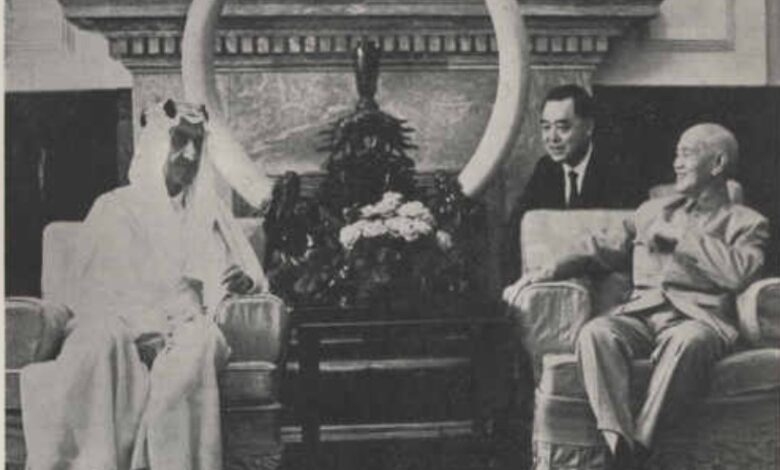
Despite the embargo, Faisal was not anti-West. He maintained strategic relations with the United States and other Western nations, allowing cooperation in development and security.
His policy was pragmatic: engage with the West where beneficial, but resist when national or Islamic interests were at stake.
TIMELINE BOX: KING FAISAL
1906 — Born in Riyadh to Abdulaziz Ibn Saud
1920s–30s — Represents Saudi Arabia in foreign missions, gains early diplomatic experience
1930s–50s — Serves as Foreign Minister, key figure in state-building
1953 — Appointed Crown Prince under King Saud
1964 — Becomes King after internal power shift, begins reforms
1960s–70s — Expands education, healthcare, infrastructure; introduces television
1973 — Leads oil embargo during Arab-Israeli war, reshapes global politics
March 25, 1975 — Assassinated in Riyadh by nephew during royal audience
June 1975 — Assassin executed after trial
Assassination
On March 25, 1975, Faisal was shot at close range inside the royal palace in Riyadh during a formal audience.
The attacker was his nephew, Faisal bin Musaid Al Saud, who approached the King under the pretext of greeting him before opening fire.
The King succumbed to his injuries shortly after, sending shockwaves across the Arab and Muslim world.
⚖️ The Assassin

Faisal bin Musaid was a member of the royal family who had spent several years studying in the United States, including at the University of Colorado.
He had been exposed to Western society and lived a lifestyle that differed from the conservative norms of Saudi Arabia, though many claims about his personal habits remain unverified.
He was described as reserved but somewhat detached, with indications of personal and emotional instability.
❓ Motive
The most widely accepted explanation is personal revenge. His brother, Khalid bin Musaid, had earlier been killed by Saudi security forces during protests against the introduction of television.
Other theories—including foreign involvement or broader political conspiracy—have circulated over the years, but no credible evidence has substantiated them.
Claims of a “Jewish girl” or external manipulation remain unverified and are not supported by official records.
FACT vs MYTH BOX
✔️ FACT
- King Faisal was assassinated by his nephew Faisal bin Musaid
- The assassin was arrested immediately and executed after trial
- Faisal used oil as a strategic tool during the 1973 embargo
- He maintained relations with the West while asserting independence
- The most accepted motive is personal revenge linked to his brother’s death
❌ MYTH
- ❌ Assassination was proven to be a CIA/Western conspiracy
- ❌ A “Jewish girl” was involved in influencing the assassin
- ❌ The assassin was officially declared insane
- ❌ Faisal was completely anti-West
⚠️ UNPROVEN / DEBATED
- Possible foreign involvement
- Psychological instability beyond official findings
- Influence of lifestyle or foreign contacts
Trial and Execution
The assassin was arrested immediately, declared mentally fit after evaluation, and executed publicly in June 1975.
Legacy
Faisal is remembered as one of Saudi Arabia’s greatest rulers. His legacy includes:
- Transforming Saudi Arabia into a modern state
- Using oil as a strategic global tool
- Promoting Islamic unity and international influence
His leadership combined discipline, vision and political strategy at a time when the Middle East was undergoing major change.
KEY QUOTES: KING FAISAL
“We can easily live without oil. We lived for centuries without it.”
👉 Said during the 1973 oil crisis, reflecting his willingness to use oil as a political weapon.
“If justice is not achieved for the people of Palestine, we will never accept peace.”
👉 Emphasising his strong stance on the Palestinian issue.
“Our faith and our values are not for sale.”
👉 Highlighting his commitment to Islamic principles over external pressure.
“We must modernise, but we must not lose our identity.”
👉 Capturing his vision of balancing development with tradition.
“The world respects strength, not weakness.”
👉 Reflecting his firm approach in international politics.
“We are not against anyone, but we stand for what is right.”
👉 Showing his balanced diplomatic stance—cooperation without submission.
Conclusion
King Faisal’s rule marked a turning point in Saudi Arabia’s history. His policies reshaped the Kingdom internally and elevated its role globally.
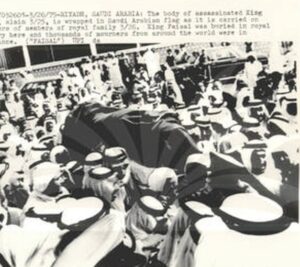
His assassination ended a defining era, but his influence continues to shape Saudi policy and identity decades later.
© Kashmir News Trust (KNT). Unauthorized use without attribution is prohibited.