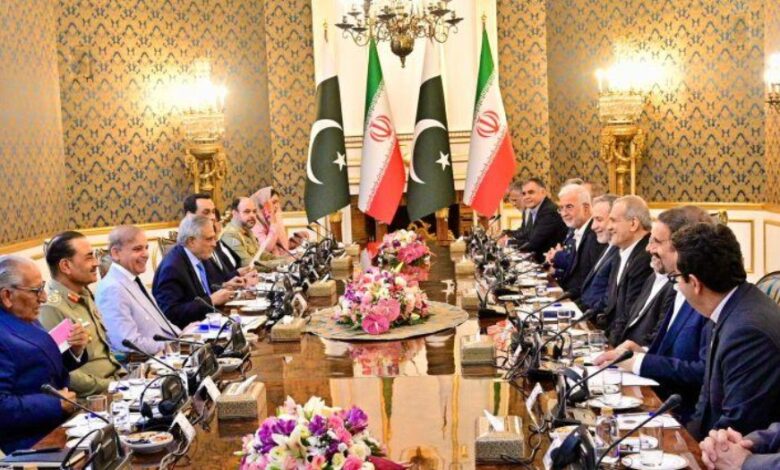
Pakistan has intensified its diplomatic push to mediate between the United States and Iran, engaging regional powers and dispatching top civilian and military leadership in a coordinated effort to revive stalled negotiations, with the White House indicating that the next round of talks is likely to be held again in Islamabad.
The renewed activity comes amid fragile ceasefire conditions and mounting regional tensions, placing Pakistan at the center of high-stakes diplomacy between Washington and Tehran.
Prime Minister Shehbaz Sharif met Saudi Crown Prince Mohammed bin Salman in Jeddah, where discussions focused on regional stability and Pakistan’s role in facilitating dialogue between the United States and Iran. The meeting is part of a broader diplomatic outreach aimed at securing regional backing for continued negotiations.
In parallel, Pakistan’s Army Chief Asim Munir arrived in Tehran for direct engagement with Iranian leadership, in what officials describe as a renewed effort to convey proposals and revive dialogue channels following inconclusive earlier talks.
The dual-track approach — combining civilian diplomacy with military-level engagement — underscores Pakistan’s attempt to position itself as a credible intermediary capable of maintaining communication with both Washington and Tehran.
The White House has signaled that a second round of US–Iran talks is “likely” to take place in Pakistan, reinforcing Islamabad’s emerging role as a neutral venue for dialogue. The initial round of negotiations, held in Islamabad earlier this month, marked a rare instance of direct engagement between the two sides but ended without a breakthrough.
Despite the lack of immediate progress, officials have indicated that diplomatic channels remain open, with Pakistan continuing to coordinate efforts to bring both parties back to the table.
The latest developments unfold against the backdrop of a temporary ceasefire announced earlier this month, which is under strain as tensions persist across the region, including concerns over maritime security and broader geopolitical rivalries.
Pakistan has also been engaging other regional stakeholders, including Gulf countries, in an attempt to build consensus and support for extending ceasefire arrangements and advancing negotiations.
While no formal date has been announced for the next round of talks, diplomatic signals from Washington suggest that Islamabad remains the preferred venue, highlighting Pakistan’s growing role in regional conflict mediation.
The outcome of these efforts is expected to have significant implications for regional stability, energy security, and broader geopolitical alignments, as stakeholders seek to prevent escalation and sustain diplomatic engagement.