
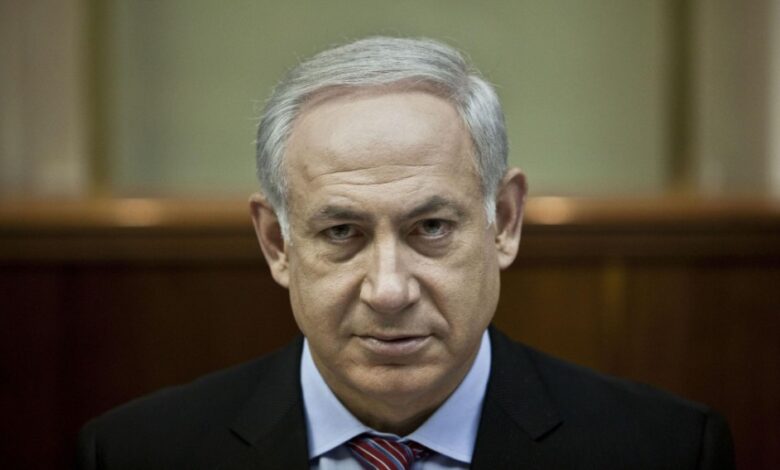
Israeli Prime Minister Benjamin Netanyahu faces one of the most serious political challenges of his career after Israel’s parliament approved a preliminary bill to dissolve itself, setting the stage for possible early elections that polls suggest could threaten his hold on power.
The development has intensified speculation about whether Netanyahu, Israel’s longest-serving prime minister and dominant political figure for more than a decade, may be approaching a defining or even final chapter in his political career.
Lawmakers voted overwhelmingly in favor of a preliminary proposal to disband the 120-member Knesset, initiating a process that could eventually lead to national elections before the October 27 deadline.
While the measure still requires committee review and final approval through additional parliamentary votes, the move signaled growing instability within Netanyahu’s ruling coalition.
The crisis gained momentum after a key ultra-Orthodox Jewish faction, traditionally regarded as one of Netanyahu’s most dependable allies, publicly declared that it no longer considered the prime minister a political partner.
The faction accused the coalition of failing to fulfill commitments regarding legislation exempting members of the ultra-Orthodox community from compulsory military service.
That rupture has exposed vulnerabilities within Netanyahu’s government at a politically sensitive moment.
The parliamentary vote assumes wider significance because it unfolds against the backdrop of Israel’s prolonged security and political turbulence following the Hamas attack of October 7, 2023 and subsequent wars involving Gaza, Lebanon and Iran.
For Netanyahu, whose political identity has long rested on national security credentials, the fallout from those events has reshaped public perceptions.
Polls in Israel have consistently shown Netanyahu’s coalition struggling to secure a parliamentary majority.
Political commentators increasingly view early elections as more than a procedural development — they may become a referendum on Netanyahu’s leadership during one of Israel’s most turbulent periods.
Although the bill to dissolve parliament remains subject to further legislative approval, political momentum appears to be shifting.
Analysts in Israel suggest elections could take place in September, though voting could also occur closer to the October deadline.
The immediate political consequence may be a weakened government with reduced capacity to advance controversial legislation while coalition uncertainty deepens.
Opposition parties, which have repeatedly sought Netanyahu’s removal, now see fresh opportunity.
A failed attempt to topple the government last year has given way to renewed optimism as coalition fractures widen.
Former Prime Minister Naftali Bennett, once Netanyahu’s aide and later his political rival, has emerged again as a principal challenger.
Bennett, aligned with opposition leader Yair Lapid through the new political alliance “Together,” is running neck-and-neck with Netanyahu’s Likud according to several surveys.
Former military chief and centrist figure Gadi Eisenkot has also gained traction among voters seeking political alternatives.
The opposition campaign is increasingly centered not around ideological revolution but around fatigue.
Their message focuses on restoring stability, healing divisions and rebuilding Israel’s international standing following prolonged conflict and economic strain.
Yet Netanyahu’s political story remains difficult to predict.
Israeli politics has repeatedly produced fragmented parliaments and inconclusive elections. Before his 2022 return to office, Israel endured five elections in less than four years without durable political resolution.
That history means Netanyahu cannot be politically written off.
Even if elections are called and his coalition performs poorly, opposition parties may still struggle to form a government, potentially allowing Netanyahu to remain at the head of an interim administration during another period of deadlock.
Nevertheless, the symbolism of the current moment is difficult to ignore.
A leader who once staged one of Israel’s most remarkable political comebacks now faces mounting internal rebellion, declining poll numbers and growing questions over whether the Netanyahu era is entering its most uncertain phase.
Who Are Netanyahu’s Main Challengers in a Possible Israeli Election?
As Israel moves closer to possible early elections, Prime Minister Benjamin Netanyahu faces a more crowded and competitive political field than in recent years.
Naftali Bennett
Former prime minister Naftali Bennett is widely viewed as Netanyahu’s strongest challenger. A former Netanyahu aide who later turned rival, Bennett led a coalition government that briefly removed Netanyahu from power in 2021. Positioned on the right, Bennett seeks to attract conservative voters disappointed with Netanyahu’s handling of security and political crises.
Yair Lapid
Leader of the centrist Yesh Atid party and former prime minister, Yair Lapid remains one of the most recognizable opposition figures. Lapid campaigns on governance reforms, social cohesion and restoring Israel’s international image. He continues to draw support from liberal and centrist voters.
Gadi Eisenkot
Former Israel Defense Forces (IDF) chief and centrist politician Gadi Eisenkot has gained visibility as a security-focused alternative. His military background and moderate image appeal to voters seeking experienced leadership without Netanyahu’s political baggage.
The ‘Together’ Alliance
Bennett and Lapid have reportedly aligned through a new political platform aimed at consolidating anti-Netanyahu votes. Polls suggest the alliance is running neck-and-neck with Netanyahu’s Likud party, making coalition arithmetic crucial.
Why Netanyahu Still Cannot Be Counted Out
Despite declining poll numbers and coalition troubles, Netanyahu remains one of Israel’s most resilient politicians. Israel’s fragmented political system often produces hung parliaments and coalition deadlocks. Even if Likud falls short, opposition parties may still struggle to form a stable government, potentially allowing Netanyahu to remain politically relevant or even lead an interim administration.
Bottom Line:
The next Israeli election may not simply decide who governs Israel — it could determine whether the long and controversial Netanyahu era finally gives way to a new political order.
© Kashmir News Trust (KNT). Unauthorized use without attribution is prohibited.