
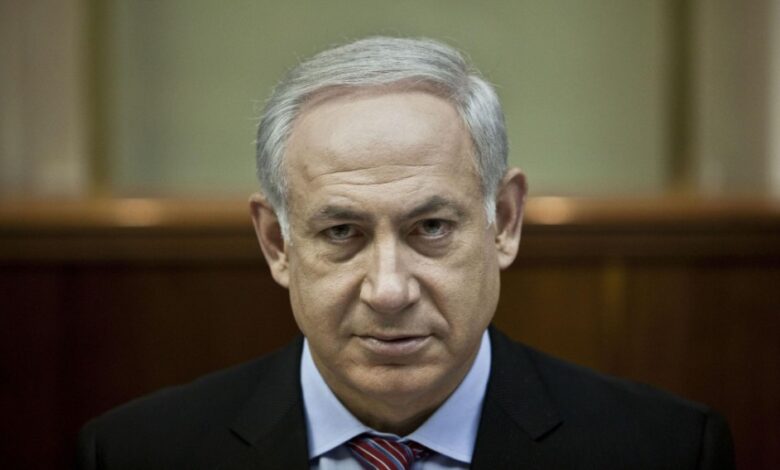
Israel moved closer to a possible snap election after lawmakers advanced legislation to dissolve parliament, deepening political uncertainty around Prime Minister Benjamin Netanyahu’s coalition government and opening the door to another potentially divisive national vote.
The preliminary vote in the 120-member Knesset marked a significant setback for Netanyahu, whose ruling alliance has come under mounting strain over a long-running dispute surrounding military service exemptions for ultra-Orthodox Jewish communities.
The move, if finalized through additional parliamentary approvals, could trigger elections several weeks ahead of Israel’s scheduled October deadline, potentially making it the country’s first national vote since the October 2023 Hamas attacks that reshaped Israeli politics and security discourse.
The crisis centers on disagreements between Netanyahu and ultra-Orthodox coalition partners who accused the government of failing to honor commitments regarding legislation exempting members of their community from compulsory military service. The issue has long divided Israeli politics but has gained sharper urgency amid ongoing regional security pressures and heavy military mobilization.
Lawmakers voted overwhelmingly in favor of the dissolution proposal during the preliminary stage, reflecting the seriousness of coalition tensions and signaling growing instability inside the ruling bloc. The bill must still pass additional readings before parliament can be formally dissolved and elections scheduled.
The political turbulence comes at a sensitive moment for Netanyahu, Israel’s longest-serving prime minister, who continues to navigate wartime leadership challenges alongside domestic political pressures. Opinion surveys cited by international media indicate Netanyahu’s coalition could struggle to secure a parliamentary majority if elections are held soon, although opposition parties also face difficulties forming a unified alternative alliance.
Analysts say Israel could face several possible outcomes in the coming weeks. Netanyahu may still attempt to repair relations with coalition partners and prevent parliament from dissolving, while failure to bridge differences could send the country toward early elections and renewed coalition negotiations.
Israel has experienced repeated political deadlock in recent years, including multiple elections between 2019 and 2022 that produced fragile governing arrangements and prolonged coalition bargaining. The latest developments raise the possibility of another period of political uncertainty.
While leadership and coalition dynamics may shift, observers note that substantial changes in Israel’s broader security and regional policies are not immediately expected, even under a different political arrangement.
© Kashmir News Trust (KNT). Unauthorized use without attribution is prohibited.