

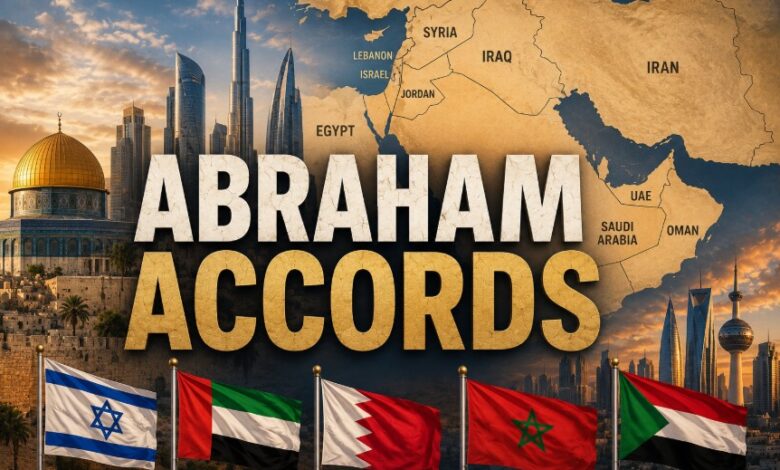
The Abraham Accords represent a series of diplomatic normalization agreements brokered by the United States in 2020 that established formal relations between Israel and several Arab countries, marking one of the most significant shifts in Middle East diplomacy in decades.
The accords were formally signed at the White House on September 15, 2020, during the first presidency of Donald Trump. The initial agreements involved Israel, the United Arab Emirates and Bahrain, with Morocco and Sudan later joining the broader normalization process. The United States acted as mediator and witness to the agreements.
The name “Abraham Accords” was chosen to reflect the shared religious heritage of Jews and Arabs through Abraham, known as Ibrahim in Islam, who is regarded as a common patriarch in Judaism, Christianity and Islam.
The agreements marked a diplomatic breakthrough because, for decades, most Arab governments had refused formal relations with Israel, linking recognition to resolution of the Palestinian issue and Israeli withdrawal from occupied territories.
Before the Abraham Accords, only Egypt and Jordan had signed peace treaties and maintained official diplomatic ties with Israel. The UAE became the first Gulf Arab country to formally normalize relations with Israel, followed by Bahrain, while Morocco and Sudan later entered separate arrangements tied to the broader initiative.
The accords emerged from a combination of strategic, political and economic interests.
One major factor was shared concern among Israel and several Gulf states regarding Iran’s regional influence and security posture. Analysts and regional studies have described Iran-related security concerns as a significant motivation behind the growing alignment between Israel and certain Arab governments.
Economic considerations also played a major role.
The agreements opened opportunities for trade, tourism, investment, technology partnerships and defense cooperation. Israel and the UAE, in particular, quickly expanded commercial ties following normalization, creating direct flights, business agreements and joint ventures.
The accords were also linked to diplomacy surrounding the Israeli-Palestinian conflict.
The UAE said normalization helped secure suspension of Israeli plans to annex parts of the occupied West Bank, although the extent and durability of that understanding remained debated.
While supporters described the accords as a breakthrough for regional peace and integration, critics argued they bypassed the Palestinian question.
Palestinian leaders and several commentators contended that Arab normalization weakened long-standing diplomatic pressure linking recognition of Israel to creation of a Palestinian state. Public opinion in parts of the Arab world remained divided despite government agreements.
The accords continue to influence Middle East diplomacy.
Successive American administrations have supported expansion of the framework, and recent diplomatic efforts have again focused on encouraging additional countries to consider normalization with Israel. However, the Gaza conflict and wider regional tensions have complicated those ambitions and increased political sensitivity surrounding the issue.
The Abraham Accords therefore remain both a diplomatic milestone and a contested political development — praised by supporters as a foundation for regional cooperation and criticized by opponents as peace between governments that did not resolve the core Israeli-Palestinian dispute.
Abraham Accords at a Glance
• Signed: September 15, 2020
• Broker: United States
• Initial parties: Israel, UAE and Bahrain
• Later participants: Morocco and Sudan
• Focus: Diplomatic normalization and cooperation
• Major debate: Recognition of Israel without Palestinian statehood resolution
© Kashmir News Trust (KNT). Unauthorized use without attribution is prohibited.