
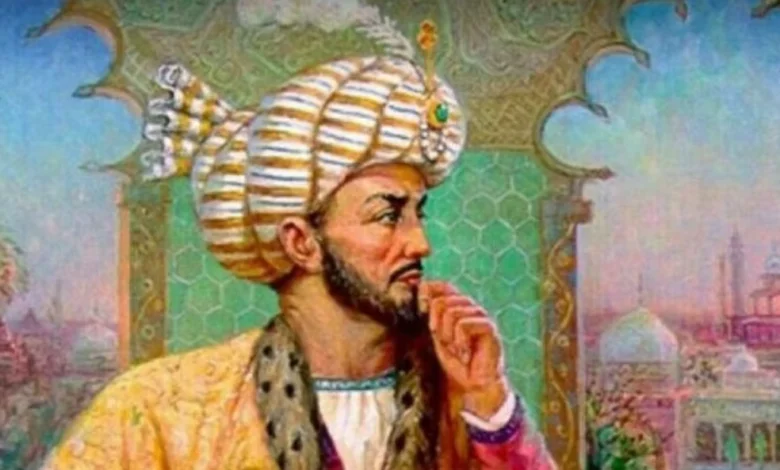
When people hear the name Babur, the image that often comes to mind is that of a warrior riding across battlefields, defeating powerful armies, and laying the foundations of the Mughal Empire in India. Yet Babur was far more than a conqueror. He was a prince without a kingdom, an exile who spent much of his youth struggling for survival, a poet who wrote about nature and emotions, a memoirist whose autobiography remains one of the most remarkable historical works of its age, and a man whose personality was filled with contradictions.
Historians today view Babur as one of the most complex figures in medieval Asian history. Unlike many rulers whose lives are known only through the accounts of court historians, Babur left behind his own voice in the form of the Baburnama, a detailed memoir that offers a rare glimpse into the mind of a sixteenth-century emperor.
Babur was born in 1483 in Andijan, in present-day Uzbekistan. Through his father he claimed descent from the great conqueror Timur, while through his mother he traced his lineage to Genghis Khan. These prestigious connections gave him legitimacy, but they did not guarantee power.
At the age of only twelve, Babur inherited the small kingdom of Fergana. What followed was a series of military struggles, betrayals, defeats, and temporary victories. He repeatedly attempted to capture Samarkand, the legendary Timurid capital that symbolized prestige and authority. Although he succeeded more than once, he was unable to hold it for long.
These early failures shaped Babur’s character. Unlike rulers who inherited stable empires, he spent much of his youth wandering between hope and disaster. There were times when he possessed a throne but lacked an army, and other times when he had loyal followers but no kingdom to rule.
One of the defining aspects of Babur’s life was resilience. Many princes would have disappeared from history after suffering repeated defeats, but Babur persisted.
After losing much of Central Asia to the rising Uzbek leader Muhammad Shaybani Khan, Babur shifted his attention southward. In 1504 he captured Kabul, which became his new power base. From there he rebuilt his fortunes and began dreaming of larger conquests.
Kabul was more than a military headquarters. It became a place where Babur developed his interests in literature, gardens, and administration. The city also allowed him to maintain the Timurid cultural traditions that he valued deeply.
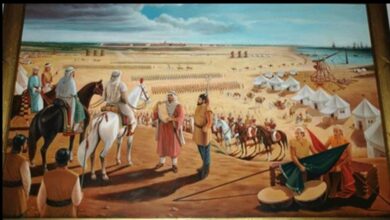
Babur’s greatest achievement came in 1526 when he invaded northern India and confronted Sultan Ibrahim Lodi at the First Battle of Panipat.
The victory transformed the political landscape of the subcontinent. Babur’s use of field artillery, defensive formations, and disciplined military tactics gave him a decisive advantage over a much larger force. Historians often regard Panipat as one of the turning points in Indian history because it opened the path for Mughal rule.
However, conquering Delhi was only the beginning. Babur soon faced powerful Rajput forces under Rana Sanga and other regional opponents. Through a combination of military skill, leadership, and determination, he managed to secure his position in northern India.
His empire was still fragile at the time of his death in 1530, but the foundations he laid enabled his descendants to build one of the most influential empires in South Asian history.
What makes Babur unique among conquerors is the honesty of his memoirs.
The Baburnama does not read like official propaganda. Babur openly discussed his victories and failures, his friendships and disappointments, his fears and ambitions. He described landscapes, cities, animals, fruits, and people with remarkable detail.
He admitted mistakes, recorded moments of despair, and reflected on personal experiences in ways that were unusual for rulers of his era. This candor has made the Baburnama one of the most valuable primary sources for historians studying Central and South Asia.
Through its pages, Babur emerges not as a distant monarch but as a human being with strengths and weaknesses.
Babur possessed a deep appreciation for literature and the natural world.
He wrote poetry in Chagatai Turkish and was familiar with Persian literary traditions. His writings reveal a sensitive side often overshadowed by his military achievements.
He paid close attention to mountains, rivers, flowers, trees, and gardens. Whenever he settled in a new region, he often sought to create gardens inspired by the Timurid style of Central Asia.
Historians frequently note that Babur’s descriptions of nature are among the most vivid sections of his memoirs. He was capable of appreciating beauty even during periods of political uncertainty and warfare.
Babur’s love for gardens was not merely a personal hobby. It became part of the Mughal cultural identity.
He introduced and promoted the Persian-Central Asian concept of formal gardens, often organized around water channels, geometric layouts, and carefully planned landscapes. These traditions later influenced the magnificent Mughal gardens created by his successors.
The famous Mughal emphasis on architecture, aesthetics, and landscape design can be traced in part to Babur’s own tastes and preferences.
Babur’s character contained many contradictions.
He was a warrior capable of harsh military campaigns, yet he could write moving passages about friendship and loss.
He enjoyed poetry and intellectual pursuits while simultaneously spending much of his life on military expeditions.
He openly recorded his consumption of wine and participation in drinking gatherings, but he also described moments when he renounced alcohol, particularly before important military campaigns.
These contradictions make him a fascinating historical figure. Rather than fitting neatly into the category of either hero or villain, Babur appears as a multidimensional individual shaped by the turbulent world in which he lived.
Babur’s writings also reveal affection for his family. He maintained close relationships with several of his children, including his eldest son Humayun, who would later succeed him.
One of the most famous stories associated with Babur concerns Humayun’s serious illness. According to traditional accounts, Babur prayed for his son’s recovery and symbolically offered his own life in exchange. Whether interpreted literally or symbolically, the story reflects the image of a father deeply concerned for his child.
His memoirs frequently mention relatives, companions, and loyal followers, showing that personal relationships mattered greatly to him.
Modern historians generally agree that Babur was not merely the founder of a dynasty. He was a remarkable individual whose life combined military ambition, cultural sophistication, personal honesty, and extraordinary perseverance.
If one were to summarize Babur’s character in a single assessment, he emerges as:
- A conqueror who changed the course of Indian history.
- An exile who overcame repeated setbacks.
- A strategist whose military innovations secured victory against stronger opponents.
- A poet who expressed emotions with unusual openness.
- A memoirist who left behind one of history’s greatest autobiographies.
- A gardener who influenced Mughal aesthetics for generations.
- A family man who showed genuine affection toward relatives and companions.
- An ambitious empire-builder determined to restore the glory of his Timurid heritage.
More than five centuries after his death, Babur continues to fascinate historians because he was not simply a king who won battles. He was a ruler who documented his own life with honesty, allowing future generations to see the human being behind the empire.
© Kashmir News Trust (KNT). Unauthorized use without attribution is prohibited.