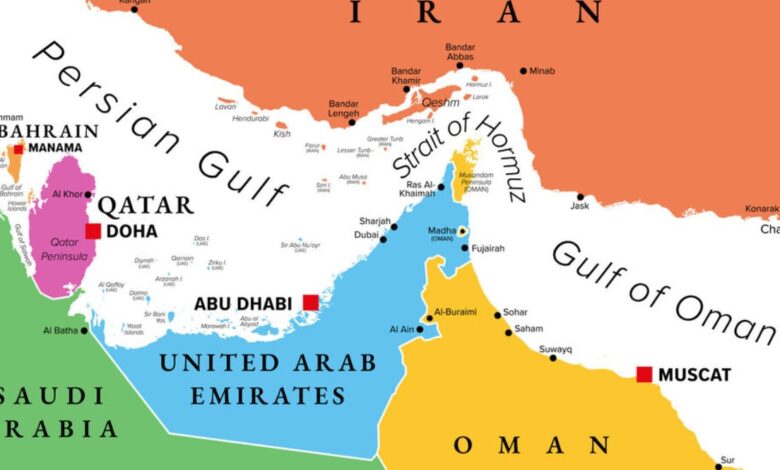
Strait of Hormuz: Why It Matters
The Strait of Hormuz is a narrow waterway between Iran and Oman. It connects the Persian Gulf to the open ocean.
- Around 20–30% of the world’s oil supply passes through it
- It is one of the most strategically important chokepoints on Earth
- Major exporters like Saudi Arabia, Iraq, UAE depend on it
What does “blocking the Strait” mean?
A blockade means stopping or severely restricting ships from passing through.
If the United States were to block it, it could involve:
1. Naval Control
- Deploying warships to monitor and control movement
- Boarding or stopping tankers
- Creating a controlled passage system
2. Military Deterrence
- Threatening force against ships linked to adversaries
- Escorting only approved vessels
3. Air & Surveillance Dominance
- Using aircraft, drones, and satellites to track every ship
- Enforcing restrictions in real time
Important: A full blockade would effectively mean military escalation or war-like conditions, especially involving Iran.
How easy is it for the US to do this?
Short answer: Militarily possible, politically very difficult
Why it’s possible
- The US Navy is the most powerful in the world
- It maintains a strong presence via the U.S. Fifth Fleet based in Bahrain
- It has aircraft carriers, submarines, and advanced surveillance
Technically, the US can control or disrupt traffic in the strait.
Why it’s NOT easy
1. Geography favors disruption
- The strait is only about 33 km wide at its narrowest
- Actual shipping lanes are even narrower
This makes it easy to disrupt but also dangerous to control.
2. Iran’s asymmetric capabilities
- Fast attack boats
- Sea mines
- Anti-ship missiles
- Coastal defenses
Iran could retaliate quickly, making the area unsafe.
3. Global economic shock
- Oil prices would skyrocket instantly
- Global markets could crash
- Countries like China, India, EU would be heavily affected
Even allies of the US would oppose a full blockade.
4. Legal & political risks
- The strait is considered an international waterway
- Blocking it could violate international law unless during war
Reality check: What usually happens instead?
Instead of a full blockade, the US typically:
- Escorts ships
- Increases patrols
- Issues warnings
- Imposes sanctions instead of direct closure
A complete shutdown is extremely rare and risky.
Bottom Line
- The US can militarily disrupt or control the Strait of Hormuz
- But a full blockade is extremely dangerous and unlikely
- It would likely trigger regional war and global economic crisis
© Kashmir News Trust (KNT). Unauthorized use without attribution is prohibited.