When Gandhi Walked Barefoot Through Riot-Hit Noakhali to Bring Back Peace

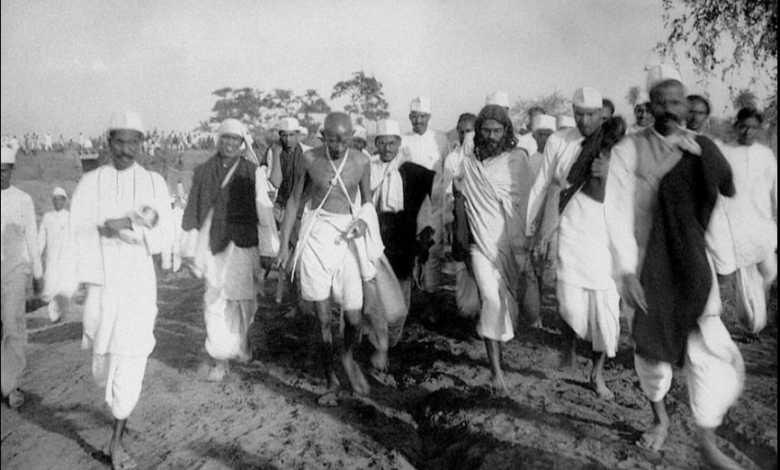
At the age of 77, when communal violence had torn through parts of Bengal, Mahatma Gandhi chose to walk from village to village in Noakhali rather than remain at a distance from those affected by the violence.
Gandhi reached Noakhali in November 1946 after reports of grave communal atrocities against the Hindu population. He travelled to the region despite his poor health and the difficulties of the journey, saying that his purpose was to console victims and wipe the tears of those who had suffered.
The Gandhi Heritage Portal records that Bengal Premier H.S. Suhrawardy made special arrangements for Gandhi and his associates to travel to Noakhali, but Gandhi refused the facilities, saying they were meant for “big people”. He left for Noakhali on November 6 and reached Chaumuhani the following day.
Instead of limiting his peace efforts to public meetings, Gandhi decided to live among the affected communities and personally visit the villages where fear and violence had taken hold.
On January 2, 1947, he began a barefoot journey from Srirampur village with a bamboo staff in his hand, walking to the nearby village of Chandipur. The Gandhi Heritage Portal records that Gandhi subsequently decided not to wear sandals for the rest of his stay in the Noakhali region because, in his words, the ground had been “hallowed by the innocent sufferings of poor men and women”.
For nearly two months, Gandhi travelled through the violence-affected villages, meeting ordinary people, visiting families, attending prayer meetings and attempting to rebuild trust between communities.
The journey was physically demanding. Historical records maintained by the Gandhi Heritage Portal note that during the mission Gandhi at one point was taking less than 600 calories a day and had to be carried on an improvised chair to a prayer ground because of exhaustion. Yet he continued visiting villages and meeting people.
His approach was not to establish himself behind official security or remain confined to a headquarters. He sought to place himself directly among people who had experienced violence and fear.
The peace march continued until March 1, 1947, when Gandhi moved on to Bihar to undertake another peace mission amid communal violence there. The Gandhi Heritage Portal describes the Noakhali mission as one of the most demanding episodes of his life and records that Gandhi regarded the effort as a “do or die” battle of non-violence.
The Noakhali journey remains striking not simply because Gandhi travelled through a region torn by communal violence, but because of the manner in which he chose to do so—on foot, often barefoot, from one village to another, meeting people directly at a time when fear and mistrust had made such contact difficult.
On Gandhi Jayanti, the episode offers a glimpse of a different side of the freedom movement’s most recognisable figure: an ageing leader who chose not to retreat from a dangerous situation, but to physically walk through it in an attempt to restore peace.
© Kashmir News Trust (KNT). Unauthorized use without attribution is prohibited.