Court absolves Army colonel of liability for civilian deaths during leave in Kashmir

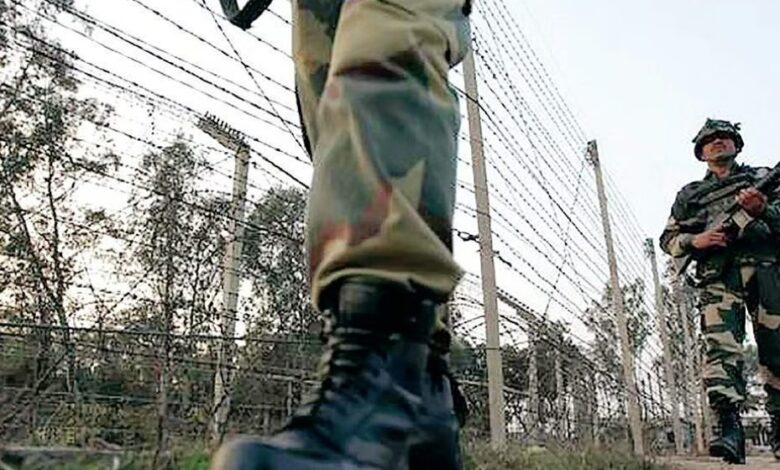
Chandigarh, March 22, KNT: In 2006, the 33 Rashtriya Rifles (RR) of Indian Army was involved in two separate firing incidents in Jammu and Kashmir, resulting in the deaths of six civilians, including three children. On February 22 that year, an incident at Dudipur in Handwara town of North Kashmir’s Kupwara district left four civilians dead, including three minors, after troops of the unit opened fire.
The Army’s chain of command did not approve of the unit’s actions, and the Commanding Officer, Colonel Randeep Singh Guleria, was counselled both verbally and in writing to prevent recurrence. However, on August 12, 2006, another firing incident occurred, leading to the deaths of two more civilians.
In a judgment with significant implications for military accountability, the Punjab and Haryana High Court has now ruled that a commanding officer cannot be held responsible for incidents involving his unit while he is on sanctioned leave, setting aside adverse remarks recorded against the officer.
The ruling is important as it addresses the scope of command responsibility in operational areas such as Kashmir, where units often operate in high-risk counterinsurgency environments.
Colonel Guleria, who commanded the 33 RR during the period, had faced severe criticism in his Annual Confidential Report (ACR), where senior officers described him as “unfit to command any unit” and criticised his leadership style as “abrasive.” The report also linked him to civilian deaths caused by his unit.
The Initiating Officer (IO), Reviewing Officer (RO), and Senior Reviewing Officer (SRO) had all made adverse remarks, citing tension within the unit and alleged shortcomings in leadership and operational control.
However, the High Court observed that such remarks could not be sustained, particularly when the officer was not present during one of the incidents and had already been cleared of blame in separate inquiries.
“Once an officer is availing annual leave, how can any incident which occurred during the said period be attributed to such officer,” the court noted, rejecting the premise that mere command position establishes liability in absence of direct involvement.
The court also pointed out that two Courts of Inquiry had already found the officer “not blameworthy” in connection with the incidents, and that no substantive material was presented to justify the adverse ACR entries.
Colonel Guleria had earlier challenged the remarks before the Armed Forces Tribunal, which had upheld the Army’s position, stating that a commanding officer remains responsible for the acts of troops under his command regardless of physical presence.
The High Court, however, disagreed with this interpretation, effectively overturning the tribunal’s reasoning and ordering that all adverse remarks be expunged from the officer’s record.
Legal observers say the judgment could have broader implications for how accountability is assessed within the armed forces, particularly in counterinsurgency operations where command structures and field realities are complex.
The ruling may also be challenged, as the Union of India is expected to consider approaching the Supreme Court against the decision.
The case underscores the tension between institutional accountability and individual responsibility within military hierarchies, especially in conflict zones like Kashmir where operational decisions can have serious civilian consequences. [KNT]
© Kashmir News Trust (KNT). Unauthorized use without attribution is prohibited.