VIP Culture vs Democracy: Why Public Roads Cannot Be Private Corridors

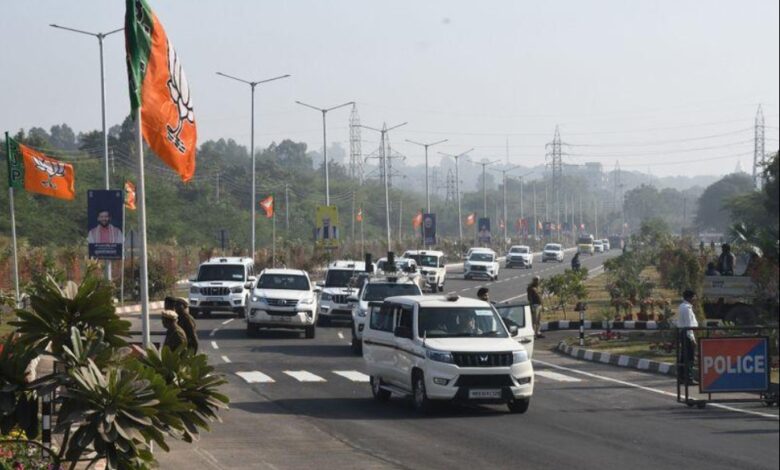
VIP culture and routine road blockades aren’t just inconvenient—they cut against the core promise of a democracy: equal citizenship. Temporary security measures for genuine threats are one thing; blanket stoppages that immobilize entire cities for the convenience or symbolism of power are another. When public roads are treated as private corridors, the message citizens receive is clear: some lives and schedules matter more than others.
At a practical level, the costs are immediate and measurable. Ambulances get delayed, daily-wage workers lose income, students miss exams, and small businesses take a hit. Over time, these repeated disruptions normalize inequality in public space. The street—arguably the most democratic of all civic arenas—becomes stratified. The state’s obligation is to protect both security and mobility, not to trade one off wholesale for the other.
History offers cautionary parallels. In pre-revolutionary France, rigid hierarchies and visible privilege fed resentment that ultimately erupted in the French Revolution. While today’s democracies are far removed from that context, the underlying lesson endures: when institutions appear to privilege elites at the expense of ordinary people, trust erodes. In modern settings, backlash may not be revolutionary, but it shows up as cynicism, protest, and disengagement—each corrosive in its own way.
यह आदमी तो कलई खोल रहा है🥸😎
इसका कहना है कि 👇
* दिल्ली के ITO पर BJP नेता का काफिला निकलने वाला है, ट्रैफिक में एंबुलेंस फंसी है।
* यहां पर किसी को कोई फर्क नहीं पड़ रहा है और पुलिस पूरी जिम्मेदारी से खड़ी है कि इनके नेता जी निकलेंगे तब ही कोई निकलेगा।
* वैसे तो मोजी जी… pic.twitter.com/IXwUyZd0rQ
— Priya singh (@priyarajputlive) April 17, 2026
The critique also resonates with ideas from Karl Marx, who framed society as structured by conflicts between classes with unequal access to power and resources. VIP culture—manifested in preferential treatment, special lanes, or sweeping stoppages—can be read as a contemporary expression of that imbalance. Even if the intent is security, the optics and lived experience reinforce a divide between rulers and the ruled.
Defenders argue that high-risk officials require robust protection, and that route clearance is sometimes necessary to prevent unpredictable threats. That point has merit. But necessity should be narrowly defined, time-bound, and evidence-based. Democracies excel when they minimize intrusion while maximizing safety. Technology and planning can help: dynamic routing, real-time traffic management, shorter and rolling closures instead of blanket halts, and transparent public advisories. Crucially, emergency services should always have protected corridors that remain unobstructed.
There are workable models. Some cities restrict stoppages to seconds, not minutes, allowing traffic to flow immediately after a convoy passes. Others avoid peak hours, reduce convoy sizes, and rely more on intelligence-led security than on visible disruption. Accountability mechanisms—post-event audits, published protocols, and grievance channels—ensure that exceptions don’t become the norm.
Ultimately, the question is not whether security matters—it does—but whether democracies can secure leaders without diminishing citizens. The answer should be yes. Public office is a trust, not a privilege that entitles one to commandeer common space. When leaders move through cities with minimal disruption, it signals respect for the very people they serve. When they don’t, it quietly signals the opposite.
A democracy’s health is reflected in small, everyday interactions between state and citizen. Roads that remain open, ambulances that move unhindered, and commutes that proceed without arbitrary interruption are not luxuries; they are indicators that equality is more than a slogan.
“ये VIP कल्चर आम आदमी के लिए सिरदर्द बन चुका है…धार्मिक स्थल भी इससे अछूता नहीं..!
एक जज या नेता की गाड़ी निकलती है तो पूरा शहर रुक जाता है…बीमार सड़क पर तड़पता है…बच्चे एग्ज़ाम मिस कर देते हैं..कोई रोज़गार का मौक़ा खो देता है…क्यों…?
सिर्फ़ इसलिए कि कोई ‘खास’ इंसान… pic.twitter.com/qlDNJfrjMm
— Rahul Saini (@JtrahulSaini) April 16, 2026
© Kashmir News Trust (KNT). Unauthorized use without attribution is prohibited.