UK-Based Panel Cites ‘Systemic Discrimination’ Against Muslims in Two Indian States

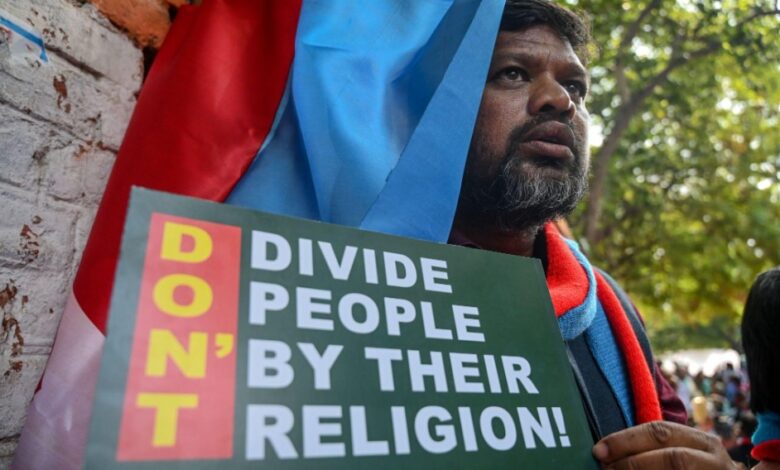
A report by a panel of independent international experts has alleged that widespread discrimination and violence against Muslims in Assam and Uttar Pradesh between 2022 and 2025 may amount to international crimes, including crimes against humanity under international law.
The report, published in March 2026 by the Transnational Legal Clinic at King’s College London, examined patterns of alleged human rights violations in the two states and concluded there were reasonable grounds to believe that “systemic discrimination” had taken place.
The panel comprised Sonja Biserko, Marzuki Darusman, and Stephen Rapp, all of whom have previously served in international human rights and legal roles. The report was introduced with a foreword by former Supreme Court judge Justice Madan Lokur, who said the findings reflect the “gravity of what is unfolding.”
According to the report, practices documented in Assam include forced evictions, deportations, hate speech, and police actions, which the panel said may amount to crimes such as forcible transfer of population and persecution under international law.
It further stated that the alleged “systematic stripping of citizenship, legality and residence” from Bengali-speaking Muslims in Assam could constitute apartheid as defined under international criminal law frameworks.
In Uttar Pradesh, the panel examined policing practices including so-called “encounter” killings and “half-encounter” maimings, as well as hate speech and enforcement patterns, concluding that these may reflect a “widespread and systematic pattern of abusive and punitive policing.”
The report also cited data suggesting that Muslims were disproportionately affected in police encounters and enforcement actions relative to their population share in the state.
Across both states, the panel identified what it described as a pattern of “dehumanisation and incitement to violence,” including statements attributed to political leaders that it said could contribute to an environment of hostility.
The findings were based on a review of multiple sources, including victim testimonies, government records, court documents, civil society reports, and media accounts. The panel said it followed United Nations fact-finding principles of independence, impartiality, and objectivity in its assessment.
The report acknowledged that India is not a signatory to the Rome Statute of the International Criminal Court, which formally defines crimes against humanity, but noted that its analysis also drew upon other international treaties and conventions to which India is a party.
It further stated that domestic remedies available to affected communities were “ineffective in practice,” limiting avenues for redress.
The report’s conclusions have added to ongoing debates around human rights, governance, and accountability in India, particularly concerning the balance between law enforcement, policy measures, and protection of minority rights.
About Transnational Legal Clinic, King’s College London
The Transnational Legal Clinic (TLC) at King’s College London is an academic program within the university’s law faculty that focuses on real-world legal research and advocacy on issues of international law, human rights, and global justice.
The clinic brings together students, researchers, and legal experts to work on complex cross-border legal issues, often producing reports, submissions, and legal analyses related to international human rights, humanitarian law, and accountability mechanisms.
Its work typically involves collaboration with civil society organizations, international legal practitioners, and academic institutions, with an emphasis on applying legal frameworks to contemporary global issues.
The clinic follows research methodologies aligned with international standards, including principles of independence, objectivity, and evidence-based analysis.
Outputs from the clinic, such as expert reports and legal studies, are often used in policy discussions, advocacy efforts, and academic discourse on international law and human rights.
© Kashmir News Trust (KNT). Unauthorized use without attribution is prohibited.